Welcome to MH Coaching and Consultancy

Tag: education

From Vision to Vulnerability: What are the Qualities of a Great Leader?

What makes a great leader? That’s quite a question, and one that doesn’t have a simple answer, this is highly subjective, views differ, as do contexts. As CEO of Forum Strategy, Alice Gregson explained as I spoke to her recently on Teachers Talk Radio, context is important, and leadership traits, behaviours and skills are not fixed, we are all continually growing and learning as humans and leaders. There are, however, key qualities that make leaders more successful, and that was something I wanted to consider further.  

Why is Leadership Important?

There is strong evidence to show that that effective school leadership is an important condition for successful school improvement. (Day et al 2020). Whilst other factors are also important, and great leadership alone may not be able to change a school, research tells us that leadership is a significant factor in the success of the organisation.

In the business world too, leadership is essential to an organisation’s success. Writing in the Harvard Business School online in 2023, Michael Boyle explains that good leadership motivates team members, 79% of employees will quit due to a lack of appreciation, 69% of employees say they would work harder if they felt their efforts were better recognized by leaders.

Employees who are made to feel that they’re appreciated, and their work is recognized are more engaged and can help the company achieve its goals. Recognizing and appreciating employees is the job of management and other leaders in the organization.

Leaders play a key role in setting direction, they also play a key role in defining the culture of an organisation. Both of have a significant impact on the organisation and its potential success, as well as the lives and wellbeing of those connected with the organisation.

What Makes a Great Leader?

The notion of a great leader is subjective, it is also context dependant, as Alice Gregson explained when I spoke to her. There are varying views on great leadership qualities, The research cited highlights this, much of it is based on opinions of leaders themselves or employees, it may also be linked to retention within the organisation. What defines effective leadership on one context, for example a very challenging and high-pressure context, may differ from another context. Leadership skills, behaviours and traits may also need to change over time. This is important to note.

So, whilst there is no single answer to the question “what makes a great leader”, noting subjectivity, context and that traits, skills and qualities are not fixed, there are some common themes.  Great leaders come in many different forms and are not all the same, there are, however some common skills, behaviours, traits and qualities that I will describe here, I would love to hear what you think too.

Back in 2013, author Jeremy Sutcliffe interviewed a selection of UK’s headteachers to find out what they believed makes a good leader. His book, 8 Qualities of Successful School Leaders: the desert island challenge, published by Bloomsbury sought to answer the question “What are the qualities needed to be a successful school leader?” Based on the BBC radio programme Desert Island Discs, a range of school leaders were asked to imagine they were cast adrift on a desert island with a school full of children in desperate need of a great headteacher.

He asked what eight qualities they would take with them to run the desert island school?

This book is 11 years old now and a lot has changed in the world, but I think the 8 qualities highlighted are still relevant. The 8 qualities listed as coming up most often are vision, courage, passion, emotional intelligence, judgement, resilience, persuasion and curiosity.

More recent reviews of research show similar findings. In a review of a wide range of research into school leadership, entitled “Successful School Leadership”  Day, Sammons & Gorgen, describe professional and policy derived standards and then go on to focus on successful principals, models and practice.

They conclude that there two main models of successful leadership practices:

  • transformational leadership practices,
  • pedagogical/instructional leadership practices,

They also focus on the theory and practices of distributed leadership.

They highlight the important transformational leadership practices of building vision and setting strategic direction, understanding and developing people, (Re)designing the organisation (establishing work conditions which make the most of the motivations, commitments and capacities of employees) and managing the teaching and learning programme by staffing appropriately, providing teaching support, monitoring and buffering staff against distractions from their work.

They go on to describe pedagogical leadership and how this emphasises the importance of establishing clear educational goals, planning the curriculum and evaluating teachers and teaching. It sees the leader’s prime focus as responsible for promoting better outcomes for students, emphasising the importance of teaching and learning and enhancing their quality.

Day et al (2020) describe that whilst distributed leadership is not a ‘model’ in itself, but rather a concept and set of practices, it works hand in hand with transformational and instructional models of leadership. Distributed leadership involves sharing leadership responsibilities and decision making. A  consensus has emerged among leadership researchers that school leadership can have an especially positive influence on school and student outcomes when it is distributed. Studies show that teacher and student morale levels improved where teachers felt more included and involved in decision-making related to the process of school development and change.

Looking through a lens of teacher retention, research by the EEF (Nguyen et al, 2023) draw on a synthesis of evidence from a group of 45 relevant studies, the report highlights three main leadership approaches or areas of leadership behaviour and qualities as beneficial to teacher retention.

First is prioritising teacher development, providing instructional support; professional development opportunities; and cultivating leadership potential in teachers. Secondly, building relational trust, building trusting relationships, individualised consideration for teachers and compassionate leadership characterised as being caring, encouraging, and listening. Thirdly, improving working conditions by supporting professional autonomy, promoting collegiality and inclusive participation in decision-making, shared power and responsibility, reciprocal support, mutual trust, and cooperation, developing an equitable support and recognition system, establishing an effective communication structure and supporting teachers with behaviour of students.

Speaking to Alice Gregson, CEO of Forum Strategy who works with senior leaders in Education, including CEOs of MATs, some really interesting leadership traits were highlighted and discussed.

First, Alice emphasized the subjective nature of the question and also the importance of context. She also emphasized that traits and skills are not fixed. Alice also made a distinction between the “what we have” – or skills of leaders and the “who we are” – or behaviours and traits of leaders. Starting with skills, Alice emphasized the importance of strategic thinking, of having the ability to turn a vision into a workable plan. Next she described the need to be able to articulate purpose clearly and well. Alice also told us that great leaders are also accountable for their decisions, build strong cultures, based on trust and respect, are strong relationship developers, within the organisation and beyond and are excellent communicators, able to tailor their style to a range of audiences, engaging with people and developing trust. She also described the skill of balancing risk, of being able to take some risk whilst mitigating potential impacts.

Alice went on to describe the behaviours and traits of great leaders, of compassion, inclusivity, collaboration, curiosity, courage, being humble and bravery. Next, we discussed vulnerability, that for her, this is about opening up, sharing our stories & facing what might be uncomfortable. It’s about letting people in and showing what makes us who we are. Sometimes vulnerability includes our weaknesses and fears, but it might also include things such as our beliefs, feelings, desires, aspirations and experiences. Vulnerability as a leader is about letting people know you – the full you. It’s so powerful because it gives us points of real connection. I loved the quote Alice shared, from Sir Steve Lancashire, “‘Me being me means you can be you.” If we can celebrate our authentic selves as leaders, we send such a powerful message to those in our organisation. Great leaders model vulnerability, sharing who they are as people, not just as professionals, building trust and creating connection.

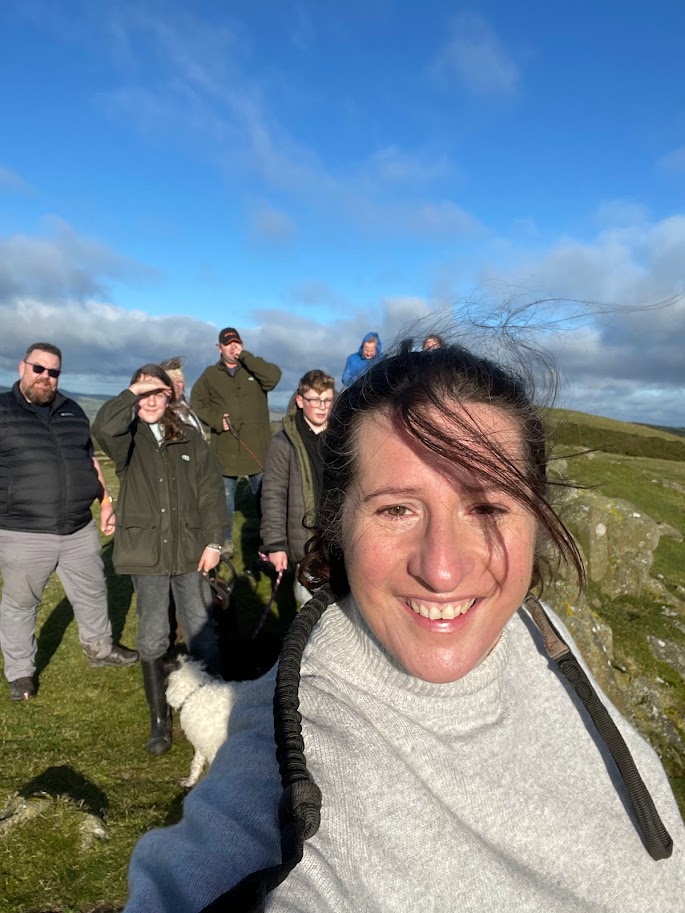
Here’s me being me, up a hill in Wales, with friends in January this year.
Great Leaders – A Conclusion

Reflecting on all of this, the research, the conversation, and my good fortune to work alongside and for some great leaders, for me, great leadership is made up of a range of skills and behaviours. Many of which are listed here already. There is no single definition and as we have seen, context is key. For me, great leaders are self-aware enough to make sure that they know their own current strengths and weaknesses, and that they have the courage to build teams around them that compliment these, with diversity, strength and challenge within those teams. A commitment to growth, learning and development of self is also crucial in my opinion.

Communication is key, with listening, curiosity and hearing others as a key part of this. The ability to build relationships, to care, have empathy and to be vulnerable, sharing of yourself as a human, creating connection, relationships and building trust within organisations, where others can feel psychologically safe and can find that risk balance point is crucial too.

A change I have noticed has been increased recognition of vulnerability, of sharing who we are as humans, letting people know who you are. Leaders modelling this, introducing ourselves and delving into who we are as people, who we are, not just our professional role. I also note resilience taking a different position, no longer just pushing through, as leaders however hard and at whatever cost, but noticing this and acknowledging when things are tough. I think this links to vulnerability too, and important for leaders to model.

As a coach, the idea that these skills, behaviours, traits and qualities are not fixed is also fascinating. We often have strong beliefs about what we can and can’t do, who we are and how we are, which may be based on messages we have received through our lives, and past experiences. This brings me onto an idea for a future topic, “Great leaders, born or made?”  What do you think?

I’d love to hear what qualities you think great leaders have – and do you agree that we all have the potential to be great leaders? Are great leaders born or made?

References

Boyles, M., (2023) Organisational Leadership, What it is and why it’s important. Havard Business School Online

Brighouse, T.M. (2007), How Successful Headteachers Survive and Thrive, R.M. Publications.

Day, C., Sammons, P. and Gorgen, K. (2020) Successful School Leadership, Education Development Trust.

DfE (2015 and 2020), National Standards of Excellence for Headteachers.

Fullan, M (2019), Nuance, Why Some Leaders Succeed and Other Fail, Jossey Bass, San Francisco.

Kizier, K (2023) 35+ Powerful leadership statistics: Things all aspiring leaders should know. Zippia: The |Career expert.

Nguyen, D.,  See, B.H., Brown,C.,  Kokotsaki, D. (2023) Reviewing the evidence base on school leadership, culture, climate and structure for teacher retention. Rapid Evidence Assessment  (Education Endowment Fund)

Woods, D (2020) The Nine Pillars of Great Leadership
Purpose: The Importance of the Why?

What does it mean to have purpose in life? Why is it important? and how can we find our purpose? These are the three questions I shall endeavour to answer here, as well as sharing examples of some purpose driven educators and leaders.

First, a bit off context. Most of my professional life has been in the world of education. Teaching can be a tough job with, for example, Ofsted and the wider accountability structures, cultural issues as well as underfunded services which are placing ever increasing pressure on educators and school leaders. There is, however, a lot of “purpose” in the education profession which I believe is a key factor that keeps great people in the profession.

At the moment, teachers and school leaders need some major changes to happen, including significant reform to the Ofsted inspection and reporting system, changes to accountability around exams and progress measures as well as increased funding for schools and other related services.

There are, however, real wellbeing benefits of having and reflecting on our moral purpose. I’m not talking about toxic positivity, but here I shall reflect on and share my learning about the importance of purpose.

Purpose – What’s Special about the Why?

Philosophers have sought and debated “the purpose of life” for centuries. I’m not going to attempt that here, but I am going to suggest that what matters is “our purpose in life”.

Our purpose or meaning in life is generally thought of as the central, motivating aims of our lives. Sometimes referred to as the reason we get up in the morning, our purpose is closely linked to our values and can guide our life decisions and direction, influence our behaviour and ultimately bring meaning to our lives.

Writing in the Harvard review in September 2023, Ayse Yemisicigill, Melis Sena Yilmaz and Matthew T. Lee define purpose as:

“an overarching intention that is personally meaningful to you and of consequence to the world beyond yourself. Your purpose can help you organize your life, give you a clear direction, and motivate you — especially when you encounter life’s inevitable setbacks and disappointments”

We all have a particular set of skills, talents, experiences and interests and our purpose is related to these. Our purpose is what motivates and drives us, what keeps us going when challenges are tough. It is also about the long game rather than short term or in the heat of the moment.

Purpose, for many is connected to meaningful work, or a vocation. It can also be about nurturing a family, bringing happiness to loved ones or commitment to a community. Purpose isn’t fixed and is likely to change through life. Change of purpose may happen after a significant life event, such a bereavement or children growing up or a change in relationship status.

Having a purpose is essential but finding what brings us meaning may not be straightforward and many of us can be confused about our purpose or lose sight of it from time to time. If we lose sight of what keeps us going, especially when faced by challenges, our mental health is likely to dip and our motivation will drop.

Writing in Psychology Today in March 2022, Kristen Fuller MD, a Physician who has become a writer, editor and reviewer explains that, according to research, individuals who have a strong sense of purpose and meaning in life tend to have better mental health, overall well-being, and cognitive functioning compared to those who lack a sense of purpose.

Fuller, who specialises in mental health, addiction, and primary care goes on to explain that individuals with a sense of life purpose are less likely to have heart attacks, strokes, and dementia. She cites several studies that also show that individuals with a strong sense of purpose tend to engage in healthier behaviours and lifestyle choices such as practicing regular physical exercise and participating in preventative health services.

A study in 2013 found that individuals with a strong sense of purpose in life were better at stress management and had better sleep than individuals without a strong sense of purpose. Research has also shown that having a positive and meaningful aspect in life may improve brain function, including overall cognition and memory. Additionally, individuals with purpose tend to have lower instances of depression.

The benefits of having a clear purpose are evident from the research research, I was interested to read and hear how highly a number of the most respected and influential education leaders and practitioners, as well as some earlier in their careers with whom I have been fortunate to work, regard purpose and how evident this is in their work.

Purpose Front and Centre

A Recent interview with Adrian Rogers, CEO of Chiltern Learning Trust as part of the TES 10 questions series highlighted an example of moral purpose in action. When asked why he works in education, Adrian responded by speaking about his background, describing how he was the first person in his family not to go down the pit, and how his intelligence gave him opportunities. He went on to describe how his background drives him, stating “you want children to have a better opportunity than you had, to make the schools that we run a better place for the children, to give them those wider opportunities.” He describes how part of his career has been in affluent areas but having a preference for schools in working class areas and a focus on raising aspirations. Later in the interview, where he describes some of the challenges he faced as a bright boy in a tough school, you can see why he is so keen to ensure the best possible educational experience for young people now across his trust.

And Adrian isn’t alone in his purpose driven leadership and sense of purpose in his professional life. I wrote to a number of leaders and educationalists asking them about their “purpose”. Sam Strickland (@Strickomaster on Twitter/X), Principal, CEO and author responded “I initially entered the profession due to my love for education, children and my absolute passion and love for wanting to teach history. I have absolutely loved my time in the profession. What keeps me here? A passion and desire to want to make a difference to my school, my staff, the pupils we serve and the community where my school is situated. I also see it as a privilege and an honour to be able to support the wider educational community through the opportunities afforded to me and my school.”

So, Sam is clear about his purpose, initially in sharing his knowledge and love of history – and then, that phrase we hear often “to make a difference”. As a Principal – the purpose of wanting to make a difference for his own school community – interestingly, specifically mentioning his staff.  Sam’s support for other teachers and heads beyond his own school is also widely known and so I think this sense of purpose is clear. Huge thanks Sam for responding.

Jamie Pardon, Director of Education and Former Headteacher in Pioneer Learning trust describes how she didn’t go into teaching directly from school, instead she started working in a  nursery as a TA and fell in love with the role. Jamie tells me that she didn’t love school herself as a pupil and student, largely after experiencing verbal and physical bullying in Year 7. Explaining this further, Jamie says, “I wanted to be part of the solution,  my motto is ‘be the change you want to see’. I went into primary rather than secondary, simply because I couldn’t pick a subject! What keeps me in education put simply is I still believe in the reasons I went into teaching. Of course, working in a fantastic organisation that is forward thinking and invests in people in all levels key too!”

Paul Carlile, a former Headteacher and now consultant and leader linked to a large successful MAT in Hull responded “So, I went in to teaching because as a secondary student who wanted to study music I missed this opportunity because of the inadequate teaching I received over 4 years … meaning I was unable to make the grade – ( syllabus not covered in both practical and theory ) the college wouldn’t accept me without the grades. I decided to go in to teaching to ensure pupils receive an equitable experience and realise their dreams.”

Geoff and Margaret, favourites of mine on X, who you may recall returned to the classroom answering the “call” for retired teachers to return during the pandemic. During today’s pub lunch, they said “ It was the children who brought us into teaching and the children who kept us there! We both just wanted to make a difference. Even though the job can be exhausting, it’s a privilege to be able shape a life.”

For the ECTs I have had the privilege of mentoring, talking “purpose” has been fascinating. For Katie who teaches year 1, it is “helping the children to develop their understanding of the world.” Oliver, who teaches year 2 tells me he gets purpose from seeing the lasting impact we have as teachers. He also values he bonds we create, says he enjoys the joy of being crazy and seeing the progress children make. For Celine, she recalls the positive impact one of her own primary school teachers had on her, and has recently been in touch with her. Such an inspiration.

Bex Owen, currently acting head at Little Paxton Primary school has clear moral purpose. As a former pupil at the school herself, now as substantive deputy head and currently acting head she describes always wanting to be a teacher. She explains, “I am massively passionate about bringing out the best in people and helping them to discover what they are brilliant at. I do want to make a difference in children’s lives and give them the best start to their education so they become lifelong learners. Even though education can be tough, it really is the best job in the world. Seeing children curious, eager to learn, getting experiences that they may not have without school and growing up to make a difference in society makes everything worthwhile. There is not a day, or hour, that is the same so teaching is never boring. Knowing you unlock the future for children through what you teach is an amazing feeling!” Bex has been at the same school for her whole career, the same school she attended as a child, and describes herself as invested in the local community.

Other leaders have similar stories. Molly describes wanting to teach because her mum was an LSA in a school, she would often go and volunteer in her school, and absolutely loved watching the teacher teach the children and interacting with them. Molly says when she was younger she really enjoyed school and worked hard and now, as a teacher, some days are hard but the reward of teaching and seeing the children achieve in small moments is absolutely amazing and so she wouldn’t want to do anything else.

Alex described how he was really unsure of what to do after leaving university so he tried volunteering in schools and LOVED it. Started in secondary then tried primary. He describes the satisfaction of being part of the school’s “journey” and feeling like you are having an I impact.

Some common themes and some contrasts. The influence of their own experiences as children and young people has been interesting, either inspired by school days they loved, or not enjoying school for various reasons and wanting to make it better for the next generation of children and young people seems to be a common theme.

For me, school wasn’t always a great place. Primary school didn’t always provide much in the way of challenge, and then at secondary school, this was also often the case. I often wasn’t that enthused or inspired, but do remember some teachers who did provide work, lessons and discussion that captured my imagination and made me think. In addition, I never really felt that I “fitted in” and so I have always wanted school to be a place that is as inclusive as possible – where children and young people can be who they truly are and understand about belonging rather than fitting in.

I guess, I wanted, as a teacher and then as a head to make sure this was the case more often ideally all of the time) for the children in my class. Becoming a school leader this widened to school level, wanting to support and challenge teachers to be the best they can be. Since leaving headship, I can see my purpose has changed a little. Now, I want to be able to enable school leaders to be the best version of themselves, anything I can do the help, through any coaching, support, governance to enable them to thrive and make their schools great places for all children and young people to learn.

What is clear is that however challenging education is, it is a vocation that brings a sense of purpose, tapping into this, thinking about it and bringing it to the front of your mind will bring wellbeing benefits.

So, how can we find our purpose?

Finding Purpose

Just because it is healthy to have a sense of purpose or meaning does not mean that a sense of purpose is easy to find. Sometimes we also assume something is our purpose because it is what we have heard, or we feel it ought to be. That is the danger of giving those examples – whilst it is great to hear about others, it is our own purpose that matters to us, and the inner work we may need to do to really find it and articulate it so that we can strive to live a life that aligns to our purpose.

  1. Take time for yourself. Finding your purpose will take time. You can use the rest of the ideas here as a basis for writing, or reflecting, or work with a coach to explore this further. Whatever you do, it will need some quality thinking time.
  2. Try new experiences, get out of your comfort zone and then take time to reflect on your experiences. This was one of the outcomes from the research into finding purpose done by Ayse Yemiscigil, Melis Sena Yılmaz and Matthew T. Lee published in September 2023 in the Harvard business review. Their study with 400 students graduating from high school showed this to be a prime factor. The research also showed that purpose was strong where people were engaging in experiences that showed them how their interests can help them contribute to others’ lives in ways that are personally meaningful. Reflection on these experiences was also found to be crucial, specifically reflecting on how the experiences linked to something that was socially useful.
  3. Search Inward. Tony Robbins, American Author and coach says that the questions “What is my purpose in life?” and “How can I be happy?” are actually the same – and they have the same answer. He argues that you can never truly understand how to find your purpose by listening to others’ opinions and seeking outside approval and that everything you need is within yourself. Robbins argues that the only thing holding us back is our own limiting beliefs and advocates identifying each limiting belief and replace it an empowering belie. Through doing this, he says we develop greater self-awareness and when we’re in control of our emotions, we’re in control of our life. We can discuss our goals and purpose, this is advocated strongly through the research by Ayse Yemiscigil, Melis Sena Yılmaz and Matthew T. Lee, taking feedback and using as we wish, but ultimately, it is up to each of us as individuals to do the work, and make sure we are focussed on our own purpose, not something we think we should have as our purpose. A non judgemental coach space can provide this opportunity for reflection.
  4. Purpose before goals. Robbins says if you focus only on achieving short-term goals, you will never find your true passion or learn how to find your purpose. The goals you work toward must always be based on finding your purpose. If they’re not, you’ll only feel a fleeting sense of accomplishment and will soon be seeking something more. You won’t be able to see that life is happening for you instead of to you. When you set a goal, ask yourself: How will this help me feel more fulfilled? How does this relate back to my purpose? Robbins advises keeping a journal to keep your purpose at the top of your mind.
  5. Focus on what you have. Developing an abundance mindset helps us to see beauty and goodness all around us and makes our purpose in life much clearer. It helps us to feel like we have more of the answers and that we are on the path to achieving meaningful goals. When we focus on what we have, fear disappears and abundance appears.
  6. Take ownership of your life. Think carefully and decide what’s truly right, You must not let yourself be driven by fear or anxiety and realise that every circumstance in your life is a result of your own decisions.
  7. Think about what brings you joy.  When you discover what brings you joy, you usually discover where your passions lie. Your abilities are connected to that sense of joy, so examine them too.
  8. Think about your needs. what are your most fundamental needs? This is an easy one to get wrong, and it is common for us to have a false sense of purpose based on others’ expectations rather than our own needs. Fulfilment begins with your innermost needs.

These ideas for finding our purpose make sense when we also reflect on some of the examples from those who generously shared their purpose with me. New experiences were common, positive benefits for others are also evident and common features of core purpose.

Reflections on Purpose

One thing that I can honestly reflect has been on my work this year with a Primary School that I have really grown to love. When I ask myself why this work has made me smile every day, always want to get up and go in to school, to be out on the gate whatever the weather, to work through any challenges, I can see it is all about the purpose. Supporting the ECTs to be the best versions of themselves, to be able then in turn to provide great education and opportunity for this wonderful school community has brought real alignment with my purpose. Of course, them being a great team to work with and the children and families being lovely too has helped. It has been a wonderful to spend the past 12 months with the ECTs and this last term with the new leadership team, and now I know they will continue to go from strength to strength. It has been a privilege to be even just a small part of their journey. Thank you Springfield for everything. It’s all about the purpose.

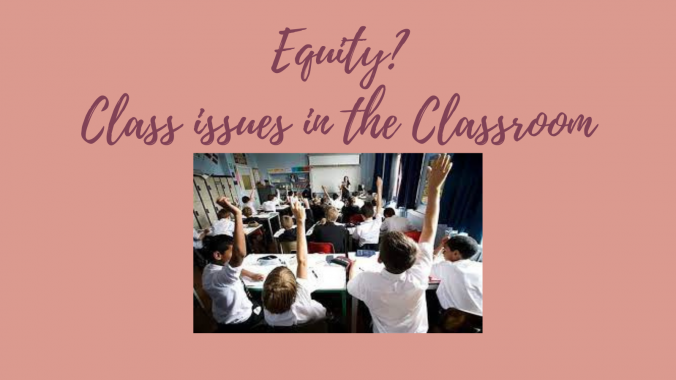
Equity? Class issues in the Classroom

Following on from my blog and Teachers Talk Radio Show in September about racial equity, in October, for my fortnightly Friday evening twilight show on Teachers Talk Radio, I was inspired once again to consider the topic of equity. This time, from a perspective of social class, a category not included in the Equality Act. My inspiration for this came partly from an article in the Guardian – which had received much interest on Twitter, referring to a new book on the subject. I had also delivered training for governors on their responsibilities with the Pupil Premium Grant and am privileged to be spending some time working in a school with a fantastic working class community. As a coach and educator, where barriers to success and seeking to overcome them are common themes, this felt like a topic I had to discuss. Teachers Talk Radio: Class issues in the Classroom – the twilight show with Maxine H

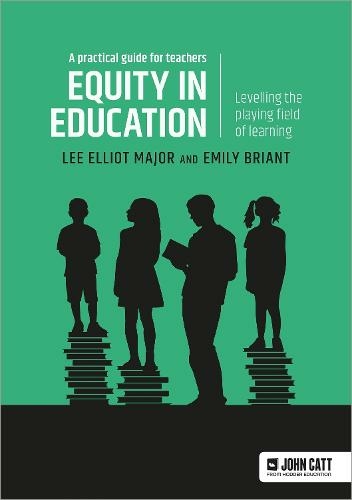
Sally Weale writes an excellent article, published on 3rd October The Guardian: Warning over unconscious bias against working-class pupils in English schools. which gained a lot of interest on Twitter, prompting a broad and fascinating discussion. The article references the work of Lee Elliot Major – specifically his new book Equity in Education: Levelling the playing field of learning – a practical guide for teachers (published by John Catt Educational), co-authored by Emily Briant, teacher and doctoral student. Elliot Major is Britain’s first professor of social mobility, based at the University of Exeter. He was previously the Chief Executive of the Sutton Trust, awarded an OBE in 2019 for services to social mobility, and proudly, the first in his family to go to university.

As I explained in the podcast, I am no expert on this subject, many other well respected names have more knowledge and have studied the topic closely. I have an interest, as a coach and educator in the subjects of equity and many of the issues around bias and limiting beliefs raised in the article, the book and in the discussions on Twitter relating to this.

Equity in Education – a practical guide for teachers is a very interesting read, I would recommend it for anyone in the education world – from ECT or trainee to CEO.

Elliot Major argues that Schools in England must do more to challenge unconscious bias in the classroom against children from working-class backgrounds. On Twitter, Professor Damien Page – Deputy Vice Chancellor at Buckinghamshire New University and Professor of Education states that he agrees with agree with much what Elliot Major writes about, including “middle class advantages being baked into the education system”. He disagrees, however with the use of the term unconscious bias, arguing “there is usually little unconscious about bias.”

Professor Page has written extensively on the topic of bias. Citing his wider research, in a series of Twitter posts he explains “Unconscious Bias starts from the premise that bias is natural and inevitable. Problem: research suggests that when people are told that discrimination is inevitable, they are more likely to discriminate as it provides a means of dissociating bias from their active choices – it provides a get out clause that explains how discrimination can be present even in those who consider themselves egalitarian. Because, you know, it’s unconscious.” He goes on to argue “On its own, unconscious bias is an organisational salve, a call for forgiveness, a get out of jail card, a sleight of hand that provides an alternative to actively challenging discrimination and maintains the status quo of white, male, middle-class, heteronormative power. If organisations want to use UB training, let it be a gateway process that leads to a focus on individual accountability for bias and definitive, zero-tolerance action whenever it occurs. We need far more focus on the conscious rather than the unconscious.”

As I interpret this, it is our responsibility to be aware of our biases – be accountable for them, call them out, not settling for an it being inevitable or acceptable due to its unconscious nature. This makes sense to me – and I hope it is an interpretation that is accurate. It makes me see that as educators, school leaders, governors and anyone else with any influence on the system, we need to look at all possible biases – and challenge them. Why do we do it this way? Why have we made that decision? What assumptions or biases may have been involved? A big task, but change is needed.

Elliot Major suggests that teachers, like all humans, are hard wired to take quick, instinctive actions, and as teachers are more likely to be from middle class backgrounds, may well be biased against children from working class backgrounds. They may have lower expectations. He goes on to cite studies from as recently as 2022 which conclude that show teachers may act differently towards children from working-class backgrounds, showing less warmth, giving less eye contact and lower-quality feedback on what they need to do next in order to advance their learning.

I found this deeply concerning, and highlighted to me the need for all of us involved in education to reflect on this, to look honestly at our biases, and ask ourselves some pretty challenging questions around this.

In his book, Elliot Major makes a number of practical recommendations for schools, including staff sessions to reflect on subconscious biases that may be creating barriers for some children, a “deep listening campaign” to understand the community the school serves, and measures to “poverty proof” the school day, helping families access food, uniforms, school trips and after school clubs.

It would seem that acknowledging and seeking to understand the biases behind the behaviours, as identified in research is a valid starting point.

Elliot Major says lessons should celebrate working-class achievement and feature figures such as Stormzy, Tracey Emin, the 19th-century palaeontologist Mary Anning and the scientist Michael Faraday.

He also suggests pupils from low-income families should be referred to as “under-resourced” rather than “disadvantaged”, as he says the term can lead to unconscious bias and lower expectations for these children. He explains “The problem with terming a child as ‘disadvantaged’ is that it is a binary classification, leading to a crude demarcation between who is or who is not ‘advantaged’. He goes on to say “It immediately invites us into the trap of deficit thinking, implying there is something wrong with children that we apparently need to solve. It focuses our minds on individuals, when facing hardship or poverty is about the circumstances individuals find themselves in.”

I can see his point here, aspirations and expectations as educators are so important. “disadvantaged” has limiting connotations, however, as Dr Lisa McKenzie – senior lecturer in sociology at the University of Bedfordshire argues on Twitter (@redrumlisa) “lets not stop saying ‘disadvantaged’ because its binary meaning theirs the ‘advantaged’ that’s a true assessment. Let’s not say ‘under resourced’ lets say what it is one group is disadvantaged by another’s advantage”.

This presents an interesting counter argument – arguing that as it is the middle classes and the system that advantages them that is ultimately disadvantaging those from lower income backgrounds – and so the term should remain to recognise this.

In “Equity in Education” sets out what is necessary in order to create Equity based Education. This, he explains, is based on four key principals.

  1. Children who face greater barriers outside of school deserve more attention in the classroom.
  2. Adopt a capacity not deficit mindset. Focus on what children can do rather than what they can’t. This includes assessing whether our own cultural norms are alienating some children. Adapt the system to fit chjildren from working class systems, rather than getting them to fit into one centred round the middle classes.
  3. Nurture authentic, individual relationships with all children, acknowledging that all are unique.
  4. Value all talents – not just the narrow academic ones.

The book is divided into guidance for classroom practitioners, leaders, CEOs and also includes a national and international scale – showing the need for systemic change at all levels.

So many valuable and intelligent arguments – creating points for reflection. Here are my main takeaways:

  • As educators, encouraging high aspiration is always important. Asking ourself whether our aspirations and views are influenced by bias (and they are likely to be) and then how we need to own that and counter it. Do we expect less of some children than others? Probably – and why is this? It comes back to the use of terms like “low ability” when actually we are probably referring to prior attainment. What makes us take a view of a child’s ability?
  • As a coach, that bias is likely to be there for us too, we need to be aware of it, it may be there for clients – as a low self expectation of self or others. What can we do to challenge this? Looking at facts and separating these from assumptions.
  • Limiting beliefs are significant – if we haven’t seen role models that look like us or sound like us – similar to discussions of racial equity, senior leaders, well known artists, academics etc are likely to be from a middle class background. It is important for young people to see role models that they can relate to – and therefore our job to be aware of any biases that are stopping us form appointing or promoting these working class role models.
  • As teachers or school leaders, there are practical changes we can make in our classrooms and schools, as well as reflecting on who we are as humans and professionals and how our beliefs and behaviours can be challenged and changed so that we are more equitable in our approach.

© 2026 MH Connection

Theme by Anders NorenUp ↑