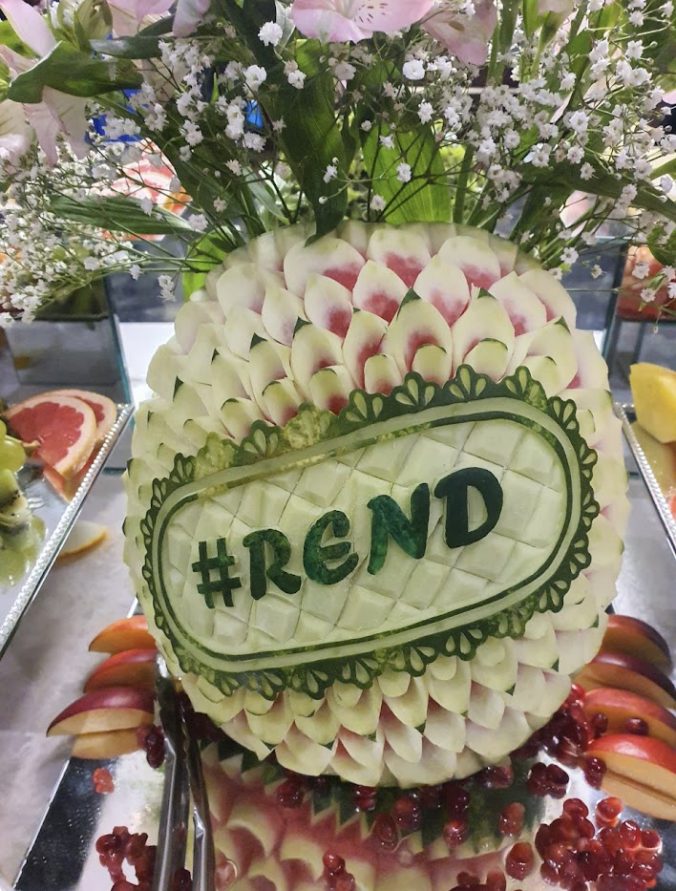
Last week, I was privileged to attend the #REND (Racial Equity network Dinner) hosted by Chiltern Teaching school and Sufian Sadiq. Such an inspirational evening with quality speakers, thought provoking content, great food and a superb opportunity to network with 480 like minded educators and leaders from across the country.
I have previously written about barriers and the speakers at #REND got me thinking about the very real barriers faced by a significant proportion of our population. There were also reflections on values, authenticity as areas I have written about previously, and so have felt compelled to dedicate this blog to the subject of racial equity.
Whilst we may think we re living in enlightened times, it is clear from the speakers at #REND and other research that society is far from equitable and that systemic racism is very real. As a white British woman, I admit to not always being so acutely aware of the reality of inequality in the system and the challenges still faced by those identifying as BAME (black and ethnic minority). The #REND speakers made the currently challenges acutely clear, whilst also presenting, at times, an optimism of how we can challenge this and move closer to achieving a more equitable society.
The Facts
Currently, only 6% of school leaders in the UK identify as BAME. As the 2021 UK census showed that 18% of the UK population are from a black, Asian or mixed ethnic group, this shows how significant this under representation is.
Role models are so important to young people, and the assumptions about what we can do in our future is informed by the roles played by those who look like us during in our formative years. Looking back now, I remember how pleased I was aged 15 to be in a school for the first time with a female headteacher, a woman, and therefore someone I identified with straight away. Would I have believed some 20 years later that headship was a possibility for me if I hadn’t seen this role carried out so well by someone I identified with? Consciously or subconsciously, I hadn’t considered quite so important. For children of BAME backgrounds, how impactful might this lack of representation be? Hearing speakers at #REND for the last two years has really opened my eyes to this.
Carry this forward and think about what governors and leaders may “expect” a headteacher to look like based on their own experience, and we see why is is very possible that without significant changes in the system, this under representation will continue.
Real Life Experiences
At a recent Teach First Event, as well as at the #REND event, speakers spoke about first hand experiences of treatment that some may find surprising to learn are still occurring in the 21st century. Leaders cited clear examples where:
- They were regularly being passed over for promotions.
- They were told that they don’t have enough experience (even though they clearly have more than the person appointed).
- They were provided little or no opportunities for you to lead on initiatives.
- They had been confronted by assumptions and stereotypes – classic examples are “you can handle the naughty kids” or “I see you more as a pastoral type person; teaching and learning isn’t the right fit for you”.
Stereotypes
The final bullet point really made me think. When, as school leaders, we reach views on what we see as the strengths of individuals, I think it is really important to examine where these views come from. What are the facts? What has someone done/achieved to show a strength and equally, what makes you think something else isn’t a strength? How could these strengths be developed? If we are trying to think positively and to have a positive mindset, why are we limiting people – whatever their background?
I think about this a lot as a coach. What are facts and what are assumptions?
Where do we get these assumptions from?
Facts and Figures
According to evidence collected by the Higher Education Statistics Agency, which collects data for the U.K.’s higher education sector around 5.5% of Black graduates are unemployed a little over a year after graduation, compared with 2.8% of white graduates. This links to a statement made by a BAME Teach First ambassador who highlighted that they had seen a trend of black NQTs (this was 2021 just before the shift to ECTs) being more likely to be offered temporary rather than permanent contracts compared to white NQTs.
#REND
Speakers at #REND spoke passionately about their own experiences, their challenges and barriers they have faced.
Sufian opened the evening, saying “Over time you develop a hyper vigilance, a sensitivity. But the stories come with you.”
He went on to say,
“The human connection is crucial to tackling inequity.”

Professor Paul Miller made a strong statement about racism: “It’s personal, it’s institutional, it’s systemic. Let’s all take a ‘common enemy’ approach to racism. “
This was followed by a call to action from Hannah Wilson (@Ethical_Leader): “Let’s disrupt and dismantle – #allyship is not enough”.
Dr Derren Wallace spoke at length about the depth of change needed, explaining; “We must be deeply committed to racial equity”
“We often hear that there is power in our diversity, but let me clear about why it is powerful.
It is powerful when we stand together across lines of race, across lines of gender and across lines of social class. Because when an issue gets mounted, the education of our children, for example, it cannot be relegated to simply being a black issue, or a brown issue or a white issue. It cannot be relegated to being an issue just for girls or just for boys. It cannot be relegated to simply be an issue just for the working classes, but it is an issue for all of us. That’s the power in our diversity. That’s when we stand together undivided”.
Such a powerful, uplifting message.
The power of diversity in tackling Racial Equity so clearly articulated by the incredible @DerronWallace – a great evening @ChilternLT #REND but now everyone who was in that room & even those who were not, have their important role to play 🙌🏾 – what’s your call to action? pic.twitter.com/wZAUZbtL4t
— Nadine Bernard FCCT (@Nadineolivia32) July 15, 2023
Luton MP Sarah Owen, after sharing her own stories, called to us to “Please continue the fight, because we are behind you all the way.”
Sarah spoke about the power of education and the importance of belonging, saying “When people feel like they belong, they feel safe.”
On Twitter, I saw an interesting reflection referring to #REND: “How many people at the event had to work twice as hard to get half as far or be considered half as good?”
I wonder, genuinely about this.
Obstacles – Not a Level Playing Field
An article in the Guardian, back in 2022 tells the story of four headteachers. Josephine Okokon, head of St Martins-in-the-Field high school for girls, London explained:
“My race became an issue very early in my career as a teacher and I began to discover these subtle, covert barriers. I was often the only female teacher of colour and I soon began to see the white teachers getting more encouragement, more support and more mentoring than me. I was left to fend for myself.
Whenever I tried to put myself forward for promotion, I was told that I needed more experience but I’d look at the white teachers who had moved up and think, they’ve got the same, if not slightly less experience than me.”
She went on to say “As I gradually worked my way up, I found that if there was any multicultural mix in the school at all, it stopped at the middle leadership. After that level, school governors are the ones making the recruitment decisions.”
As a governor, this made me think – the importance here for governors to ensure they receive training and follow processes, with advice and guidance is crucial.
Funmi Alder, head of Bearwood primary school, Berkshire states “There is absolutely systemic racism in the teaching profession, which makes it very hard to progress in your career. I know a disproportionate number of very good teachers of colour who would make amazing headteachers but seem to be stuck in middle leadership posts.”
She goes on to say “It doesn’t become easier when you become a headteacher. If anything, your position becomes more precarious because the higher you go, the more people have a problem with taking direction from those who don’t look like them. This is why new black headteachers have to work much harder than their white counterparts in developing relationships with staff with the sad reality being, that some will never accept you.”
Anne Hamilton, headteacher at the Evelina hospital school, London explains, “When I was doing my national professional qualification for headship (NPQH), my mentor – a white head – told me she didn’t know where I could get a headship. Now, why did this white woman imply that I would never be a head? I had got on to this prestigious course and she had been chosen as my mentor. It was her role to give me everything I needed to do a good job when I became a head, not to tell me to give up.”
Ross Ashcroft, headteacher, Cherry Oak primary school, Birmingham describes instances of unconscious bias where he has turned up to greet a visitor in reception in a suit and tie, and they presumed he is teaching assistant. He also describes being accused of being too aggressive (when he knows he hasn’t) and going for headship interviews and told that he didn’t get the job because the governing board said he “wasn’t the best fit” or that “they weren’t sure whether they could work with him” despite him scoring top marks in all the tasks and having no areas identified for improvement in the interviews.
He also explains that he has spent pretty much his whole career in pastoral, behavioural and safeguarding. He says it wasn’t what he necessarily wanted but being nudged or pushed towards these specialisms is a common theme among teachers of colour, especially black men. He believes this may be because BAME men are inherently thought of as being intimidating and confrontational and it means they often end up being glorified bouncers rather than teachers. These non-academic specialisms then have a knock-on effect meaning those who have done these roles then hit a brick wall when applying for headships because most senior leadership roles require specialist experience in curriculum areas.
These are real life examples of how teachers and school leaders of colour have faced significant barriers. It is a huge problem that requires a major change in our culture and systems.
An Optimistic Future?
Given the size and depth of the problem, is there any hope for the future?
#REND showed the strength of support for Racial Equity. 480 people attended, tickets sold out faster than Glastonbury. An incredible evening with school leaders and others from the world of education and beyond standing tall and in solidarity. An isolated event, but something hugely positive in raising the awareness of the problem, bring a call to arms for all and creating some momentum for change.
One of the Speakers, Dr Patrice Evans, Deputy Headteacher at Challney Boys, and one of Sufian’s own teachers spoke about her own experiences as a black female teacher and school leaders, the challenges she has faced.
She ended, however, with an optimistic statement. She said:
“I look at you right now and I smile. I am heartened by the range of diversity in the room. “You have each other… People will throw stones. But pick them up and build empires with them.”
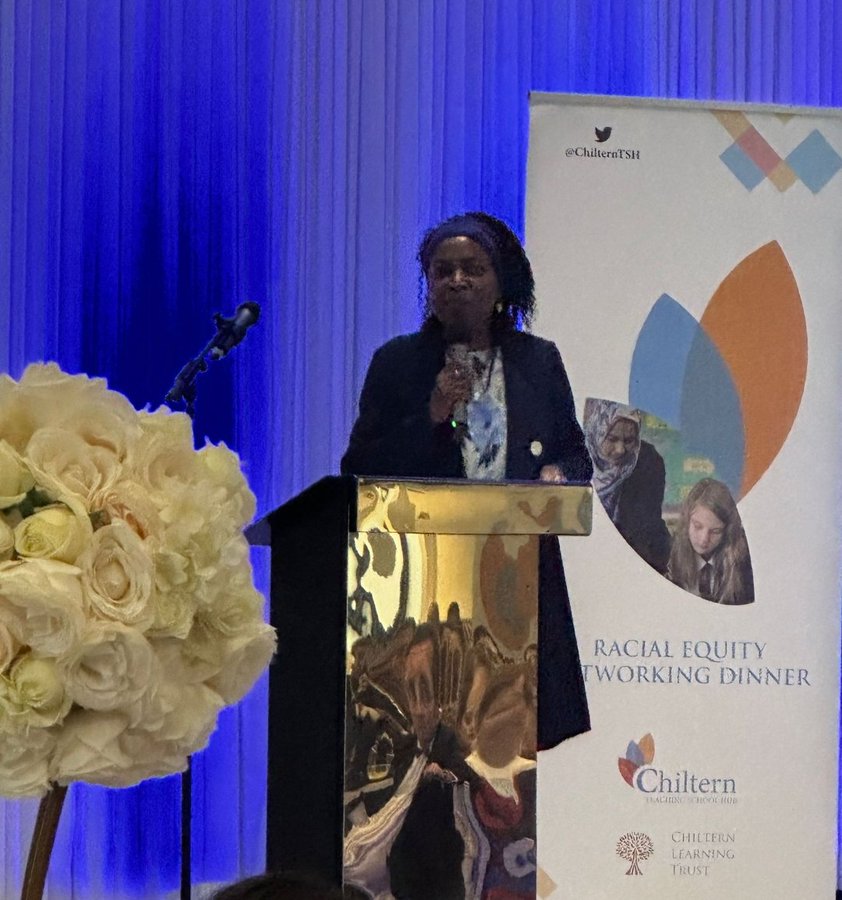
Thank you Dr Evans. You are a true inspiration.
Thank you also to Sufian and the Chiltern Teaching School, not just for this event, but for everything you do in working towards racial equity. I’m proud to be in your network and walk by your side.
Leave a Reply