Welcome to MH Coaching and Consultancy

Category: Goals

From Vision to Vulnerability: What are the Qualities of a Great Leader?

What makes a great leader? That’s quite a question, and one that doesn’t have a simple answer, this is highly subjective, views differ, as do contexts. As CEO of Forum Strategy, Alice Gregson explained as I spoke to her recently on Teachers Talk Radio, context is important, and leadership traits, behaviours and skills are not fixed, we are all continually growing and learning as humans and leaders. There are, however, key qualities that make leaders more successful, and that was something I wanted to consider further.  

Why is Leadership Important?

There is strong evidence to show that that effective school leadership is an important condition for successful school improvement. (Day et al 2020). Whilst other factors are also important, and great leadership alone may not be able to change a school, research tells us that leadership is a significant factor in the success of the organisation.

In the business world too, leadership is essential to an organisation’s success. Writing in the Harvard Business School online in 2023, Michael Boyle explains that good leadership motivates team members, 79% of employees will quit due to a lack of appreciation, 69% of employees say they would work harder if they felt their efforts were better recognized by leaders.

Employees who are made to feel that they’re appreciated, and their work is recognized are more engaged and can help the company achieve its goals. Recognizing and appreciating employees is the job of management and other leaders in the organization.

Leaders play a key role in setting direction, they also play a key role in defining the culture of an organisation. Both of have a significant impact on the organisation and its potential success, as well as the lives and wellbeing of those connected with the organisation.

What Makes a Great Leader?

The notion of a great leader is subjective, it is also context dependant, as Alice Gregson explained when I spoke to her. There are varying views on great leadership qualities, The research cited highlights this, much of it is based on opinions of leaders themselves or employees, it may also be linked to retention within the organisation. What defines effective leadership on one context, for example a very challenging and high-pressure context, may differ from another context. Leadership skills, behaviours and traits may also need to change over time. This is important to note.

So, whilst there is no single answer to the question “what makes a great leader”, noting subjectivity, context and that traits, skills and qualities are not fixed, there are some common themes.  Great leaders come in many different forms and are not all the same, there are, however some common skills, behaviours, traits and qualities that I will describe here, I would love to hear what you think too.

Back in 2013, author Jeremy Sutcliffe interviewed a selection of UK’s headteachers to find out what they believed makes a good leader. His book, 8 Qualities of Successful School Leaders: the desert island challenge, published by Bloomsbury sought to answer the question “What are the qualities needed to be a successful school leader?” Based on the BBC radio programme Desert Island Discs, a range of school leaders were asked to imagine they were cast adrift on a desert island with a school full of children in desperate need of a great headteacher.

He asked what eight qualities they would take with them to run the desert island school?

This book is 11 years old now and a lot has changed in the world, but I think the 8 qualities highlighted are still relevant. The 8 qualities listed as coming up most often are vision, courage, passion, emotional intelligence, judgement, resilience, persuasion and curiosity.

More recent reviews of research show similar findings. In a review of a wide range of research into school leadership, entitled “Successful School Leadership”  Day, Sammons & Gorgen, describe professional and policy derived standards and then go on to focus on successful principals, models and practice.

They conclude that there two main models of successful leadership practices:

  • transformational leadership practices,
  • pedagogical/instructional leadership practices,

They also focus on the theory and practices of distributed leadership.

They highlight the important transformational leadership practices of building vision and setting strategic direction, understanding and developing people, (Re)designing the organisation (establishing work conditions which make the most of the motivations, commitments and capacities of employees) and managing the teaching and learning programme by staffing appropriately, providing teaching support, monitoring and buffering staff against distractions from their work.

They go on to describe pedagogical leadership and how this emphasises the importance of establishing clear educational goals, planning the curriculum and evaluating teachers and teaching. It sees the leader’s prime focus as responsible for promoting better outcomes for students, emphasising the importance of teaching and learning and enhancing their quality.

Day et al (2020) describe that whilst distributed leadership is not a ‘model’ in itself, but rather a concept and set of practices, it works hand in hand with transformational and instructional models of leadership. Distributed leadership involves sharing leadership responsibilities and decision making. A  consensus has emerged among leadership researchers that school leadership can have an especially positive influence on school and student outcomes when it is distributed. Studies show that teacher and student morale levels improved where teachers felt more included and involved in decision-making related to the process of school development and change.

Looking through a lens of teacher retention, research by the EEF (Nguyen et al, 2023) draw on a synthesis of evidence from a group of 45 relevant studies, the report highlights three main leadership approaches or areas of leadership behaviour and qualities as beneficial to teacher retention.

First is prioritising teacher development, providing instructional support; professional development opportunities; and cultivating leadership potential in teachers. Secondly, building relational trust, building trusting relationships, individualised consideration for teachers and compassionate leadership characterised as being caring, encouraging, and listening. Thirdly, improving working conditions by supporting professional autonomy, promoting collegiality and inclusive participation in decision-making, shared power and responsibility, reciprocal support, mutual trust, and cooperation, developing an equitable support and recognition system, establishing an effective communication structure and supporting teachers with behaviour of students.

Speaking to Alice Gregson, CEO of Forum Strategy who works with senior leaders in Education, including CEOs of MATs, some really interesting leadership traits were highlighted and discussed.

First, Alice emphasized the subjective nature of the question and also the importance of context. She also emphasized that traits and skills are not fixed. Alice also made a distinction between the “what we have” – or skills of leaders and the “who we are” – or behaviours and traits of leaders. Starting with skills, Alice emphasized the importance of strategic thinking, of having the ability to turn a vision into a workable plan. Next she described the need to be able to articulate purpose clearly and well. Alice also told us that great leaders are also accountable for their decisions, build strong cultures, based on trust and respect, are strong relationship developers, within the organisation and beyond and are excellent communicators, able to tailor their style to a range of audiences, engaging with people and developing trust. She also described the skill of balancing risk, of being able to take some risk whilst mitigating potential impacts.

Alice went on to describe the behaviours and traits of great leaders, of compassion, inclusivity, collaboration, curiosity, courage, being humble and bravery. Next, we discussed vulnerability, that for her, this is about opening up, sharing our stories & facing what might be uncomfortable. It’s about letting people in and showing what makes us who we are. Sometimes vulnerability includes our weaknesses and fears, but it might also include things such as our beliefs, feelings, desires, aspirations and experiences. Vulnerability as a leader is about letting people know you – the full you. It’s so powerful because it gives us points of real connection. I loved the quote Alice shared, from Sir Steve Lancashire, “‘Me being me means you can be you.” If we can celebrate our authentic selves as leaders, we send such a powerful message to those in our organisation. Great leaders model vulnerability, sharing who they are as people, not just as professionals, building trust and creating connection.

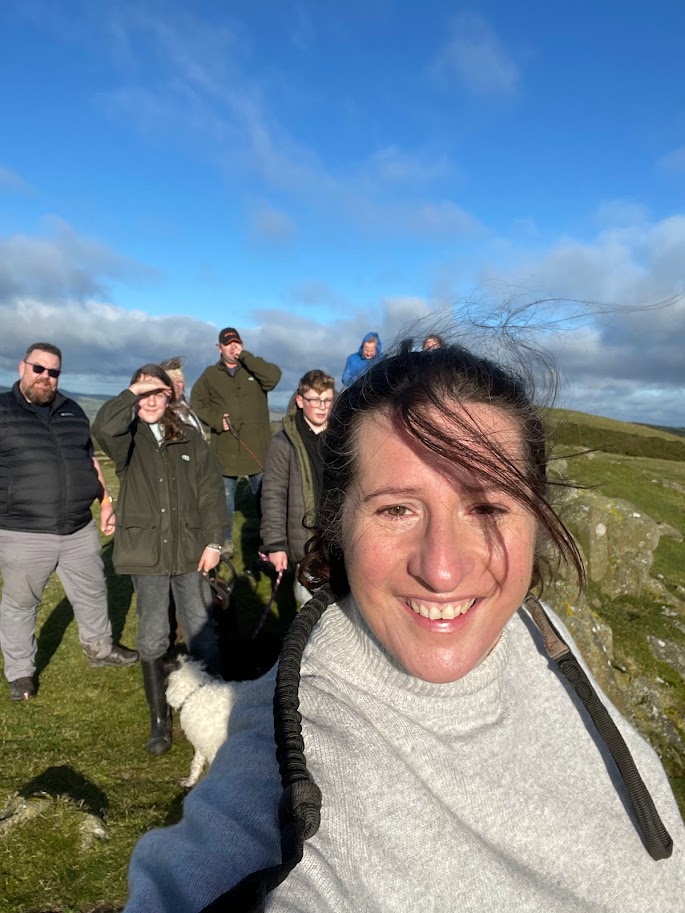
Here’s me being me, up a hill in Wales, with friends in January this year.
Great Leaders – A Conclusion

Reflecting on all of this, the research, the conversation, and my good fortune to work alongside and for some great leaders, for me, great leadership is made up of a range of skills and behaviours. Many of which are listed here already. There is no single definition and as we have seen, context is key. For me, great leaders are self-aware enough to make sure that they know their own current strengths and weaknesses, and that they have the courage to build teams around them that compliment these, with diversity, strength and challenge within those teams. A commitment to growth, learning and development of self is also crucial in my opinion.

Communication is key, with listening, curiosity and hearing others as a key part of this. The ability to build relationships, to care, have empathy and to be vulnerable, sharing of yourself as a human, creating connection, relationships and building trust within organisations, where others can feel psychologically safe and can find that risk balance point is crucial too.

A change I have noticed has been increased recognition of vulnerability, of sharing who we are as humans, letting people know who you are. Leaders modelling this, introducing ourselves and delving into who we are as people, who we are, not just our professional role. I also note resilience taking a different position, no longer just pushing through, as leaders however hard and at whatever cost, but noticing this and acknowledging when things are tough. I think this links to vulnerability too, and important for leaders to model.

As a coach, the idea that these skills, behaviours, traits and qualities are not fixed is also fascinating. We often have strong beliefs about what we can and can’t do, who we are and how we are, which may be based on messages we have received through our lives, and past experiences. This brings me onto an idea for a future topic, “Great leaders, born or made?”  What do you think?

I’d love to hear what qualities you think great leaders have – and do you agree that we all have the potential to be great leaders? Are great leaders born or made?

References

Boyles, M., (2023) Organisational Leadership, What it is and why it’s important. Havard Business School Online

Brighouse, T.M. (2007), How Successful Headteachers Survive and Thrive, R.M. Publications.

Day, C., Sammons, P. and Gorgen, K. (2020) Successful School Leadership, Education Development Trust.

DfE (2015 and 2020), National Standards of Excellence for Headteachers.

Fullan, M (2019), Nuance, Why Some Leaders Succeed and Other Fail, Jossey Bass, San Francisco.

Kizier, K (2023) 35+ Powerful leadership statistics: Things all aspiring leaders should know. Zippia: The |Career expert.

Nguyen, D.,  See, B.H., Brown,C.,  Kokotsaki, D. (2023) Reviewing the evidence base on school leadership, culture, climate and structure for teacher retention. Rapid Evidence Assessment  (Education Endowment Fund)

Woods, D (2020) The Nine Pillars of Great Leadership

A Career of Many Jobs

A much-publicised DfE survey found that 40,000 teachers left teaching before retirement in the 2021-2022 academic year. This represents 9% of the workforce and I was one of them.

After 26 years as a teacher and school leader and presuming that I would be a teacher until retirement at 67, leaving was a huge step for me. I had, however become increasingly aware that there are more and more people changing jobs multiple times, and whose careers had made significant twists and turns. They, like me had also found that experience gathered along the way was invaluable in subsequent roles, I certainly know that the experience my career has brough it very relevant to the work I do now and provides knowledge, expertise and understanding highly relevant in coaching and consulting. Making the change has been great for me, but an important first step was the realisation that a job is no longer for life.

Thinking back to the statistics around teachers leaving, I was prompted to look again at the 40,000 leavers (9%) statistic. I wanted to se how this compared to other professions, I also wanted to look at how transferable skills are relevant and valuable and finally to consider what someone considering a change in direction should bear in mind and how they can be supported in their decision making.

Leaving the Profession – is it Just Teaching?

There is no doubt that teaching is a tough job and that teachers and school leaders, particularly in the last few years faced significant challenges. Workload, the political landscape, pay, performance targets, behaviour or pupils and relationships with parents and high stakes accountability form Ofsted are real concerns for those in the teaching profession and frequently, and quite understandably cited as reasons for leaving. But are teachers the only professionals looking to move on? It would seem not.

Career change has become increasingly common in recent years, and not just in education. Across the UK and indeed globally, a traditional “job for life” from school, college or university followed until retirement is no longer the norm and hasn’t been for some time.

In 2022. Open Study College, in a survey of 2000 UK workers found that those aged 25-34 have, on average, already worked in six different roles whilst older adults approaching retirement, had only worked in an average of seven jobs during their entire working life.

The survey found the most common reason behind changing jobs was the desire for a higher wage, followed by moving for better career progression and finding work in a new location. Others also opted to change jobs to either take on a bigger challenge, move to something less stressful, or go somewhere with better training opportunities.

When I was at university, the other career I considered was accountancy, which prompted me to investigate career change statistics for those in this profession. In June 2023, The Account Online published an article stating that over a third of accountants of 250 surveyed were considering leaving the profession in the next 5 years. Reasons cited for planning to leave included poor work life balance, particularly in the 25 to 44 age bracket.  Whilst 90% overall said they enjoy their role, and 56% said they were prompted to want to leave due to spending too much time completing manual tasks.

In 2022, Alight, a major company supporting companies in payroll & HR carried out an “International workforce and wellbeing mindset study”. They surveyed 10,000 UK employees working full or part time in companies with more than 100 employees. Respondents represented multiple age groups, across a broad array of industries and in a variety of work setups (including fully remote, in the office and hybrids of the two). Roughly half of UK employees (49%) said their employee experience “met their expectations” while another 25% say it is below their expectations and only 26% say it exceeded expectations. More than one in (27%) said they dread going to work or starting their workday and only 21% say they are likely to recommend their company as an employer. According to this study, only 35% of UK employees rate their professional or career wellbeing highly and almost three-quarters (71%) reported suffering from moderate to high levels of stress.

Significant figures here showing dissatisfaction and stress evident through these surveys across a variety of industries. No surprise therefore that many are seeking change of career.

Changing Jobs Made Easier

The study by Alight also showed that people were able to start to plan for a future career and that other paths are also emerging for those planning a change. 28% of those polled said they have a “side hustle”, such as an emerging coaching business, sales income or other small money-making enterprise, with 86% saying this side venture is completely different to their current career. One in four of those with a job on the side began doing it to build up additional skills and contacts, which they can then hopefully turn into a job.

A survey of 2,000 professionals by Robert Walters HR found many people are ‘career cushioning’, which refers to someone setting the groundwork to leave a role because of uneasiness about their current position. This survey showed more than a third (37%) of workers are taking steps to look for a new job. When asked what they had done in preparation to move, two thirds (66 %) said they had monitored the job market and almost half (43 per cent) had updated their CVs, while a third (33 %) were actively applying for jobs. The top reasons for preparing to move were: lack of job security (72 %); turbulent economic conditions (55 %); internal changes within their business (45 %); and low job satisfaction (33 %).

The Open College research showed that people were more able to change jobs due to a wide variety of options available to support people switching careers. For example, it is now easier to access training through distance learning, meaning people can retrain and change their career path even while they are already in a full-time role.

So, it seems that there are many changes across careers going on and that this is due to challenging conditions in roles as well as the availability of options to train.

For those going into teaching, options are very varied. These include apprenticeships and other ways to work and be paid during training. Child care costs can also be supported, which is a huge benefit. Financial support in the form of a parent learning allowance & a childcare grant which covers 85% cost and up to £323 for someone with two children.

Transferable Skills

So, in this world where careers include many jobs – what skills do we need? The World Economic forum “Future of Jobs report” May 2023 is a fascinating read. It includes data from 803 companies, collectively employing more than 11.3 million workers across 27 industry clusters and 45 economies from all world regions.

The fastest-growing roles relative to their size today are driven by technology, digitalization, and sustainability. Most of the fastest growing roles are technology related roles with AI and Machine Learning Specialists top the list of fast-growing jobs, followed by Sustainability Specialists, Business Intelligence Analysts and Information Security Analysts. Renewable Energy Engineers, and Solar Energy Installation and System Engineers are relatively fast-growing roles, as economies shift towards renewable energy.

Looking to the future – over the next 10 to 15 years, large-scale job growth is expected in education, agriculture and digital commerce and trade. Jobs in the Education industry are expected to grow by about 10%, leading to 3 million additional jobs for Vocational Education Teachers and University and Higher education Teachers. Jobs for agricultural professionals, especially Agricultural Equipment Operators, are expected to see an increase of around 30%, leading to an additional 3 million jobs. Growth is forecast in approximately 4 million digitally enabled roles, such as E-Commerce Specialists, Digital Transformation Specialists, and Digital Marketing and Strategy Specialists.

As for the skills that will be needed and are values by companies, the top 10 are:

  • Analytical Thinking (a cognitive skill)
  • Creative thinking (another cognitive skill),
  • Resilience (a self-efficacy skill)
  • Flexibility, and agility (self-efficacy skills)
  • motivation and self-awareness (further self-efficacy skills)
  • Curiosity and lifelong learning. (a further self-efficacy skill)
  • Dependability and attention to detail
  • Technological literacy
  • Empathy and active listening and leadership and social influence (attitudes relating to working with others)
  • Quality control.

Quality control is an example of a skill particularly important to a limited cohort of businesses. Interestingly, management skills, engagement skills, technology skills, ethics and physical abilities are generally considered to be less important than cognition, self-efficacy, and working with others. The whole nature of management is said to be changing, with the growth of coaching styles of leadership.

Should I Stay or Should I go?

Know that you are not alone if you are considering a change or job. A career of many jobs is very much the norm. If you’re a deciding what to do, you may want to start by asking if it is possible for you to stay in your current role and to thrive. Are there any changes you can make in your current role, or that you can be supported with that will enable you to return to enjoying it – presuming you once did, and that there was a good reason for your choice to pursue that role in the first place.

How can I stay and thrive?

What would you need to change? How could this be done? If you’re saying its not possible, what might you be assuming? Have a look at the expectations. Are these real or perceived? Are they your own, extremely high expectations? How do you feel about this?

What about boundaries? Could you set some working boundaries if work/life balance is your issue? Key phrases, like “Don’t let Monday steal your Sunday” and looking at your own mindset may help.

Is it time for a Change?

Apart from asking yourself these questions, it can be useful top talk to someone independent, outside work. Someone neutral, so not a family member who will often, through very best intentions give advice that comes from a place of care but may come with some assumptions as well as being as they see you, through their lens. They may see your current role as part of your identity. They may also worry about you.

Someone totally independent, maybe someone you know from a while back or separate to your work. Alternatively, a coach can help you by listening closely to what you are (and maybe aren’t) saying, by noticing any body language and by asking some inciteful questions that will spark deeper thinking and discovery.

Next Steps

The brilliant part of many of our jobs, and this is particularly true of teaching, is that many professionals have such a superb range of transferable skills. Anyone in teaching will, for example, recognise many of the skills listed in the top 10 above in themselves. These are great transferable skills that are learned and enhanced in teaching, making teaching a valuable profession in my opinion, whilst teaching is rewarding in its own sake, bringing a strong sense of purpose, it also provides growth in a vast range of transferrable skills desired by a range of industries.

Finding what you want to do can be exciting and terrifying. Have a think about the type of work you want to do. How much structure do you like? How much responsibility?

Go back and ask, what is your dream job?

Ultimately, you are looking for the balance between four things:

  • What you love and what brings you joy,
  • What the world needs,
  • What you’re good at and
  • what you can earn from.

If a job scores highly in one and not at all in the others, you are unlikely to be satisfied. It can be a trade-off, something very well paid but brings you no joy. Similarly, loving a role but earning little or nothing may not be an option. It can be helpful to decide where you sit with each of these and where you want the balance to be.

Again, that conversation, with yourself and someone who offers no judgement can be helpful.

So, what will you do? Is it time for a change? I’d love to hear from you.

New Year, New Goals?

I have always been somewhat on on the fence when it comes to goals. I know some people found the idea of setting goals, particularly at New Year quite jarring. Looking back, sometimes I have found myself to be in a good place having not set goals. other times, I think I have probably missed opportunities.

I wrote about goals in one of my earlier blogs back in April, following on from a previous post about values.

What I have definitely learned is that the most important thing about goals is that if you are going to set goals, it is vital that you make sure they are the right goals for you. Looking back, where things haven’t gone well or I have found myself to be unhappy, I realise now that I had been pursuing the wrong goals. These were often goals that I thought I ought to have, or that were expected of me (or so I thought). Often these goals were not in line with my values, or my purpose, or were just not right for me at the time.

It may take some time to find the right goals, and self coaching or speaking to a coach can help with this. There is quite a body of research about goals, and evidence strongly points towards the importance of goal setting. Where I have set goals that were right for me, in line with my values and purpose, achievable and yet challenging, I have found them helpful.

I also firmly believe in starting by celebrating wins and this forms an important part of goal setting for me now. For me, 2024 will be about building on some of these achievements, as well as making some changes.

Here are some useful questions to think about when setting goals, and what better time that as we approach a New Year?

  • What matters to you? What really matters, not what you think should matter, or others want to matter.
  • What has gone well in 2023? What have you achieved and what has brought you joy?
  • How do you want to feel by the end of 2024?
  • What do you want to keep in 2024?
  • What do you want to be different in 2024?
  • What do you want to do in 2024 and what do you want to achieve in 2024?
  • What might get in your way? What can you do to keep on track? Who can help you?

Now imagine you are doing the things you want to do in 2024 and/or have achieved the things you want to achieve. How does that feel? Imagine you’re looking back at the end of the year. Are you in line with your purpose and values? What advice would you give yourself now?

What about you? Goals or go with the flow? What do you want 2024 to bring for you?

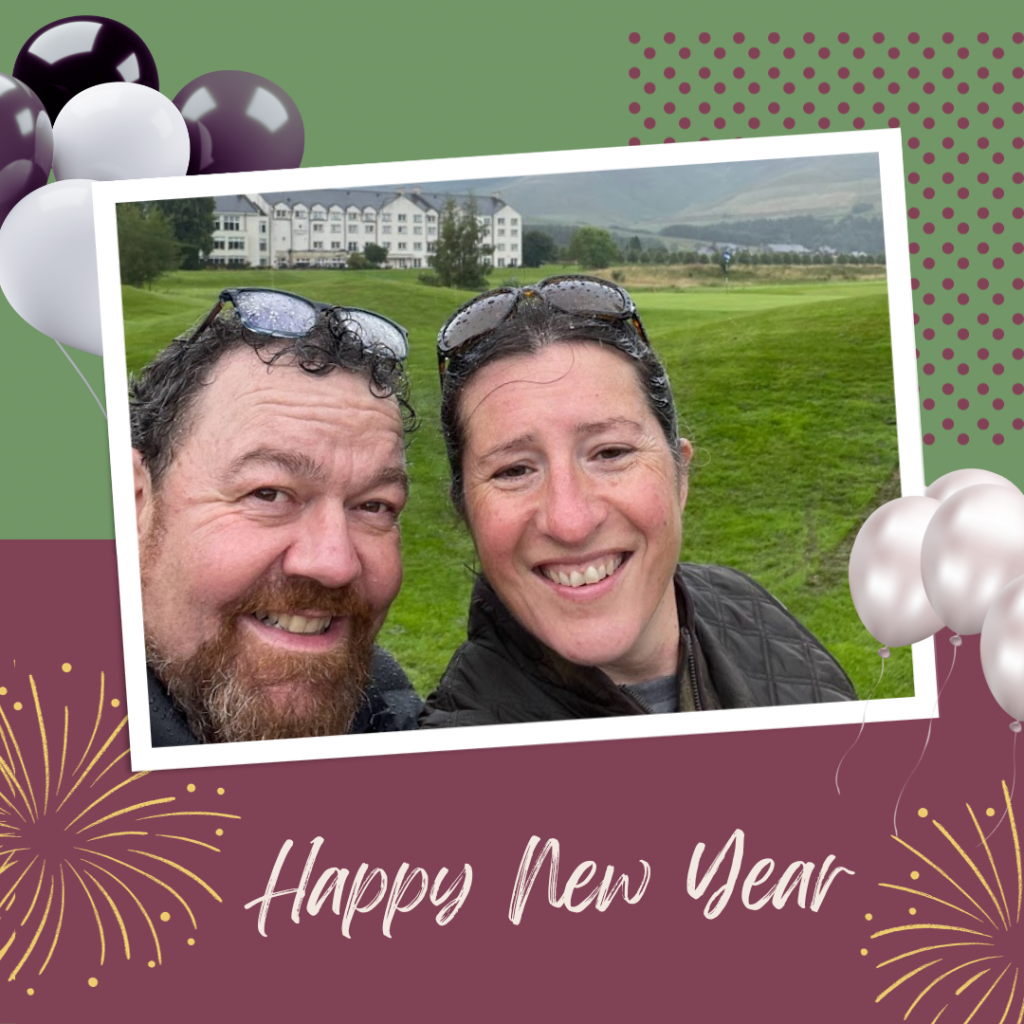
Happy New Year, I wish you health, happiness and everything you want 2024 to bring.

2023: Celebrating the Wins

Coming towards the end of 2023, I have started to see several posts about setting goals for the forthcoming year. I have set goals before or even New Years Resolutions and achieved with varying rates of success. Completing “Couch to 5K” a few years ago was probably one of the more successful, I still run, which I had never done before January 1st, 2020. Other goals or resolutions have been less effective and fallen by the wayside.

This year, I wanted to think differently, so I have been looking to the areas of positive psychology and neuroscience, prompted by learning from the coach training I completed a while back, for some guidance, which has brought an awareness of the benefits of celebrating wins first before thinking about goals. Previously, goal setting, for me has involved focussing on what has gone wrong or somewhere I believe I am failing.

Negativity Bias

Does this sound familiar? Research shows that, we tend to ignore our personal achievements and dwell on our shortcomings instead. In part this is the way we are built, what psychologists call ‘negativity bias’. Studies show we’re more likely to focus on the things we haven’t achieved than take stock of what we have accomplished.

Our negativity bias means we tend to pay more attention to negative events than positive ones and often make decisions based on negative rather than positive information. This is likely to be a result of evolution. Earlier in human history, paying attention to bad, dangerous, and negative threats in the world was literally a matter of life and death. Those who were more attuned to danger and who paid more attention to the bad things around them were more likely to survive. This meant they were also more likely to hand down the genes that made them more attentive to danger.

The evolutionary perspective suggests that this tendency to dwell on the negative more than the positive is simply one way the brain tries to keep us safe. Whilst this may still serve a purpose, it is something that can also hold us back and ultimately be damaging. An awareness of it and developing alternative thought patters is therefore important.

Why Focus on the Wins?

Spending time focussing on the positives, our achievements, wins, however, small makes us feel better and makes us more likely to achieve further success. Our brain is a reward-loving machine. At the centre of this is dopamine, a neurotransmitter associated with pleasure, reward, and motivation. When we achieve a goal or receive positive feedback (even from ourselves), causes the release of dopamine, which boosts our mood, motivation and attention. It also signals us to keep doing the activity again and again. Missing this celebration, therefore, means that we not only miss out on the feelgood element, but also the prompt to support future achievement. If we consistently undermine or overlook our successes, we can inadvertently starve our brain of this positive reinforcement. This can lead to negative neural pathways and foster Imposter Syndrome or other forms of self-doubt.

If you acknowledge your skills and celebrate your achievements, you’ll begin to act in a way that embodies confidence and competence. If you focus on failure, you are more likely to doubt yourself which will make you less likely to succeed. Recognizing your wins, no matter how minor leads to improved performance, increased motivation, and a sense of well-being. This has been studied closely, multiple studies have revealed that individuals who take the time to acknowledge and celebrate their achievements exhibit higher levels of self-esteem, reduced anxiety, and enhanced job performance. One study indicated that participants who reflected on past successes before embarking on a task were more resilient and performed better than those who didn’t.

Embracing Success can also be a challenge if we have been brought up to be modest. We may (I know I do) feel uncomfortable about acknowledging achievements publicly. Acknowledging achievements doesn’t, however, necessarily mean flaunting them. It’s about internal validation. I did want to share some thought, partly for my own recognition, and, hopefully, to help you look for your wins too.

Reflecting on My Wins

2023 has been my first full year of running my own business. Whilst I have also had a school-based role for part of the time too, this has been a year of learning about business. Setting up my accounts, thinking about pricing and meeting an accountant to organise how I pay myself and ensure tax is paid properly has been an accomplishment.

Growth and expertise are two of my core values, this year I have been pleased to complete further coach training, so I can now be confident in coaching teams as well as individuals, I passed the new coaching competency exam, and having completed 500 hours of coaching (and the previous 125 hours of coach training and 10 hours of mentor coaching) became accredited at the higher level of PCC (Professional Certified Coach).

Connection is another core value of mine, and the relationships I have built with the school leaders I have coached, supported and the teachers I have mentored have been positive. Their feedback has been super, with them commenting on how the space I provide enables them to think and grow, and how the support and coaching has benefitted their wellbeing. Again, with wellness as one of my core values too, seeing the wellbeing benefits for school leaders and teachers has been great.

My overall purpose professionally is to support school leaders and teachers, in whatever I am doing. Indirectly, by providing governor training, which has been well received and from which feedback shows positive impact has also been a win.

Additionally, in a totally random move, I joined Teachers Talk Radio as a host this year, my fortnightly show has begun to attract downloads and feedback has been positive. I have also enjoyed this new experience, growth and learning.

In terms of achieving personal goals this year, I have been pleased to be able to spend some more time with my husband, Richard, to support him with his travelling role and be more present for him. My Dad too, has benefited from us having some more time together, and I have been pleased to be able to support him with shopping and other appointments as well as regular trips out for coffee and lunch. It was also great to have organised a reunion with friends from university in November, I can’t believe 30 years since we first met, and enjoying weekend back in Birmingham this year was great. Certainly a highlight to look back on.

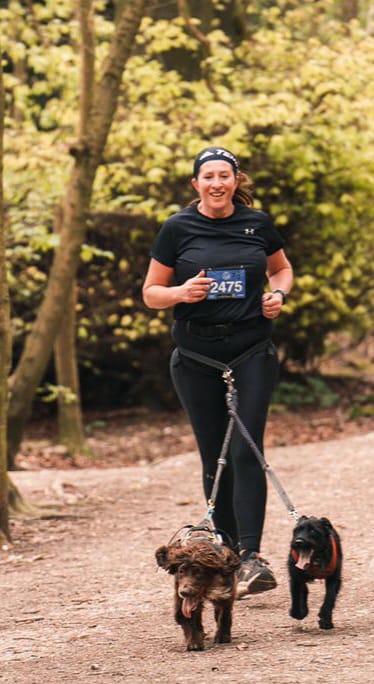
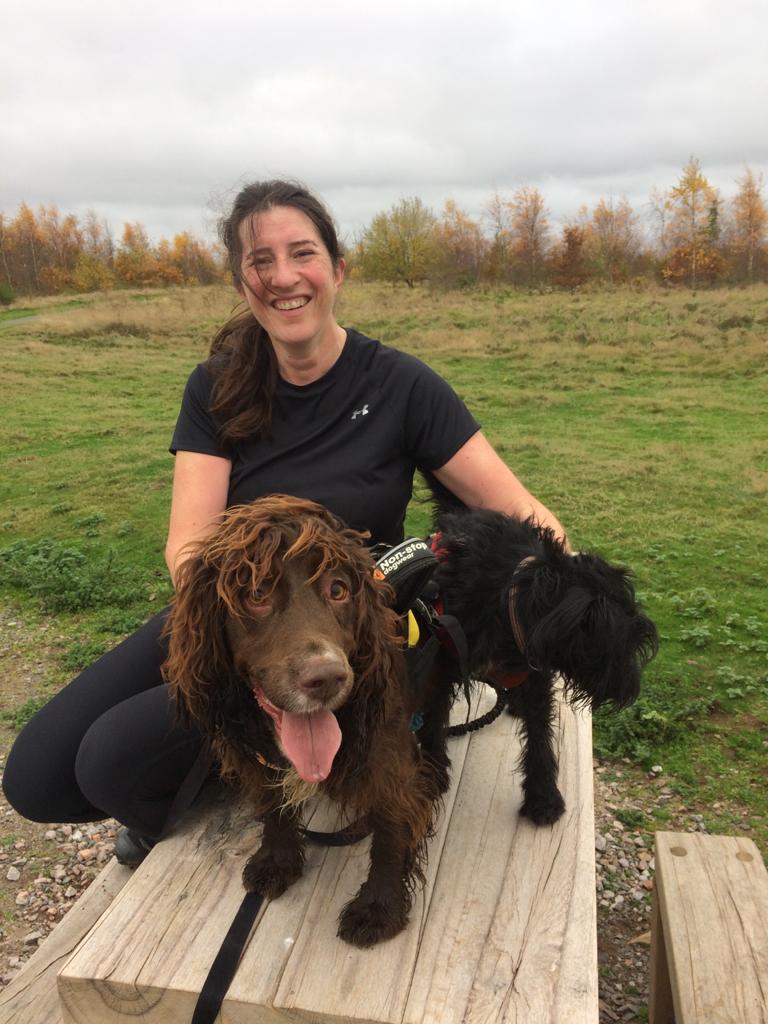
I pleased to have kept up with running, especially with the dogs and have joined a gym and started Pilates. I’ve enjoyed some day light horse rides and attended a dressage competition. I have also embraced my creativity, beginning to master pyrography and Dremel engraving and producing some items for home and for gifts. All small wins, but important for wellness and creativity.

Next Steps

The process of writing these has brought a real wellbeing benefit. I have also been inspired to think of next steps and new goals, building on the success here. I am careful not to let this take away from my enjoyment of the simple accomplishments – and sometimes a clear “that’s good enough” means we don’t need to take something further – just enjoy the achievement. It has, however, helped me to begin to clarify some goals.

How to Embrace Success

The process of listing and writing a little about each win has inspired some new goals for 2024 – so look out for those later this week. First, however, I want to focus on consolidating the important step of embracing success. Here are the steps to follow if you want to gain the benefits from embracing success too.

First, acknowledge and make a habit of writing out your accomplishments, no matter how small. Some prompts that may help are:

  • How much have you changed in the last year? And in what ways?
    • What challenges have you faced and what did they teach you?
    • And what are the learnings you are taking into this new year?
    • What are you most proud to have achieved?

Next, share your achievements. You can talk to friends, mentors, colleagues or a coach. Talking out loud can help and their feedback may be helpful too, but remember, this is just one perspective.

When someone offers praise, accept it gracefully instead of deflecting or undermining compliments. You can try a simple “Thank you” as a response.

Why You Should Share Your Wins

Celebrating our achievements inspires others to do the same, creating a ripple effect. If we can encourage and uplift one another, we can drive collective growth and innovation.

What have been your accomplishments this year?

Even the smallest wins can cause the dopamine release and then the prompt to repeat these, thus building future success. Sharing your wins will also inspire others to do the same.

Running: Reflections on Values, Goals and Barriers

  • “I can’t run”
  • “I don’t run”
  • “Running is something I could never enjoy”
  • “I don’t see the point of running”

These are all things I have said, many times. I thought these statements were true, and to me, at a point in time, they have all been true.

At school, I hated PE. Pretty much everything about it, I hated the changing rooms, I dreaded any game where I had to catch a ball (poor hand eye co-ordination and being short sighted resulted in almost certain failure), I remember feeling sick half way round a cross country run (the few occasions I took part before working out a plan for total avoidance). As soon as I could stop I did and never went back. Horse riding and looking after horses has been my “exercise” – never running – that was always avoided.

With very few exceptions, I probably had never run any sort of distance until the age of about 45. Around my 45th birthday I decided to lose some weight and to get fitter, so followed an advert for a local trainer who was running some exercise groups. This involved a supportive group of women, a great trainer and was held in a golf range. There was a variety of exercises, weights, skipping (something else I never thought I would be able to do) and a little bit of running – just short distances. I lost weight, got into exercising consistently and then, in January 2020 I started the couch to 5K. After 9 weeks, I finished it and did my first Park Run. Shortly after, we went into lockdown and running started to bring yet more benefits.

Running and Limiting Beliefs

Running has taught me that just because we think we can’t do something, it doesn’t mean we never will. I am not a fast runner, but I have found I can actually run reasonably well. I can see that we can probably do many of the things we tell ourselves we can’t. Looking back now at all of the voices telling me I would never be a runner – probably most of them mine, all I needed was a plan, a way to break it down into manageable chunks and to find a place to start. Ultimately, I just needed to believe.

Running and Having a Plan

Couch to 5K is a brilliant plan. It breaks down your introduction to running into manageable sessions, starting with just running for 60 seconds and then resting – before repeating. It is just 30 minutes too, including warm up and cool down. The commentary is encouraging and you always know when you are half way through. This builds up over the course of weeks, one week you run for 20 minutes without a break – this is the first time I felt like a runner. Eventually you run for 30 minutes, at first, this didn’t quite cover 5K, so I and then I built up the running time until I ran 5K. Soon I chieved 5K within 30 minutes.

Running and Values

Wellness is one of my core values, and running reinforces this, improving my physical fitness (as well as weight, improved cardio vascular fitness is a bonus). More notably, however, is the “headspace” running provides. The feeling after a run is amazing – stressbusting at its best. Connection is another of my values, and whilst connection with people takes up a lot of my days, running is all about time with my dogs and my connection with them. I also enjoy running with people too.

Running and Goals

I have also learned a lot about goal setting. My first goal was to run 5k. This was a good goal for me, realistic, measurable and really got me into running. Then I worked out a plan to increase to 10k, again, positive in that longer runs provide good thinking space for me, a time to really relax. The dogs also prefer this level of exercise.

For a time, I got quite caught up in wanting to run faster, I realise now, that it is important to check in with your goals. I had decided I wanted to run a faster mins per KM speed. I started some training on this, but after some time I was feeling frustrated and had avoided some runs. I had also picked up a couple of aches and pains in my knees. I realised that it was about my times, and I gave it some thought – why do I run? For fitness and wellness. I realised that speed isn’t such a benefit for this – but consistency and remaining injury free was. I also realised that I had fallen into a bit of a trap with Strava, which is good for keeping track, but had led me into “comparisonitis”. Other Strava contacts were running faster than me, I needed to give this some thought. Should I keep using Strava? I decided I should as I like to look back at the records. I also like the community – and as long as I am aware to keep the comparisons at bay, this is a benefit.

If my goals were to win races, be the fastest for my age group, it would be different. But knowing that my reasons for running are to keep fit, to enjoy the physical and mental benefits as well as to exercise the dogs, I decided that running 3 times per week – even if just a short run, was a better goal for me. Consistency and commitment are important to me.

Running and Resilience

Will I ever take that next step and test my stamina and resilience by trying an ultra or marathon? At this stage I don’t know – my goal is to keep running as part of my wellness – physical and emotional and resilience fits here.

Resilience will be my next topic.

What do you think? Any barriers you have overcome? Are you a runner?

Ever achieved something you thought was well outside your range?

I’d love to hear.

Barriers: What’s Blocking Your Way?

Have you ever reached a point where you feel “stuck” – there’s a barrier in the way, something stopping you from getting further, you’re not making the progress you want to make. You might have goals and just feel that you are not reaching them.

What are your barriers?

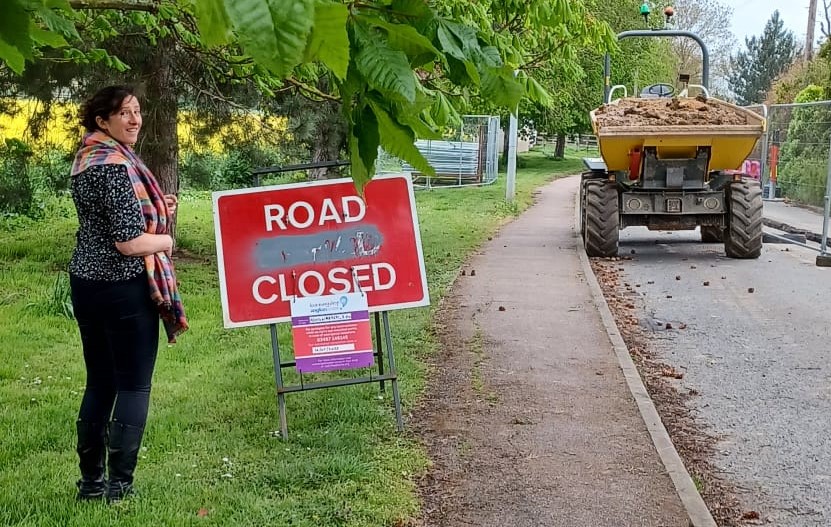
The roadblock pictured here is very real. Contractors, on behalf of Anglian Water have blocked the road for essential maintenance, (they also kindly agreed to take my picture.)

What about other blocks? How many of these are “real”, which are “perceived” and how can we get past them?

If you’re feeling stuck, it is worth giving some thought to the nature of your barriers. There are some common themes, many of which I recognise in my own experience and many have arisen in coaching conversations. Here are some of them. Which do you recognise?

Are you chasing the “right” goals?

In the past, I have found myself pursuing goals that I felt I ought to have. These goals may be linked to someone else’s idea of success – maybe a mentor or someone you look up to, or maybe society’s definition. Creating your own goals, based on your own values is important, and as they are so much more meaningful if truly in line with your values making them more achievable.

Are your behaving in line with your values?

Have a look at what you are doing in pursuit of your goals. Do your actions match your true values? Again, it is always worth looking closely at your values – the real ones – look back at the first blog post to check you are aware of these and can then make steps to live by them. Without this, you might be following rules and beliefs you picked up in your formative years, and may therefore end up acting in a way that isn’t in line with the person you truly want to be. If you are chasing a huge salary and accompanying consumerist lifestyle, whereas your values are much more around family and connection, this will present a barrier to you. Once you start to change the goals, link them more to your values, you will find less barriers.

Are you falling into the Advice trap?

Well meaning individuals can be quick to offer us advice. The problem with advice is that it is what works or worked for THEM, and may therefore not necessarily work for us. This advice might come from respected people, we may feel we ought to follow it, it might also sound good – but will often “feel” wrong.

An awareness of this, asking yourself how you feel about these ideas – and more of a coaching approach from those helping us can provide a better way forward.

Have you become disconnected from your “truth” and “purpose”?

Similar to your values, what are your true wants and needs. Are you working towards something that matches these, or what you think you ought to be working for? You might be adhering to outdated social norms, rather than your own truth – such as pay being more important than how a job makes you feel.

Acting in line with your purpose, knowing the impact you want to make will provide you with the golden intrinsic motivation, lacking this, with all of the extrinsic (pay, benefits, status) rewards, will leave you feeling blocked.

Are you staying in your comfort zone?

A bit like the safety barriers around the the roadworks, where a less safe but more direct option would be to keep the road open so we all drove precariously close to a huge hole but as long as we avoided the hole, would probably reach our destination with minimal delay, we often put up barriers to stop ourselves taking risk. Our brains’ first job is to keep us alive, so it is no surprise that our safety – including avoiding even small or perceived risks is something our brains will always try to do. Sticking with the safe and known option, avoiding changes are all comfort zone signs. Sometimes, the comfort zone may not actually be that comfortable, but we stick with it. Being a headteacher was this for me for quite some time, however hard it was, whatever feelings I had about it not being right for me any more, I had done it for a long time, and there was an element of wanting to stick with it. Of course, with this, there are the bits that were still good too. The whole ides of moving to freelance work, temporary contracts and this professional unknown was a huge step, but one I haven’t regretted for a second.

As I coach, one of my favourite questions is “What happens if you do nothing?” In most cases, this can lead to staying stuck. You can ask “what is the worst thing that can happen”? Stepping out of your comfort zone can then help you get a step closer to achieving your goals and feels good.

Do you believe in yourself?

Similar to staying in your comfort zone, lacking confidence can be a major barrier. Fear of failure is a major block for many people, without even being aware of it.

I love asking “What would you do if you knew you wouldn’t fail?”

Similarly, this can be about worrying what other people would think. This has been (and continues to be) a huge barrier for me. Making big decisions like leaving a job that I no longer wanted to do, my first thought – will people think I’m a failure? What will they think of me for giving up? As for speaking on Teacher talk Radio or writing a blog, parking these thoughts, separating my self worth from the feedback and seeing this as part of wider growth is a work in progress.

Barriers for Young People

Similarly, educators will be familiar with barriers faced by children and young people. How can we help them to get past these barriers? These days we are met with volumes of research from well known and well respected sources like the EEF (Education Endowment Fund). Again, these barriers are well known and the better we understand them as educators, the better we can tailor our approaches.

How can you get past the barriers?

An awareness of the barriers, maybe understanding that whilst they are real to you there is a way to shift them is helpful, our best chance of success also comes from creating a “reward state” in our thinking. Focusing on the desired outcomes, allowing ourselves some quiet space for good quality thinking is really helpful. Being solution focused and good thinking will be our next blog topic.

What about you?

I’m curious, has anything here sparked your thinking? What are your barriers and how are you getting past them, shifting them to the side, finding a good diversion or knocking them flat?

Goals: How do you really want to be?

Following on my post about values, the topic of goal felt like a logical next step.

I shall attempt to clarify what goal setting means, look at the benefits (and possible pitfalls) of goal setting, look at different views and research on goal setting and share my own reflections, based on my coach training and experience. My aim is to provide some information help you to set your own goals, and then work to achieve them.

What are goals?

Life goals are defined as the desired states that people seek to obtain, maintain or avoid (Nair, 2003). Goals may be short-term or longer term, and the longer term goals may be broken up into a number of short term goals. When you keep breaking goals down into their actionable parts, these parts are often called objectives. So, objectives are the actual actions you take to reach goals.

Broadly defined, goal-setting is the process of establishing clear and usable targets, or objectives, for learning.

(Moeller, Theiler, & Wu, 2012)

Because our lives include many different parts, life goals may be relationship goals, career goals, financial goals, and more.

Why set goals?

First, if we make a conscious decision to move in a particular direction it is more likely that we will actually achieve some travel that way – rather than purely relying on chance. The act of setting goals and the thought we put into crafting them directs our attention to the why, how, and what of our aspirations. As such, they give us something to focus on and impact positively on our motivation. In short, we are more likely to make decisions that benefit ourselves in the longer term if we are goal focussed.

Secondly, if and when we know where we want to be, we can assess where we are now, and essentially, we can chart our progress. This feedback helps us adjust what we do accordingly and when it’s rewarding feedback, our brains release dopamine, our “feel good” chemical (Treadway et al., 2012).

But there is much more to it than just goal setting. First, the nature of the goal is important, and secondly, the plan for getting there. For this blog post, I shall focus on the goal part.

Setting goals – The link to our values

When our goals are based on our values, they are meaningful to us. Meaning, purpose, and striving for something ‘bigger’ is a key element of in positive psychology. Dr. Martin Seligman developed the PERMA model suggesting there are five key elements required for a human to flourish positive emotion, engagement, positive relationships, meaning and accomplishment. The ‘M’ in Seligman’s PERMA model links to the value of goal setting.

The process of setting meaningful goals, in line with our values, is itself, a positive action. Working then to achieve these goals is then where we benefit even further.

Intrinsic and Extrinsic Goals

Kasser and Ryan (2001), defined two types of life goals, and explain that these relate to our wellbeing in different ways:

  1. Intrinsic goals relate to emotional intimacy, personal growth, and helping others. They are believed to be aligned with our needs as humans, reflecting our inherent desire for self-knowledge and more fulfilling relationships (Maslow, 1943).
  2. Extrinsic goals are more culturally defined and less about our nature as human beings, encompassing things like our physical appearance, social standing, status symbols, and wealth.

Research suggests that intrinsic life goals are related to greater happiness, self-actualization, vitality, and satisfaction with life, compared with extrinsic life goals (Ryan et al., 1999; Niemiec et al., 2009).

No surprise to see that some goals – the ones that the media and advertisers try to generate within us, such as a “perfect” (unobtainable) appearance, or a brand new Tesla (apologies to Tesla fans) won’t necessarily bring fulfilment and meaning.

It is worth, therefore, exploring your current goals and asking yourself what that is important to you. What will it mean to you to achieve that goal? What will it feel like to achieve that goal?

Evaluate your past and current goals

One goal I had from being about 10 years old was to own my own horse. Goal or obsession …. a possibly blurred line, this was something that drove my decision making, provided motivation and kept me focussed at key moments throughout school. I knew that I wanted the sort of job that would allow a good enough salary, and time to enable horse ownership. It is a goal I achieved, aged 27 and I have maintained ongoing horse ownership and developed this extending into further into lifestyle goals since then. To a certain extent, this is an extrinsic purchase based goal. It has also been one that I’m pleased I pursued. Here’s my first horse, Roland.

There are routes to horse ownership without university education, but this is something I also wanted, possibly naively, I thought teaching would fit the bill as a job. Once in teaching, then going for promotions like head of year made the finance more of a reality as did exam marking. The money I saved back in the late ’80s also gained interest and I never touched it through university (let’s not mention the student loan…) Admittedly, there was some good fortune here too – but that goal focus certainly made it a reality. Partly, this is a financial goal (they are not referred to as four legged money pits for nothing- the purchase is just the start), but also much more as any horse owner will tell you, this is a lifestyle.

Having my own horse is something that I am so thankful for, it is wonderful on so many levels, bringing wellbeing benefits at times I have needed the support. Such an escape from stress and a valuable connection with a beautiful animal.

Other goals have possibly not served me so well. At times I have also lacked focus and been unclear on my goals. There have been times when I have asked myself “Why am I even doing this?”. I now know where where I either lacked goals or my goals and actions were not aligned with my values, my wellbeing has been impacted. I have drifted into “what I think I ought to do” rather than conscious pursuit of meaningful, values driven goals. There is sometimes a place for this, but it is certainly something to be mindful of in my experience.

Reflecting back on professional choices, being a headteacher is a great job, such a privilege, but as I look back and I don’t specifically remember this being a clear goal. I’m not sure I’m really examined other leadership roles either. Similarly, having lived this role for over a decade, a rethink, a thorough examination of my values and new goals was long overdue. Setting new goals was helpful.

It is natural for our goals to change through our lives, either gradually, or more suddenly following major life events. For me, this has led me to set the following professional and personal goals:

To set up a business and lifestyle which enables me to be well and healthy whilst allowing time for what I consider most important. This means

  • Work flexibly – spend no more than 3 days per week away from home.
  • Work centred around my core values of connection, growth, wellness, creativity and expertise – coaching, mentoring and consultancy
  • Schedule time every week for riding and enjoying the horses, to be able to get out and compete in dressage (even just Prelim), so have time to practice and also have training.
  • Walk or run daily with the dogs.
  • Spend time with my husband and also with my dad – both full evenings and also day times.
  • Bring in income that covers my contribution to the bills, allows some saving and some spare.
  • To be competent, continue to develop expertise in my profession, through ongoing training. To reach PCC standard in coaching.
  • Creativity – also means trying new things. Challenging myself, being a biot scared.

Meaningful Goals – a reflection

It is useful to take stock at some points in our lives, step back and consider our values, and then think about what we want to happen next or what we want from our lives.

In the past, I have certainly set goals that I think I “ought” to have rather than those linked to my values or real needs. Within running – as a relatively new runner, just completing couch to 5K a couple of years back, my running goals started off being all about improving my 5k times, then getting to 10k, then improving that time and so on. It was only when I stopped to ask myself what I wanted from running (to get fitter, feel better, exercise the dogs) that I realised I actually just needed to be consistent. It is more important for me to stay injury free, to run consistently, not push the pace and set a goal of 3 runs per week. That is just me, you may be different. Yes, the personal bests are good to see, as are the Strava comments, but ultimately, getting the right goal is important.

I have also, in the past set work related goals that didn’t help me. These goals were not in line with my values, were more in the “ought to” category, and sometimes dictated by others rather than being my own goals.

Setting Goals

When setting goals, start by asking yourself what you want to be different. How do you want to feel? Jot down some notes, consider your thoughts about this and then come up with some potential goals. Look at your “draft goal” and ask yourself the following questions:

  • How realistic is your goal? Research indicates that the best goals are challenging, yet achievable (Locke & Latham, 2002).
  • Does your goal have a “positive approach” . Rather than setting negative, avoidance goals that have us working away from certain harmful, averse, or unpleasant outcomes, set yourself positive targets. Depending on whether they are intrinsic or extrinsic, therefore, they might be desirable, enjoyable, or ‘good’ in a deeper sense (Coats et al., 1996).
  • What might get in the way of you achieving your goal? How do you plan to overcome obstacles? Can you think of some alternative pathways?Be ready to fail along the way…but don’t let it stop you. It is worth accepting this inevitability first up and also be aware that resilience is a useful skill to develop throughout your journey.
  • How can you involve others? Family and friends can be invaluable. Not only do they help us generate ideas, but we may be able to reach out to them for support along the way.
  • How can you break your goals down? Celebrating wins along the way is the same as celebrating our progress towards a larger life goal. Amabile & Kramer, (2011) tell us the importance of celebrating success along the way.

Goals and Coaching

For me, coaching, building from the basis of a values focus, has then enabled me to define goals linked to my values. Exploring what is important to me, setting goals and then the really exciting part – working towards those goals, whether in mini steps, breaking into objectives or just diving straight in.

New coaches are often taught the “GROW” model developed by sir John Whitmore, where a client is asked questions to first establish their goal (G), then their current reality (R), then looking at various options (O) in terms of potential actions before the client decides what (W) they will do. This provides a structure, but if hurried, can miss out on some potential magic, in terms of the goal, in my opinion, the most fascinating part of the process. Frequently, through exploration, it becomes evident that the initial goal articulated by the client isn’t the the “real” goal…. that there is much more to be considered. With time, space, reflection and a non judgemental space, we can often get beyond what we think our goals are – or what we have allowed ourselves to believe our goals are or should be, and then go on to focus on something which provides far more meaning for us.

What are your goals?

What will it mean to you to achieve them?

How will it feel when you have achieved them?

What might get in your way? How will you feel and react if you aren’t successful? (this leads me to another blog idea)

© 2026 MH Connection

Theme by Anders NorenUp ↑