Welcome to MH Coaching and Consultancy

Category: Equity

Equity? Class issues in the Classroom

Following on from my blog and Teachers Talk Radio Show in September about racial equity, in October, for my fortnightly Friday evening twilight show on Teachers Talk Radio, I was inspired once again to consider the topic of equity. This time, from a perspective of social class, a category not included in the Equality Act. My inspiration for this came partly from an article in the Guardian – which had received much interest on Twitter, referring to a new book on the subject. I had also delivered training for governors on their responsibilities with the Pupil Premium Grant and am privileged to be spending some time working in a school with a fantastic working class community. As a coach and educator, where barriers to success and seeking to overcome them are common themes, this felt like a topic I had to discuss. Teachers Talk Radio: Class issues in the Classroom – the twilight show with Maxine H

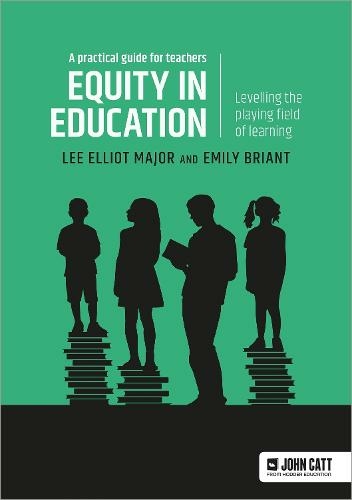
Sally Weale writes an excellent article, published on 3rd October The Guardian: Warning over unconscious bias against working-class pupils in English schools. which gained a lot of interest on Twitter, prompting a broad and fascinating discussion. The article references the work of Lee Elliot Major – specifically his new book Equity in Education: Levelling the playing field of learning – a practical guide for teachers (published by John Catt Educational), co-authored by Emily Briant, teacher and doctoral student. Elliot Major is Britain’s first professor of social mobility, based at the University of Exeter. He was previously the Chief Executive of the Sutton Trust, awarded an OBE in 2019 for services to social mobility, and proudly, the first in his family to go to university.
As I explained in the podcast, I am no expert on this subject, many other well respected names have more knowledge and have studied the topic closely. I have an interest, as a coach and educator in the subjects of equity and many of the issues around bias and limiting beliefs raised in the article, the book and in the discussions on Twitter relating to this.

Equity in Education – a practical guide for teachers is a very interesting read, I would recommend it for anyone in the education world – from ECT or trainee to CEO.

Elliot Major argues that Schools in England must do more to challenge unconscious bias in the classroom against children from working-class backgrounds. On Twitter, Professor Damien Page – Deputy Vice Chancellor at Buckinghamshire New University and Professor of Education states that he agrees with agree with much what Elliot Major writes about, including “middle class advantages being baked into the education system”. He disagrees, however with the use of the term unconscious bias, arguing “there is usually little unconscious about bias.”

Professor Page has written extensively on the topic of bias. Citing his wider research, in a series of Twitter posts he explains “Unconscious Bias starts from the premise that bias is natural and inevitable. Problem: research suggests that when people are told that discrimination is inevitable, they are more likely to discriminate as it provides a means of dissociating bias from their active choices – it provides a get out clause that explains how discrimination can be present even in those who consider themselves egalitarian. Because, you know, it’s unconscious.” He goes on to argue “On its own, unconscious bias is an organisational salve, a call for forgiveness, a get out of jail card, a sleight of hand that provides an alternative to actively challenging discrimination and maintains the status quo of white, male, middle-class, heteronormative power. If organisations want to use UB training, let it be a gateway process that leads to a focus on individual accountability for bias and definitive, zero-tolerance action whenever it occurs. We need far more focus on the conscious rather than the unconscious.”

As I interpret this, it is our responsibility to be aware of our biases – be accountable for them, call them out, not settling for an it being inevitable or acceptable due to its unconscious nature. This makes sense to me – and I hope it is an interpretation that is accurate. It makes me see that as educators, school leaders, governors and anyone else with any influence on the system, we need to look at all possible biases – and challenge them. Why do we do it this way? Why have we made that decision? What assumptions or biases may have been involved? A big task, but change is needed.

Elliot Major suggests that teachers, like all humans, are hard wired to take quick, instinctive actions, and as teachers are more likely to be from middle class backgrounds, may well be biased against children from working class backgrounds. They may have lower expectations. He goes on to cite studies from as recently as 2022 which conclude that show teachers may act differently towards children from working-class backgrounds, showing less warmth, giving less eye contact and lower-quality feedback on what they need to do next in order to advance their learning.

I found this deeply concerning, and highlighted to me the need for all of us involved in education to reflect on this, to look honestly at our biases, and ask ourselves some pretty challenging questions around this.

In his book, Elliot Major makes a number of practical recommendations for schools, including staff sessions to reflect on subconscious biases that may be creating barriers for some children, a “deep listening campaign” to understand the community the school serves, and measures to “poverty proof” the school day, helping families access food, uniforms, school trips and after school clubs.

It would seem that acknowledging and seeking to understand the biases behind the behaviours, as identified in research is a valid starting point.

Elliot Major says lessons should celebrate working-class achievement and feature figures such as Stormzy, Tracey Emin, the 19th-century palaeontologist Mary Anning and the scientist Michael Faraday.

He also suggests pupils from low-income families should be referred to as “under-resourced” rather than “disadvantaged”, as he says the term can lead to unconscious bias and lower expectations for these children. He explains “The problem with terming a child as ‘disadvantaged’ is that it is a binary classification, leading to a crude demarcation between who is or who is not ‘advantaged’. He goes on to say “It immediately invites us into the trap of deficit thinking, implying there is something wrong with children that we apparently need to solve. It focuses our minds on individuals, when facing hardship or poverty is about the circumstances individuals find themselves in.”

I can see his point here, aspirations and expectations as educators are so important. “disadvantaged” has limiting connotations, however, as Dr Lisa McKenzie – senior lecturer in sociology at the University of Bedfordshire argues on Twitter (@redrumlisa) “lets not stop saying ‘disadvantaged’ because its binary meaning theirs the ‘advantaged’ that’s a true assessment. Let’s not say ‘under resourced’ lets say what it is one group is disadvantaged by another’s advantage”.

This presents an interesting counter argument – arguing that as it is the middle classes and the system that advantages them that is ultimately disadvantaging those from lower income backgrounds – and so the term should remain to recognise this.

In “Equity in Education” sets out what is necessary in order to create Equity based Education. This, he explains, is based on four key principals.

  1. Children who face greater barriers outside of school deserve more attention in the classroom.
  2. Adopt a capacity not deficit mindset. Focus on what children can do rather than what they can’t. This includes assessing whether our own cultural norms are alienating some children. Adapt the system to fit chjildren from working class systems, rather than getting them to fit into one centred round the middle classes.
  3. Nurture authentic, individual relationships with all children, acknowledging that all are unique.
  4. Value all talents – not just the narrow academic ones.

The book is divided into guidance for classroom practitioners, leaders, CEOs and also includes a national and international scale – showing the need for systemic change at all levels.

So many valuable and intelligent arguments – creating points for reflection. Here are my main takeaways:

  • As educators, encouraging high aspiration is always important. Asking ourself whether our aspirations and views are influenced by bias (and they are likely to be) and then how we need to own that and counter it. Do we expect less of some children than others? Probably – and why is this? It comes back to the use of terms like “low ability” when actually we are probably referring to prior attainment. What makes us take a view of a child’s ability?
  • As a coach, that bias is likely to be there for us too, we need to be aware of it, it may be there for clients – as a low self expectation of self or others. What can we do to challenge this? Looking at facts and separating these from assumptions.
  • Limiting beliefs are significant – if we haven’t seen role models that look like us or sound like us – similar to discussions of racial equity, senior leaders, well known artists, academics etc are likely to be from a middle class background. It is important for young people to see role models that they can relate to – and therefore our job to be aware of any biases that are stopping us form appointing or promoting these working class role models.
  • As teachers or school leaders, there are practical changes we can make in our classrooms and schools, as well as reflecting on who we are as humans and professionals and how our beliefs and behaviours can be challenged and changed so that we are more equitable in our approach.

Racial Equity: Reflections on #REND

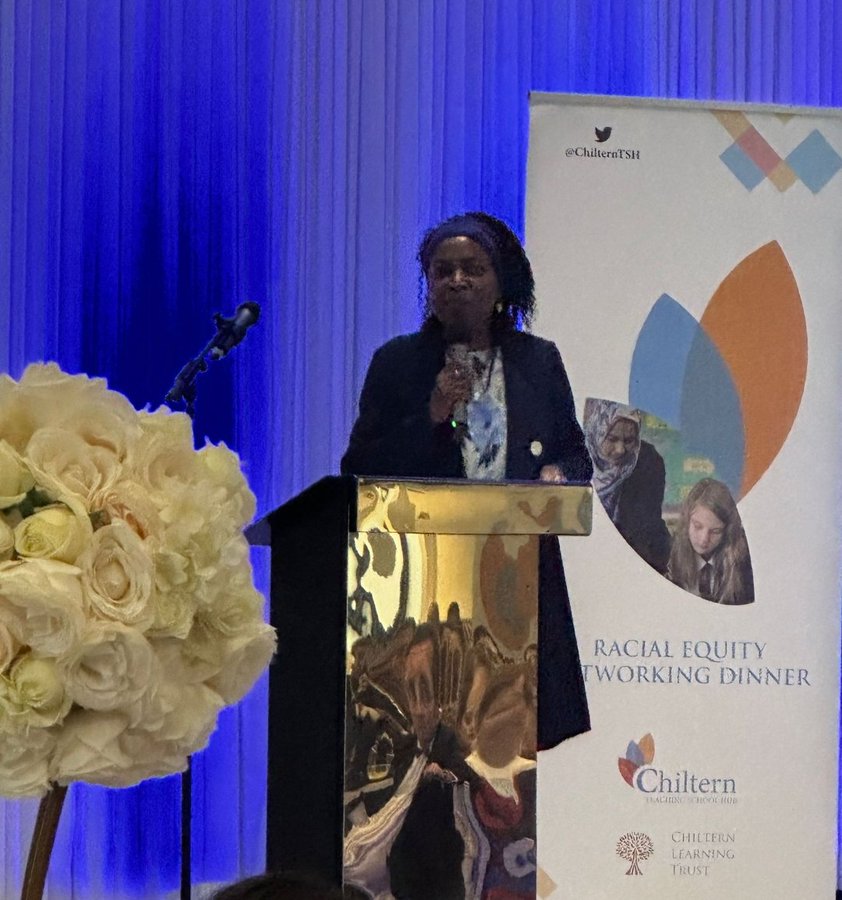
Last week, I was privileged to attend the #REND (Racial Equity network Dinner) hosted by Chiltern Teaching school and Sufian Sadiq. Such an inspirational evening with quality speakers, thought provoking content, great food and a superb opportunity to network with 480 like minded educators and leaders from across the country.

I have previously written about barriers and the speakers at #REND got me thinking about the very real barriers faced by a significant proportion of our population. There were also reflections on values, authenticity as areas I have written about previously, and so have felt compelled to dedicate this blog to the subject of racial equity.

Whilst we may think we re living in enlightened times, it is clear from the speakers at #REND and other research that society is far from equitable and that systemic racism is very real. As a white British woman, I admit to not always being so acutely aware of the reality of inequality in the system and the challenges still faced by those identifying as BAME (black and ethnic minority). The #REND speakers made the currently challenges acutely clear, whilst also presenting, at times, an optimism of how we can challenge this and move closer to achieving a more equitable society.

The Facts

Currently, only 6% of school leaders in the UK identify as BAME. As the 2021 UK census showed that 18% of the UK population are from a black, Asian or mixed ethnic group, this shows how significant this under representation is.

Role models are so important to young people, and the assumptions about what we can do in our future is informed by the roles played by those who look like us during in our formative years. Looking back now, I remember how pleased I was aged 15 to be in a school for the first time with a female headteacher, a woman, and therefore someone I identified with straight away. Would I have believed some 20 years later that headship was a possibility for me if I hadn’t seen this role carried out so well by someone I identified with? Consciously or subconsciously, I hadn’t considered quite so important. For children of BAME backgrounds, how impactful might this lack of representation be? Hearing speakers at #REND for the last two years has really opened my eyes to this.

Carry this forward and think about what governors and leaders may “expect” a headteacher to look like based on their own experience, and we see why is is very possible that without significant changes in the system, this under representation will continue.

Real Life Experiences

At a recent Teach First Event, as well as at the #REND event, speakers spoke about first hand experiences of treatment that some may find surprising to learn are still occurring in the 21st century. Leaders cited clear examples where:

  • They were regularly being passed over for promotions.
  • They were told that they don’t have enough experience (even though they clearly have more than the person appointed).
  • They were provided little or no opportunities for you to lead on initiatives.
  • They had been confronted by assumptions and stereotypes – classic examples are “you can handle the naughty kids” or “I see you more as a pastoral type person; teaching and learning isn’t the right fit for you”.

Stereotypes

The final bullet point really made me think. When, as school leaders, we reach views on what we see as the strengths of individuals, I think it is really important to examine where these views come from. What are the facts? What has someone done/achieved to show a strength and equally, what makes you think something else isn’t a strength? How could these strengths be developed? If we are trying to think positively and to have a positive mindset, why are we limiting people – whatever their background?

I think about this a lot as a coach. What are facts and what are assumptions?

Where do we get these assumptions from?

Facts and Figures

According to evidence collected by the Higher Education Statistics Agency, which collects data for the U.K.’s higher education sector around 5.5% of Black graduates are unemployed a little over a year after graduation, compared with 2.8% of white graduates. This links to a statement made by a BAME Teach First ambassador who highlighted that they had seen a trend of black NQTs (this was 2021 just before the shift to ECTs) being more likely to be offered temporary rather than permanent contracts compared to white NQTs.

#REND

Speakers at #REND spoke passionately about their own experiences, their challenges and barriers they have faced.

Sufian opened the evening, saying “Over time you develop a hyper vigilance, a sensitivity. But the stories come with you.”

He went on to say,

“The human connection is crucial to tackling inequity.”

Professor Paul Miller made a strong statement about racism: “It’s personal, it’s institutional, it’s systemic. Let’s all take a ‘common enemy’ approach to racism. “

This was followed by a call to action from Hannah Wilson (@Ethical_Leader): “Let’s disrupt and dismantle – #allyship is not enough”.

Dr Derren Wallace spoke at length about the depth of change needed, explaining; “We must be deeply committed to racial equity”

“We often hear that there is power in our diversity, but let me clear about why it is powerful.

It is powerful when we stand together across lines of race, across lines of gender and across lines of social class. Because when an issue gets mounted, the education of our children, for example, it cannot be relegated to simply being a black issue, or a brown issue or a white issue. It cannot be relegated to being an issue just for girls or just for boys. It cannot be relegated to simply be an issue just for the working classes, but it is an issue for all of us. That’s the power in our diversity. That’s when we stand together undivided”.

Such a powerful, uplifting message.

Luton MP Sarah Owen, after sharing her own stories, called to us to “Please continue the fight, because we are behind you all the way.”

Sarah spoke about the power of education and the importance of belonging, saying “When people feel like they belong, they feel safe.”

On Twitter, I saw an interesting reflection referring to #REND: “How many people at the event had to work twice as hard to get half as far or be considered half as good?”

I wonder, genuinely about this.

Obstacles – Not a Level Playing Field

An article in the Guardian, back in 2022 tells the story of four headteachers. Josephine Okokon, head of St Martins-in-the-Field high school for girls, London explained:

“My race became an issue very early in my career as a teacher and I began to discover these subtle, covert barriers. I was often the only female teacher of colour and I soon began to see the white teachers getting more encouragement, more support and more mentoring than me. I was left to fend for myself.

Whenever I tried to put myself forward for promotion, I was told that I needed more experience but I’d look at the white teachers who had moved up and think, they’ve got the same, if not slightly less experience than me.”

She went on to say “As I gradually worked my way up, I found that if there was any multicultural mix in the school at all, it stopped at the middle leadership. After that level, school governors are the ones making the recruitment decisions.”

As a governor, this made me think – the importance here for governors to ensure they receive training and follow processes, with advice and guidance is crucial.

Funmi Alder, head of Bearwood primary school, Berkshire states “There is absolutely systemic racism in the teaching profession, which makes it very hard to progress in your career. I know a disproportionate number of very good teachers of colour who would make amazing headteachers but seem to be stuck in middle leadership posts.”

She goes on to say “It doesn’t become easier when you become a headteacher. If anything, your position becomes more precarious because the higher you go, the more people have a problem with taking direction from those who don’t look like them. This is why new black headteachers have to work much harder than their white counterparts in developing relationships with staff with the sad reality being, that some will never accept you.”

Anne Hamilton, headteacher at the Evelina hospital school, London explains, “When I was doing my national professional qualification for headship (NPQH), my mentor – a white head – told me she didn’t know where I could get a headship. Now, why did this white woman imply that I would never be a head? I had got on to this prestigious course and she had been chosen as my mentor. It was her role to give me everything I needed to do a good job when I became a head, not to tell me to give up.”

Ross Ashcroft, headteacher, Cherry Oak primary school, Birmingham describes instances of unconscious bias where he has turned up to greet a visitor in reception in a suit and tie, and they presumed he is teaching assistant. He also describes being accused of being too aggressive (when he knows he hasn’t) and going for headship interviews and told that he didn’t get the job because the governing board said he “wasn’t the best fit” or that “they weren’t sure whether they could work with him” despite him scoring top marks in all the tasks and having no areas identified for improvement in the interviews.

He also explains that he has spent pretty much his whole career in pastoral, behavioural and safeguarding. He says it wasn’t what he necessarily wanted but being nudged or pushed towards these specialisms is a common theme among teachers of colour, especially black men. He believes this may be because BAME men are inherently thought of as being intimidating and confrontational and it means they often end up being glorified bouncers rather than teachers. These non-academic specialisms then have a knock-on effect meaning those who have done these roles then hit a brick wall when applying for headships because most senior leadership roles require specialist experience in curriculum areas.

These are real life examples of how teachers and school leaders of colour have faced significant barriers. It is a huge problem that requires a major change in our culture and systems.

An Optimistic Future?

Given the size and depth of the problem, is there any hope for the future?

#REND showed the strength of support for Racial Equity. 480 people attended, tickets sold out faster than Glastonbury. An incredible evening with school leaders and others from the world of education and beyond standing tall and in solidarity. An isolated event, but something hugely positive in raising the awareness of the problem, bring a call to arms for all and creating some momentum for change.

One of the Speakers, Dr Patrice Evans, Deputy Headteacher at Challney Boys, and one of Sufian’s own teachers spoke about her own experiences as a black female teacher and school leaders, the challenges she has faced.

She ended, however, with an optimistic statement. She said:

“I look at you right now and I smile. I am heartened by the range of diversity in the room. “You have each other… People will throw stones. But pick them up and build empires with them.”

Thank you Dr Evans. You are a true inspiration.

Thank you also to Sufian and the Chiltern Teaching School, not just for this event, but for everything you do in working towards racial equity. I’m proud to be in your network and walk by your side.

© 2026 MH Connection

Theme by Anders NorenUp ↑