Have you ever reached a point where you feel “stuck” – there’s a barrier in the way, something stopping you from getting further, you’re not making the progress you want to make. You might have goals and just feel that you are not reaching them.
What are your barriers?
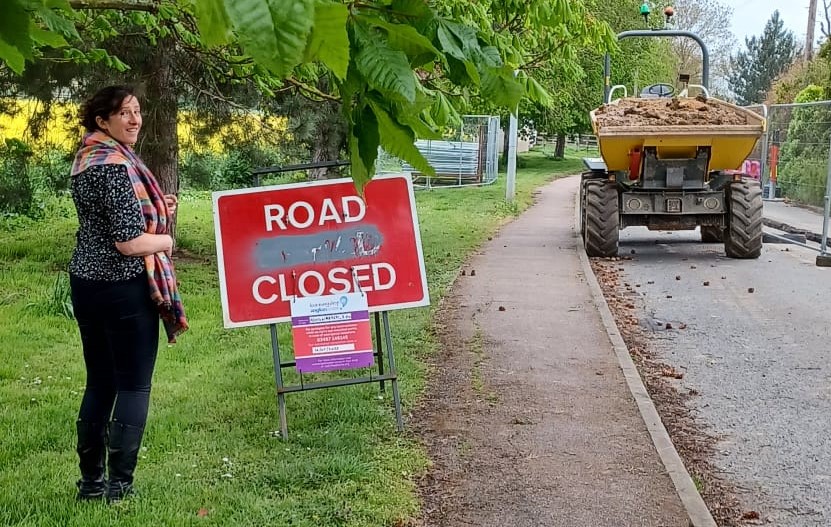
The roadblock pictured here is very real. Contractors, on behalf of Anglian Water have blocked the road for essential maintenance, (they also kindly agreed to take my picture.)
What about other blocks? How many of these are “real”, which are “perceived” and how can we get past them?
If you’re feeling stuck, it is worth giving some thought to the nature of your barriers. There are some common themes, many of which I recognise in my own experience and many have arisen in coaching conversations. Here are some of them. Which do you recognise?
Are you chasing the “right” goals?
In the past, I have found myself pursuing goals that I felt I ought to have. These goals may be linked to someone else’s idea of success – maybe a mentor or someone you look up to, or maybe society’s definition. Creating your own goals, based on your own values is important, and as they are so much more meaningful if truly in line with your values making them more achievable.
Are your behaving in line with your values?
Have a look at what you are doing in pursuit of your goals. Do your actions match your true values? Again, it is always worth looking closely at your values – the real ones – look back at the first blog post to check you are aware of these and can then make steps to live by them. Without this, you might be following rules and beliefs you picked up in your formative years, and may therefore end up acting in a way that isn’t in line with the person you truly want to be. If you are chasing a huge salary and accompanying consumerist lifestyle, whereas your values are much more around family and connection, this will present a barrier to you. Once you start to change the goals, link them more to your values, you will find less barriers.
Are you falling into the Advice trap?
Well meaning individuals can be quick to offer us advice. The problem with advice is that it is what works or worked for THEM, and may therefore not necessarily work for us. This advice might come from respected people, we may feel we ought to follow it, it might also sound good – but will often “feel” wrong.
An awareness of this, asking yourself how you feel about these ideas – and more of a coaching approach from those helping us can provide a better way forward.
Have you become disconnected from your “truth” and “purpose”?
Similar to your values, what are your true wants and needs. Are you working towards something that matches these, or what you think you ought to be working for? You might be adhering to outdated social norms, rather than your own truth – such as pay being more important than how a job makes you feel.
Acting in line with your purpose, knowing the impact you want to make will provide you with the golden intrinsic motivation, lacking this, with all of the extrinsic (pay, benefits, status) rewards, will leave you feeling blocked.
Are you staying in your comfort zone?
A bit like the safety barriers around the the roadworks, where a less safe but more direct option would be to keep the road open so we all drove precariously close to a huge hole but as long as we avoided the hole, would probably reach our destination with minimal delay, we often put up barriers to stop ourselves taking risk. Our brains’ first job is to keep us alive, so it is no surprise that our safety – including avoiding even small or perceived risks is something our brains will always try to do. Sticking with the safe and known option, avoiding changes are all comfort zone signs. Sometimes, the comfort zone may not actually be that comfortable, but we stick with it. Being a headteacher was this for me for quite some time, however hard it was, whatever feelings I had about it not being right for me any more, I had done it for a long time, and there was an element of wanting to stick with it. Of course, with this, there are the bits that were still good too. The whole ides of moving to freelance work, temporary contracts and this professional unknown was a huge step, but one I haven’t regretted for a second.
As I coach, one of my favourite questions is “What happens if you do nothing?” In most cases, this can lead to staying stuck. You can ask “what is the worst thing that can happen”? Stepping out of your comfort zone can then help you get a step closer to achieving your goals and feels good.
Do you believe in yourself?
Similar to staying in your comfort zone, lacking confidence can be a major barrier. Fear of failure is a major block for many people, without even being aware of it.
I love asking “What would you do if you knew you wouldn’t fail?”
Similarly, this can be about worrying what other people would think. This has been (and continues to be) a huge barrier for me. Making big decisions like leaving a job that I no longer wanted to do, my first thought – will people think I’m a failure? What will they think of me for giving up? As for speaking on Teacher talk Radio or writing a blog, parking these thoughts, separating my self worth from the feedback and seeing this as part of wider growth is a work in progress.
Barriers for Young People
Similarly, educators will be familiar with barriers faced by children and young people. How can we help them to get past these barriers? These days we are met with volumes of research from well known and well respected sources like the EEF (Education Endowment Fund). Again, these barriers are well known and the better we understand them as educators, the better we can tailor our approaches.
How can you get past the barriers?
An awareness of the barriers, maybe understanding that whilst they are real to you there is a way to shift them is helpful, our best chance of success also comes from creating a “reward state” in our thinking. Focusing on the desired outcomes, allowing ourselves some quiet space for good quality thinking is really helpful. Being solution focused and good thinking will be our next blog topic.
What about you?
I’m curious, has anything here sparked your thinking? What are your barriers and how are you getting past them, shifting them to the side, finding a good diversion or knocking them flat?
Leave a Reply