Welcome to MH Coaching and Consultancy

Author: admin (Page 1 of 3)

From Vision to Vulnerability: What are the Qualities of a Great Leader?

What makes a great leader? That’s quite a question, and one that doesn’t have a simple answer, this is highly subjective, views differ, as do contexts. As CEO of Forum Strategy, Alice Gregson explained as I spoke to her recently on Teachers Talk Radio, context is important, and leadership traits, behaviours and skills are not fixed, we are all continually growing and learning as humans and leaders. There are, however, key qualities that make leaders more successful, and that was something I wanted to consider further.  

Why is Leadership Important?

There is strong evidence to show that that effective school leadership is an important condition for successful school improvement. (Day et al 2020). Whilst other factors are also important, and great leadership alone may not be able to change a school, research tells us that leadership is a significant factor in the success of the organisation.

In the business world too, leadership is essential to an organisation’s success. Writing in the Harvard Business School online in 2023, Michael Boyle explains that good leadership motivates team members, 79% of employees will quit due to a lack of appreciation, 69% of employees say they would work harder if they felt their efforts were better recognized by leaders.

Employees who are made to feel that they’re appreciated, and their work is recognized are more engaged and can help the company achieve its goals. Recognizing and appreciating employees is the job of management and other leaders in the organization.

Leaders play a key role in setting direction, they also play a key role in defining the culture of an organisation. Both of have a significant impact on the organisation and its potential success, as well as the lives and wellbeing of those connected with the organisation.

What Makes a Great Leader?

The notion of a great leader is subjective, it is also context dependant, as Alice Gregson explained when I spoke to her. There are varying views on great leadership qualities, The research cited highlights this, much of it is based on opinions of leaders themselves or employees, it may also be linked to retention within the organisation. What defines effective leadership on one context, for example a very challenging and high-pressure context, may differ from another context. Leadership skills, behaviours and traits may also need to change over time. This is important to note.

So, whilst there is no single answer to the question “what makes a great leader”, noting subjectivity, context and that traits, skills and qualities are not fixed, there are some common themes.  Great leaders come in many different forms and are not all the same, there are, however some common skills, behaviours, traits and qualities that I will describe here, I would love to hear what you think too.

Back in 2013, author Jeremy Sutcliffe interviewed a selection of UK’s headteachers to find out what they believed makes a good leader. His book, 8 Qualities of Successful School Leaders: the desert island challenge, published by Bloomsbury sought to answer the question “What are the qualities needed to be a successful school leader?” Based on the BBC radio programme Desert Island Discs, a range of school leaders were asked to imagine they were cast adrift on a desert island with a school full of children in desperate need of a great headteacher.

He asked what eight qualities they would take with them to run the desert island school?

This book is 11 years old now and a lot has changed in the world, but I think the 8 qualities highlighted are still relevant. The 8 qualities listed as coming up most often are vision, courage, passion, emotional intelligence, judgement, resilience, persuasion and curiosity.

More recent reviews of research show similar findings. In a review of a wide range of research into school leadership, entitled “Successful School Leadership”  Day, Sammons & Gorgen, describe professional and policy derived standards and then go on to focus on successful principals, models and practice.

They conclude that there two main models of successful leadership practices:

  • transformational leadership practices,
  • pedagogical/instructional leadership practices,

They also focus on the theory and practices of distributed leadership.

They highlight the important transformational leadership practices of building vision and setting strategic direction, understanding and developing people, (Re)designing the organisation (establishing work conditions which make the most of the motivations, commitments and capacities of employees) and managing the teaching and learning programme by staffing appropriately, providing teaching support, monitoring and buffering staff against distractions from their work.

They go on to describe pedagogical leadership and how this emphasises the importance of establishing clear educational goals, planning the curriculum and evaluating teachers and teaching. It sees the leader’s prime focus as responsible for promoting better outcomes for students, emphasising the importance of teaching and learning and enhancing their quality.

Day et al (2020) describe that whilst distributed leadership is not a ‘model’ in itself, but rather a concept and set of practices, it works hand in hand with transformational and instructional models of leadership. Distributed leadership involves sharing leadership responsibilities and decision making. A  consensus has emerged among leadership researchers that school leadership can have an especially positive influence on school and student outcomes when it is distributed. Studies show that teacher and student morale levels improved where teachers felt more included and involved in decision-making related to the process of school development and change.

Looking through a lens of teacher retention, research by the EEF (Nguyen et al, 2023) draw on a synthesis of evidence from a group of 45 relevant studies, the report highlights three main leadership approaches or areas of leadership behaviour and qualities as beneficial to teacher retention.

First is prioritising teacher development, providing instructional support; professional development opportunities; and cultivating leadership potential in teachers. Secondly, building relational trust, building trusting relationships, individualised consideration for teachers and compassionate leadership characterised as being caring, encouraging, and listening. Thirdly, improving working conditions by supporting professional autonomy, promoting collegiality and inclusive participation in decision-making, shared power and responsibility, reciprocal support, mutual trust, and cooperation, developing an equitable support and recognition system, establishing an effective communication structure and supporting teachers with behaviour of students.

Speaking to Alice Gregson, CEO of Forum Strategy who works with senior leaders in Education, including CEOs of MATs, some really interesting leadership traits were highlighted and discussed.

First, Alice emphasized the subjective nature of the question and also the importance of context. She also emphasized that traits and skills are not fixed. Alice also made a distinction between the “what we have” – or skills of leaders and the “who we are” – or behaviours and traits of leaders. Starting with skills, Alice emphasized the importance of strategic thinking, of having the ability to turn a vision into a workable plan. Next she described the need to be able to articulate purpose clearly and well. Alice also told us that great leaders are also accountable for their decisions, build strong cultures, based on trust and respect, are strong relationship developers, within the organisation and beyond and are excellent communicators, able to tailor their style to a range of audiences, engaging with people and developing trust. She also described the skill of balancing risk, of being able to take some risk whilst mitigating potential impacts.

Alice went on to describe the behaviours and traits of great leaders, of compassion, inclusivity, collaboration, curiosity, courage, being humble and bravery. Next, we discussed vulnerability, that for her, this is about opening up, sharing our stories & facing what might be uncomfortable. It’s about letting people in and showing what makes us who we are. Sometimes vulnerability includes our weaknesses and fears, but it might also include things such as our beliefs, feelings, desires, aspirations and experiences. Vulnerability as a leader is about letting people know you – the full you. It’s so powerful because it gives us points of real connection. I loved the quote Alice shared, from Sir Steve Lancashire, “‘Me being me means you can be you.” If we can celebrate our authentic selves as leaders, we send such a powerful message to those in our organisation. Great leaders model vulnerability, sharing who they are as people, not just as professionals, building trust and creating connection.

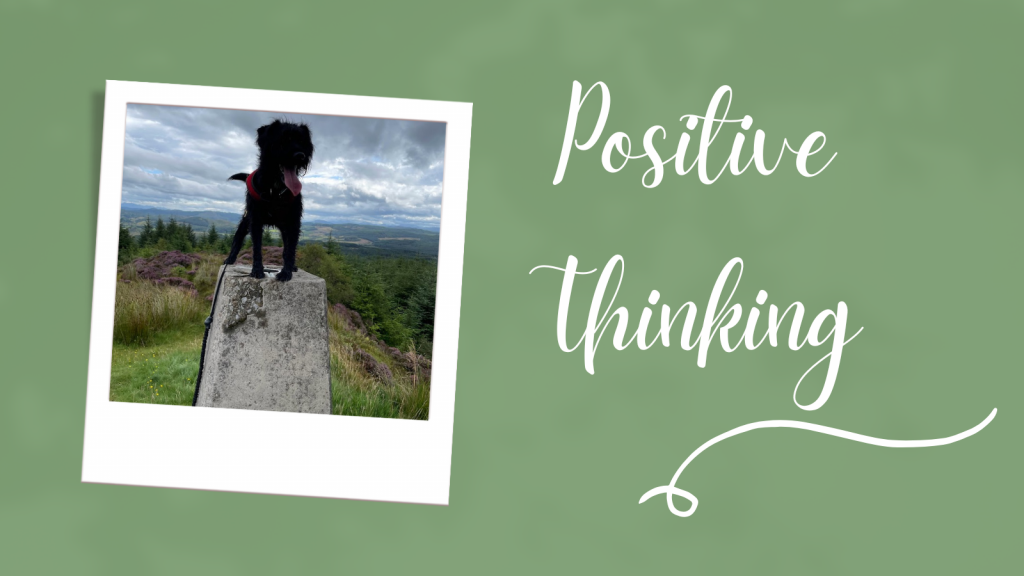
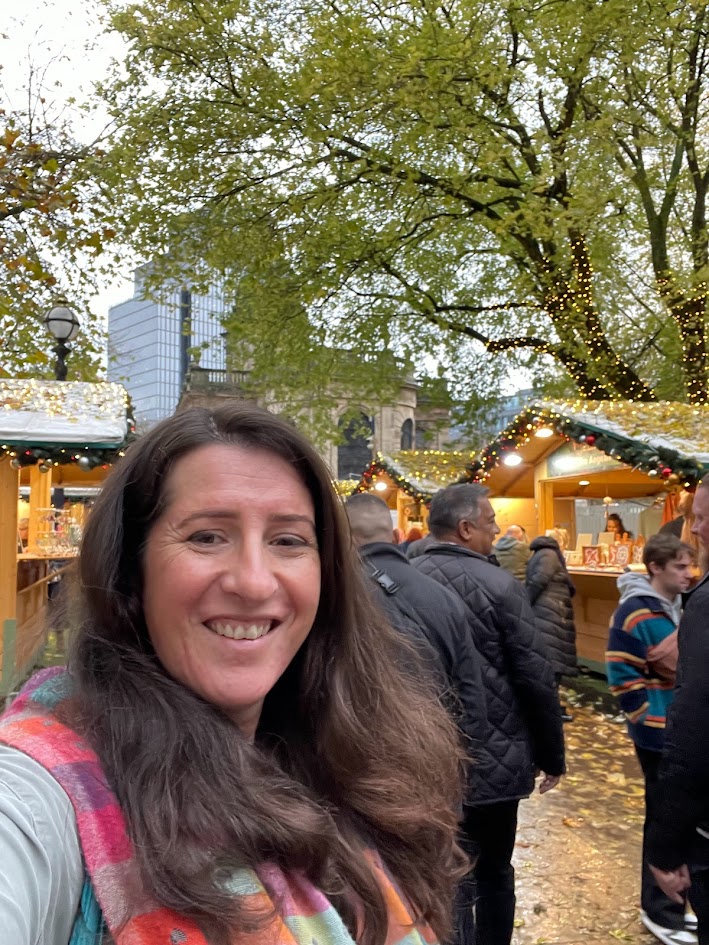
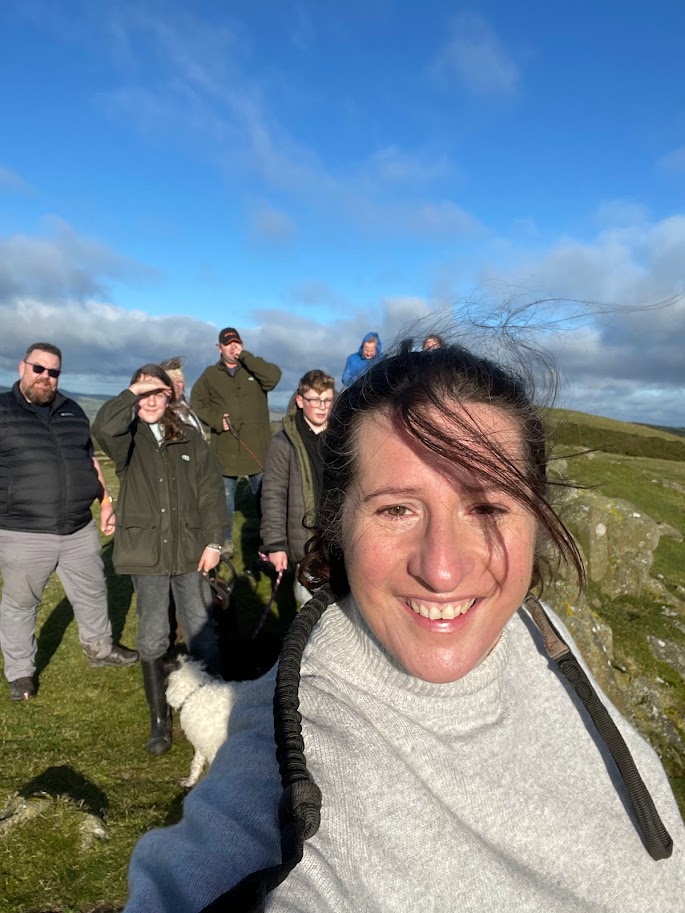
Here’s me being me, up a hill in Wales, with friends in January this year.
Great Leaders – A Conclusion

Reflecting on all of this, the research, the conversation, and my good fortune to work alongside and for some great leaders, for me, great leadership is made up of a range of skills and behaviours. Many of which are listed here already. There is no single definition and as we have seen, context is key. For me, great leaders are self-aware enough to make sure that they know their own current strengths and weaknesses, and that they have the courage to build teams around them that compliment these, with diversity, strength and challenge within those teams. A commitment to growth, learning and development of self is also crucial in my opinion.

Communication is key, with listening, curiosity and hearing others as a key part of this. The ability to build relationships, to care, have empathy and to be vulnerable, sharing of yourself as a human, creating connection, relationships and building trust within organisations, where others can feel psychologically safe and can find that risk balance point is crucial too.

A change I have noticed has been increased recognition of vulnerability, of sharing who we are as humans, letting people know who you are. Leaders modelling this, introducing ourselves and delving into who we are as people, who we are, not just our professional role. I also note resilience taking a different position, no longer just pushing through, as leaders however hard and at whatever cost, but noticing this and acknowledging when things are tough. I think this links to vulnerability too, and important for leaders to model.

As a coach, the idea that these skills, behaviours, traits and qualities are not fixed is also fascinating. We often have strong beliefs about what we can and can’t do, who we are and how we are, which may be based on messages we have received through our lives, and past experiences. This brings me onto an idea for a future topic, “Great leaders, born or made?”  What do you think?

I’d love to hear what qualities you think great leaders have – and do you agree that we all have the potential to be great leaders? Are great leaders born or made?

References

Boyles, M., (2023) Organisational Leadership, What it is and why it’s important. Havard Business School Online

Brighouse, T.M. (2007), How Successful Headteachers Survive and Thrive, R.M. Publications.

Day, C., Sammons, P. and Gorgen, K. (2020) Successful School Leadership, Education Development Trust.

DfE (2015 and 2020), National Standards of Excellence for Headteachers.

Fullan, M (2019), Nuance, Why Some Leaders Succeed and Other Fail, Jossey Bass, San Francisco.

Kizier, K (2023) 35+ Powerful leadership statistics: Things all aspiring leaders should know. Zippia: The |Career expert.

Nguyen, D.,  See, B.H., Brown,C.,  Kokotsaki, D. (2023) Reviewing the evidence base on school leadership, culture, climate and structure for teacher retention. Rapid Evidence Assessment  (Education Endowment Fund)

Woods, D (2020) The Nine Pillars of Great Leadership
International Women’s Day: Celebrating Women in Leadership

Whilst women make up 76% of the teaching workforce, according to the 2023 DfE school workforce survey, only 70% of school leaders are female. In primary schools, women made up 85% of the workforce in 2020 but only 74% of headteachers were women. In secondary schools, women made up 63% of the workforce but only  40% of headteachers were women.

This statistical imbalance gives us all the more reason, on International Women’s day and all year round, to celebrate some of the amazing women in leadership.

We can all think of women leaders who have inspired us, we can probably also think of many men for whom we can say the same. We may have encountered poor leaders of both genders. This is a celebration of women in leadership, not a denial that some may be less strong and also not ignoring the many great male leaders out there too.

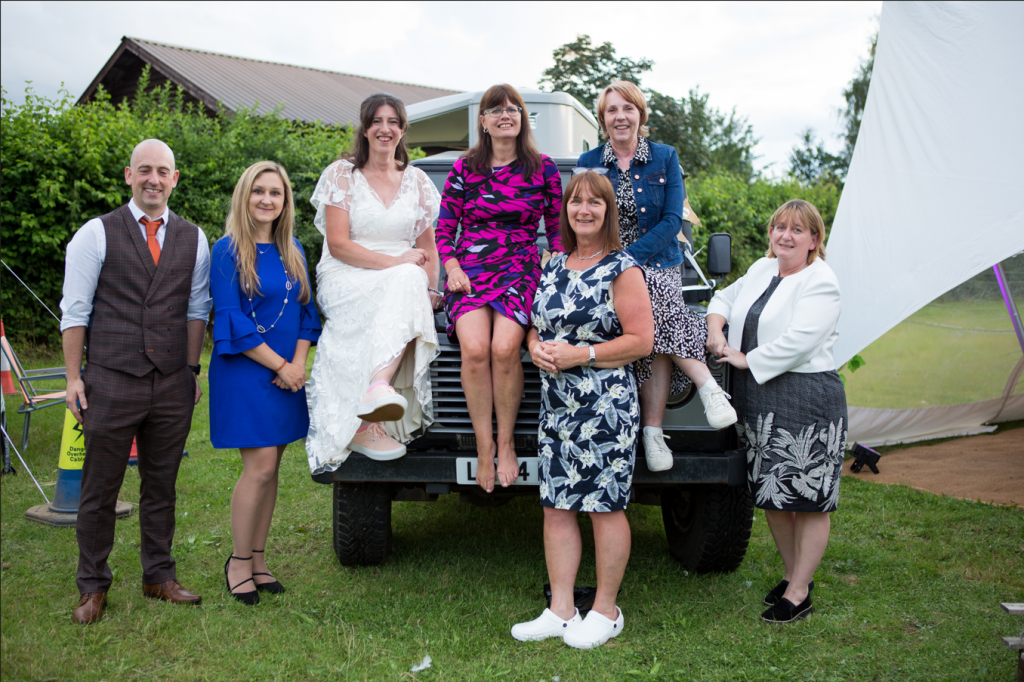
Them picture at the top is me, on my wedding day with the senior leadership team from my school when I was a headteacher. Some fantastic women leaders, and you will notice Paul, a superb male leader too.

Benefits of Women in Leadership

There is a range of evidence showing the benefits women leaders bring to the world of business. It is reasonable, I believe, to suggest that this research would be relevant to the world of education as leading teams has similarities across sectors. This research is not always new, a meta-analysis of 61 studies completed by Eagly et al in 1992 concluded that female leaders demonstrate more transformational leadership style and that women are more likely to model what’s good in the organization and inspire people to go along with its mission.

A study into team effectiveness (Woolley et al 2010) showed that team collaboration is greatly improved by the presence of women in the group. The research showed that groups that included more women or that were led by women exhibited greater equality in conversational turn-taking, which enabled the group members to be responsive to one another and to make the best use of the knowledge and skills of members.

In a national survey by the Pew Research Centre, (Taylor et al 2008), women ranked better than or equal to men in seven of eight traits relevant to leadership. Women were also ranked as being more compassionate, outgoing, and creative.

A social psychology study (Mansi P. Joshi, 2022) showed where organisations had a female leader, there was a perception and anticipation of fairer treatment amongst members of the organisation. They also found that female leaders generated organizational trust in both male and female dominated industries.

Research also shows that where female leaders were appointed to posts such as CEO and board members, stereotypes were less likely to be expressed through language within the organisation (Lawson et. al 2022). The research found that female representation can systematically change gender stereotypes and overcome the trade-off between women being perceived as either competent or likeable.

Celebrating Women Headteachers

It was a privilege to talk to two inspirational women leaders in my Teachers Talk Radio Show on International Women’s Day this year. I spoke to Caren Earp, Head of Henlow Academy in Bedfordshire and Jess Pather, Headteachers of Lea Manor High school in Luton. Both are leading their schools through phases of transition and significant change. Both show strong, purpose driven leadership, care and nurture.

Caren is also a mum, her daughter now in year 11 has been her first priority and has been an interested visitor to her schools. Caren spoke about how she has been inspired by Stella Rimington, former Director general of MI5, who spoke openly about balancing motherhood and leadership at a high level.

Caren spoke with genuine pride of the growth in her school, the role that her team have played in this. She shared some wise words too which she hopes will inspire female leaders to step up. Caren says, “Sometimes the opportunity that is in front of you may not be the one you had in mind”. This has been true for Caren, who stepped in to lead Henlow Academy, growing it form a small Middle School to a flourishing Secondary School – with their first year 11s this academic Year. Congratulations Caren on this journey and for the support you continue to provide to other women in leadership, as a role model to women, including your own daughter, I celebrate you. You are a true example of a woman in leadership championing other women.

https://teacherstalkradio.podbean.com/e/celebrating-women-leaders-in-education-on-international-womens-day-the-twilight-show-with-maxine/

Jess spoke of her own journey and her purpose driven leadership and desire to change lives for young people and the communities she serves was clear. Jess also spoke with genuine pride of the leaders who she has seen grow, particularly from her previous school, who are now taking on major roles and whose influence on the communities they serve is significant. The change in her current school has been phenomenal and continues at a fast pace. She has a broad and diverse team, totally bought into her vision and continues to drive these improvements forward. Jess spoke about her own belief in seeing colleagues as people first and professionals second, of prioritising her people in this way. This is clear in her work too. Jess also advised women to be confident in our abilities, and to pursue your dreams with integrity.

Caren shared a quote from Elbert Hubbard that feels like a common theme in the conversations with both these women leaders, “It is a fine thing to have ability, but the ability to discover ability in others is the true test”. Whether we are talking about women in leadership or leadership in general, this is an important quote.

Celebrating Women in Leadership

I’d like to give a mention to some other women in leadership. Sue Teague, she was headteacher where I was deputy head and taught me a lot about distributed leadership, strategy and giving people the space and skills to do their job. I would also like to give a mention to Anna Rogers, her integrity, determination and purpose, always wanting to ensure the best for the children is a real inspiration.

And Finally – Celebrating The Most Important Woman to Me

Finally, I want to give a mention my first teacher, before I had got as far as school – my mum. My mum taught me to read and write before I had even started school. She didn’t have the opportunity to stay on at school for any further study, leaving school to work in Leicester’s hosiery industry as a factory worker at 15. She was a bright lady and was determined for things to be better for me, she was a talented artist, (much of her work ended up displayed around my primary and secondary schools) and she wrote beautifully. She devoted so much of her life to looking after me and my dad and taught me to work hard, reinforcing key messages like if you want something, work hard and you can achieve it. She taught me to be confident and to speak up if something isn’t right. So my final biggest shout out, for International Women’s Day and for Mothers day this Sunday is my mum, Helen Warner. My biggest inspiration. Thank you. You may not have been around on Earth for some time, but to me, you’re still here, inspiring me every day.

References

Eagly, A. H., Makhijani, M. G., & Klonsky, B. G. (1992). Gender and the evaluation of leaders: A meta-analysis. Psychological Bulletin, 111(1), 3–22. https://doi.org/10.1037/0033-2909.111.1.3

Eagly, A. H., Nater, C., Miller, D. I., Kaufmann, M., & Sczesny, S. (2020). Gender stereotypes have changed: A cross-temporal meta-analysis of U.S. public opinion polls from 1946 to 2018. American Psychologist, 75(3), 301–315. https://doi.org/10.1037/amp0000494

Mansi P. Joshi https://orcid.org/0000-0002-8780-4612 joshimp@iu.edu and Amanda B. DiekmanView My Fair Lady? Inferring Organizational Trust From the Mere Presence of Women in Leadership Roles Volume 48, Issue 8
https://doi.org/10.1177/01461672211035957 personality and Social Psychology bulletin

Lawson M.A, Martin A.E, Huda I, and Matz SC, The Wharton School, University of Pennsylvania, Philadelphia, PA; received December 30, 2020; Hiring women into senior leadership positions is associated with a reduction in gender stereotypes in organizational language
February 22, 2022

Paul Taylor, Rich Morin, D’Vera Cohn, April Clark, Wendy Wang, Pew Research Center 202 419-4328 http://pewresearch.org AUGUST 25, 2008 A Paradox in Public Attitudes Men or Women: Who’s the Better Leader?

WILLIAMS WOOLLEY A , CHRISTOPHER F. CHABRIS, ALEX PENTLAND, NADA HASHMI, AND THOMAS W. MALONE Evidence for a Collective Intelligence Factor in the Performance of Human Groups
30 Sep 2010, Vol 330, Issue 6004 pp. 686-688

The Power of Positive Thinking

What is Positive Thinking?

Positive thinking means making the most of potential obstacles, trying to see the best in other people, and viewing yourself and your abilities in a positive light. Seligman (1990) defines positive thinking as “approaching life’s challenges with a positive outlook.” Positive thinking doesn’t mean seeing the world through rose-coloured lenses by ignoring or glossing over the negative aspects of life, equally, it doesn’t mean avoiding difficult situations.

Positive thinking is similar in many ways to Positive Psychology and indeed, the terms are often used interchangeably. It is important to understand, however, that they are not the same thing. Positive thinking is about looking at things from a positive point of view. It is a type of thinking that focuses on maintaining a positive, optimistic attitude. It comes from Positive Psychology; a branch of psychology that studies the effects of optimism, what causes it, and when it is best utilised. Martin Seligman is credited as the father of Positive Psychology and its efforts to scientifically explore human potential.

Why is Positive Thinking Important?

Research tells us that positive thinking helps us to manage stress and can even improve our health. Park et al (2016) found a range of health benefits of positive thinking, including:

  • Better stress management and coping skills
  • Enhanced psychological health
  • Greater resistance to the common cold
  • Increased physical well-being
  • Longer life span
  • Lower rates of depression
  • Reduced risk of cardiovascular disease-related death

The exact reason for the physical health benefits is not always clear, it may be that those who think positively would be more likely to have healthier lifestyles, or that healthier lifestyles enable people to think more positively. We know there is a link between diet and mood, as well as the mental health benefits of exercise. It is also likely that those who think positively would be less likely to partake in unhealthy pursuits such as heavy alcohol or drug use or smoking and may be less likely to comfort eat and choose less healthy foods.

There is also evidence to suggest that people who think positively tend to be less affected by stress. Research suggests that having more positive automatic thoughts helps people become more resilient in the face of life’s stressful events. People who had high levels of positive thinking were more likely to walk away from stressful life events with a higher sense of the meaningfulness of life (Boyraz & Lightsey, 2012).

Positive thinking also helps promote greater feelings of happiness and overall satisfaction with life.

A word of caution about toxic positivity

It is important to create a distinction between positive thinking and toxic positivity. The latter is unhelpful, it involves insisting on maintaining a positive mindset no matter how upsetting or dire a situation is. It means ignoring more difficult emotions, and this type of excessive positivity hampers communication and can lead to feelings of guilt or shame in people who feel they should only be positive all the time. An acceptance of difficult emotions is important for mental wellbeing.

Positive thinking doesn’t mean that you ignore life’s less pleasant situations, it means that you approach unpleasantness in a more positive and productive way. It also means that you think the best is going to happen, not the worst.

The Challenge of Positive Thinking

Whilst we may be aware of the benefits of positive thinking, our brains may not be naturally wired this way. There is significant evidence showing that adults display a negativity bias, or the propensity to notice, learn from, and use negative information far more than positive information. This bias will have helped enormously through evolution, highlighting dangers and prompting adaptive functions which have enabled the survival of the species, but may be less helpful in the modern world.

Negativity bias explains why the media is so focussed on bad news; we are more likely to watch bad news than good. We also notice the bad so much more than the good.

The Key(s) to Positive Thinking

Whilst some of us are more naturally positive in our thinking, may be more optimistic as a result of our genes and past experiences, it is possible to shift our mindset and think more positively. We can learn positive thinking skills.

So how can we do this? It is all about building up habits over time and taking a number of small steps.

Awareness

The first step is to establish an awareness of our natural negativity bias. To know that it is normal and natural to recall the one thing that hasn’t gone so well so much more clearly than all the successes and positive things. To be aware that we may dwell on the negatives, and to ask ourselves the facts. How many times has that really happened? Balance that against the positives that we don’t recall so easily to check for a more balanced picture.

Self-talk

Self-talk is the endless stream of unspoken thoughts that run through our heads. These automatic thoughts can be positive or negative. Some of our self-talk comes from logic and reason but other self-talk may arise from misconceptions that you create because of lack of information or expectations due to preconceived ideas of what may happen. It may be based on beliefs, assumptions and biases, all of which, due to our natural negativity bias are more likely to be negative.

Checking on these thoughts for facts as opposed to assumptions is important in order to create a more balanced and positive outlook.

Some common forms of negative self-talk and ways to address them are:

  • Filtering. You magnify the negative aspects of a situation and filter out all the positive ones. For example, your day at work was good. You completed your tasks ahead of time and were complimented for doing a speedy and thorough job. That evening, you focus only on your plan to do even more tasks and forget about the compliments you received. Once you notice this, look at all the things you have achieved, write them down or list them in your head. Create a balance and make sure you are aware of all the positives – now think logically about the best course of action.
  • Personalising. When something bad occurs, you may automatically blame yourself. For example, you hear that an evening out with friends is cancelled, and you assume that the change in plans is because no one wanted to be around you. Again, once you are aware that this is a possibility, look for the facts. Why else could it be? Realistically, how likely is it to be because of you? What are the other possibilities?
  • Catastrophising. You automatically anticipate the worst without facts that the worse will happen. Look at the evidence, what realistically is the worst that could happen, how likely is that? What else might happen?
  • Saying you “should” do something. You think of all the things you think you should do and blame yourself for not doing them. Who says you” should” do these things? Which are important? What have you done? Remember, you are likely to be ignoring all the things you have done.
  • Magnifying. You make a big deal out of minor problems. Again, look at the facts. How much of an issue is it really? What is the worst that could happen? Will this still matter in 5 weeks? 5 months? 5 years?
  • Perfectionism. Keeping impossible standards and trying to be more perfect sets yourself up for failure. Who is setting these standards? What is “good enough”?
  • Polarising. You see things only as either good or bad. There is no middle ground. Again, here look at all the possibilities, write them down, look logically for facts and evidence.

If you examine your self-talk and look for any of these forms of negative self-talk, you can challenge them, check for facts, and hopefully move to a more positive view. An awareness is an important first step. From here, sense check and take a conscious move to reframe to something more positive.

Journalling or talking to someone neutral, like a coach can be a good way to identify and challenge unhelpful, negative thinking, helping you to think in a more positive way.

A simple rule is also to imagine, when you are talking to yourself that you are talking to a friend/respected colleague or someone you care about. Don’t say anything to yourself that you wouldn’t say to them. Be gentle and encouraging with yourself. If a negative thought enters your mind, evaluate it rationally, check for accuracy/facts and respond with affirmations of what is good about you.

Follow a healthy lifestyle. 

You are more likely to think positively if you engage in physical exercise, eat well, and get enough sleep. Exercise can positively affect mood and reduce stress, you should about 30 minutes on most days of the week as this can bring about real benefits to your thinking. Techniques to manage stress will also help, mindfulness and meditation, bringing yourself to the here and now rather than fretting about what has happened and worrying about the future is very beneficial for our thinking.

Positive Company

Being around positive, supportive people you can depend on to give helpful advice and feedback will also help your thinking. People who demonstrate negative traits may increase your stress level and make you doubt your ability to manage stress in healthy ways.

Gratitude

Gratitude is associated with optimism and has been determined that grateful people are happier, receive more social support, are less stressed, and are less depressed.

Think about things you’re thankful for in your life. This doesn’t mean that toxic positivity of “at least you have X, Y or Z….”, but taking a moment to pause, think about what is good and appreciating it.

Simple things, noticing beauty in your surroundings, a sunrise (or sunset), a flower, painting, pet or something else you appreciate. Draw this into your consciousness, as our negativity bias draws the negative things. This creates a balance.

Professional Context

Thinking of the profession I know the best; we know that teaching and school leadership is tough. We also know that our negativity bias and the negativity bias in the media will bring all the worst parts into focus and emphasize them, often ignoring the good parts.

This is true of other professions too, although they may not get the same negative media attention. It may be that when you have evaluated, looked at the facts that you decide it is time to move on and to have a change, and that’s fine too. As I have written about before, jobs for life are a thing of the past and a change is fine.

Whatever choices you make, looking to the facts, an awareness of negativity bias and potential unhelpful thinking and reframing this into a more positive view will bring immense benefits.

References

Boyraz G, Lightsey OR Jr. (2012) Can positive thinking help? Positive automatic thoughts as moderators of the stress-meaning relationship. Am J Orthopsychiatry. 2012;82(2):267-77.

Park N, Peterson C, Szvarca D, Vander Molen RJ, Kim ES, Collon K. (2016) Positive psychology and physical health: Research and applications. Am J Lifestyle Med. 2016;10(3):200-206.

Seligman, Martin E.P.  (1990) Learned Optimism: How to Change Your Mind and Your Life Vintage Books

Culture: Does it Really Eat Strategy for Breakfast?

Did you know that Humphrey Bogart never said, “Play it again Sam” in Casablanca? Or that Alec Guinness, as Obi-Wan Kenobi, never says “may the force be with you” in the original Star Wars movies?  In other famous misquotes, Paul Drucker, never said “Culture eats strategy for breakfast”.

Here, I will look at what culture and this famous (mis)quote means, why culture is important, and how a strong culture can be developed.  

Culture may be described as the guiding beliefs and values evident in the way an organisation operates. It is the written or the unwritten rules that influence the behaviour of those involved in the organisation at all levels. It may be about ambition and it will almost certainly influence the amount of effort people put into their work, how they speak to and treat each other each other and how they feel about going to work.

Paul Drucker was born in 1909 in Austria, moving to Germany and then the UK before settling in the USA in 1937. He had a distinguished career, first as a professor of politics and philosophy at Bennington College from 1942 to 1949, then twenty-two years at New York University as a professor of management from 1950 to 1971 before moving to Claremont Graduate University, California in 1971, where he developed one of the country’s first executive MBA programs for working professionals at and established the Drucker Archives (which later became the Drucker Institute). Drucker taught his last class in 2002 at age 92 and continued to act as a consultant to businesses and nonprofit organizations and stayed actively linked to the university up to his death aged 95 in 2005.

Drucker’s writings about management and organisations are wide ranging with many well renowned theories influencing businesses today. A key theme is a focus on relationships among human beings, as opposed to statistics or technology.  His books contain many lessons on how organizations can bring out the best in people, and how workers can find a sense of community and dignity in a modern society organized around large institutions.

The famous (mis)quote “Culture eats strategy for breakfast, was popularized in 2006 by Mark Fields, president of Ford Motor Company. What Drucker actually said, in an article for the Wall Street Journal (March 28,1991) was “Culture, no matter how defined, is singularly persistent.”  

Shortly before this, one of Drucker’s professional contemporaries, Michigan Institute of Technology psychology professor Edgar Schein wrote a similarly themed quote in his book from 1985 “Organizational Culture & Leadership.” Schein wrote, “culture determines and limits strategy,”.

Neither quote is as catchy and memorable as “culture eats strategy for breakfast” but both describe the importance of organizational culture, that it is always present and that it can determine the success or failure of strategy.

Misunderstanding, as well as misquoting is also common, specifically interpreting this as a view of culture versus strategy, believing that that culture and strategy are somehow separate, competing forces, and that perhaps a good culture replaces the need for a good strategy. Or that you can only have one or the other, which is clearly wrong and not at all what either Drucker or Shein are saying.

I have heard culture described as the habitat in which a company’s strategy lives or dies. While the organization’s strategy critically provides direction, it is culture that creates the environment in which people are either enabled to effectively execute the strategy or are held back/prevented from doing so in some way. It is in this way that culture eats strategy for breakfast. Culture determines how individuals work and function within an organization, enabling (or preventing) the organization’s success at carrying out its mission and achieving its strategic vision. No matter how well-crafted a strategy may be, it will prove very hard to effectively implement if the organization’s strategy and culture are not well aligned or if people feel unempowered or unsupported and resist the very change the strategy is intended to bring about.

This helps us to understand why culture is so important. The way we do things in an organisation, the ambitions and beliefs are all crucial. In schools, a culture of aspiration and high expectations of all children is vital.  Conversely, a culture where assumptions are rife, limiting beliefs based on social class, prior attainment, gender, or race would be extremely problematic to say the least.

A culture where communication is strong and there is clear respect, will almost certainly provide the conditions a strategy needs for success and will be more likely lead to the best outcomes. Feeling involved, empowered and being treated with respect will also have significant wellbeing benefits for employees too.

A negative culture can be damaging to all. Bad for the leaders, employees as well as those they serve. A culture of extreme resistance to change, of poor communication may be understandable and may be a result of historic events or as an impact of past leadership but means that a school or other organisation is unlikely to be able to provide the best outcomes.

So, seeing the importance of culture, and the impact positive and negative, how is culture creates and who defines culture?

Who Creates the Culture?

Leaders play a pivotal role in the culture of the organisations they lead. In a school context, school culture is central to the the Headteachers’ standards.  It is vital for leaders to be aware of the impact of their influence on organisational culture for them to ensure their team will deliver on their vision and strategy.  Strategy is important, but alone cannot achieve the leader’s vision. Those who are responsible for driving the strategy, for implementing it, doing the work, need to be passionate about the vision. They need to have buy in, and culture is crucial there. If they are doing something because they must and don’t know wholeheartedly agree or feel passionate about the cause, their actions may be half hearted actions, or less sustained.

Leaders need to create a culture where those doing the work are enthused. Key elements of strong cultures are ambition and high expectation for all, in schools this is particularly important, a genuine belief in everyone and their potential, of ambition for students regardless of their backgrounds leads to strong outcomes. Other features of effective cultures include growth, respect, and where people think for themselves and feel confident to try new things without fear of reprisal.

When there is poor leadership in an organisation, the impact on culture can be significant and felt by all involved. People will not feel involved or empowered, may lack clarity and wellbeing will often be low, morale low and trust almost totally lacking.

Visiting several schools in the past few weeks, it has been a privilege to see some where leaders have transformed the culture. One, where staff morale had been low, and formal complaints had been frequent, a new senior leader has worked hard to build relationships, empower others, be open and honest creating a more harmonious environment where middle leaders are clearly passionate about their roles and everyone is pulling in the same direction. The culture is visible as soon as you walk into the school, happy faces (where frowns and avoiding eye contact had been the norm), positivity and a wealth of new opportunities and examples of people stepping up and showing confidence in their roles. In another school , seeing a culture of trust growing between senior leaders and staff, pupils and parents, created by strong leaders being highly visible, demonstrating integrity and building relationships again shows the impact leadership has on culture.

Research shows that a strong culture is also impacted by others in the organisation, in schools, this relates specifically to teachers, but I would argue that support staff play a vital role too. Specifically, the benefits of teacher collaboration in promoting a positive school culture, improving instructional practices, and fostering a supportive community for both educators and students is clear (Hargreaves & Dawe, 1990; Ingersoll & Strong, 2011). A positive school culture is built on trust, shared values, and a sense of collective responsibility. Teachers who actively engage in collaborative efforts contribute to the creation of a harmonious and positive working environment (Louis et al., 2010). Research by Little (1990) highlights that collaborative relationships among teachers are linked to increased job satisfaction and a greater sense of professional fulfilment. By working together, teachers can establish a culture of mutual support and encouragement. When colleagues collaborate, they become resources for one another, sharing insights, strategies, and innovative practices. This sense of camaraderie contributes to a more vibrant and inclusive school culture. A study by Ronfeldt, Farmer, and McQueen (2015) found a positive correlation between teacher collaboration and instructional quality. Teachers who engage in collaborative planning and reflection are better positioned to adapt their practices to meet the diverse needs of their students.

Professional relationships among teachers create an environment conducive to ongoing learning. Through collaborative lesson planning, peer observations, and joint professional development initiatives, educators can refine their teaching methods and incorporate evidence-based practices into their classrooms (Cordingley et al., 2015). There are wellbeing benefits of collaboration too. A supportive network of colleagues can act as a buffer against professional stress and burnout (Johnson, Berg, & Donaldson, 2005). By fostering positive relationships, teachers provide each other with emotional support, encouragement, and a shared sense of purpose vital in the challenging world of education.

Whilst there is definitely an argument for culture coming form the most senior leaders, others in the organisation play a significant role too. So how can leaders and others in the organisation create a strong culture?

Growing the Right Culture

A positive culture is not created overnight, it occurs gradually and should not be left to chance. A culture needs to be deliberate and so leaders need to be clear on what the culture they want looks like and why.

The first step in building a strong culture, and for a leader to build strong relationships and gain trust. A leader should be calm, reassuring, taking time to speak to everyone and more importantly to listen. Leaders must be honest, consistent, strong, and visible.

Leaders must focus on what they want the culture to be like and to then ensure their won behaviours model this. All behaviours too, not just the words.

If leaders are aiming to foster a culture of learning, they must model this, showing themselves as a learner, on a path to improvement, by partaking in training and admitting that they “don’t know it all”. They must then enable and empower others to seek professional development, and encourage, through not criticising, that reflection and improvement are part of the organisation’s expectations.

If a leader wants a culture where people can take time out to refresh and live their own lives, they need to be specific about creating a culture where people don’t work after hours and therefore must never send emails at late hours and tell everyone how long they are working. Leaders must model good boundaries.

If a leader wants a culture where people don’t moan, they must resist this themselves. People will be looking to them for the expected behaviours, if they moan, others will copy.

If a leader wants a culture where people think for themselves and are solution focussed, they must resist the temptation to jump in and be a rescuer and must give their team space and time to fins their own way. Similarly, they must be supportive and encouraging and never critical.

Collaboration too can be modelled by leaders, working with others in the organisation and beyond. Leaders are key in creating structures that support collaboration by their team too, through allowing time and opportunities.

Leaders must also be aware of their non-verbal communication, and how their unconscious actions may also reflect their own deep-seated beliefs. As leaders, it is vital to check our own mindset, asking if we believe all children can achieve. Biases too must be considered, as a leader, we must ask ourselves if we have equally high expectations of all children whatever background or prior attainment. Another are to question is around inclusivity, do we really believe in inclusivity for all, even when it means making some hard reasonable adjustments?

In establishing what we want as leaders for the culture or our organisations we must set aside time and space to think in order to form conscious and deliberate view. A coach can support this and will observe any potential mismatch between actions and words, which can enable us to work deeper on our own beliefs, biases, and assumptions. These are all perfectly natural and don’t make us bad people or poor leaders, working on them in a non-judgemental space can be vey beneficial.

One of the difficult things for leaders is that everything we say and do will determine the culture. All words and actions must align with the culture we want. Everything you say and do is an opportunity to foster the culture you want.

Leaders must make sure they empower others to support the culture and expect they will, never settling for anything less. This means as well as being explicit about the culture, living it yourself, leaders are also responsible for challenging anything that is outside the expected behaviours and contrary to the culture.

It is good for the team to be able to generate and contribute to the development of explicit culture, for example, if linking to values as well as setting out the values, naming and clarifying them, with each value, set out and co-create explicit behaviours we want to see and don’t want to see.

An international school leader recently described a session for her staff on culture. Having taken over the setting and noting some aspects of culture that caused her concern, notably the behaviours of some staff towards each other, she consulted them on how they wanted to be. She also invited them to write down (and let go) of all things that had happened to them that they hadn’t liked. She read them out (anonymised) and then visibly screwed them up and discarded them, banishing the old behaviours away and replacing with a new co-created way.

Leaders need to challenge anything that is outside the agreed cultural norms, whether on a large scale – like this example or with individuals. Starting with clarity, checking the person is OK, pointing out what the behaviour is and why it is a problem, and clarifying future expectation. A strong relationship underpinning this will help, but always so important not to let something go.

There is so much evidence of the strength in collaboration, that it seems this should be central to school culture. There are a number of things that school leaders can do to support this. Involving teachers in decision-making processes fosters a sense of ownership and investment in the school’s direction. Collaborative decision-making can take various forms, such as involvement in curriculum development, participation in school improvement initiatives, or representation on committees (Bryk, Sebring, Allensworth, Luppescu, & Easton, 2010).

Leaders can also enable opportunities for peer observations, which can offer fresh perspectives, promote reflective practices, and contribute to the collective improvement of teaching standards within the school. Encouraging teachers to observe their colleagues in action and provide constructive feedback is a powerful strategy for professional growth (Hattie & Timperley, 2007).  Further benefits can be found from implementing collaborative learning opportunities such as workshops, seminars, or book studies where teachers explore new ideas together, discuss their applications, and collectively consider how to integrate these insights into their classrooms (Cordingley et al., 2015). Leaders can provide these opportunities, and play their role in creating culture, but ultimately, there needs to be a buy in and involvement from the rest of the school. Teachers have a he opportunity here to shape culture in their schools by promoting, supporting and taking part in activities such as these.

In Conclusion

The importance of culture in creating the environment in which a strong strategy can be successful is vital. Culture underpins the work of any organisation; a strong culture provides a perfect habitat to enable a strong strategy to flourish. Leaders need to give clarity to culture, model it and enable it to develop, with others in the organisation also playing a vital role. In a school context, teachers are pivotal in the development of culture, as contributors to professional growth and pillars of support for one another. By engaging in the collaboration and picking up the behaviours modelled by leaders, the rest of the organisation bring the culture to life.

References

Bryk, A. S., Sebring, P. B., Allensworth, E., Luppescu, S., & Easton, J. Q. (2010). Organizing schools for improvement: Lessons from Chicago. University of Chicago Press.

Cordingley, P., Bell, M., Thomason, S., & Firth, A. (2015). The importance of multi-modal teacher professional development to improve pupil outcomes. Journal of Educational Change, 16(2), 209-228.

Fullan, M (2015) The New Meaning of Education Change Fifth Edition

Goddard, Y. L., Goddard, R. D., & Tschannen-Moran, M. (2007). A theoretical and empirical investigation of teacher collaboration for school improvement and student achievement in public elementary schools. Teachers College Record, 109(4), 877-896.

Hargreaves, A., & Dawe, R. (1990). Paths of professional development: Contrived collegiality, collaborative culture, and the case of peer coaching. Teaching and Teacher Education, 6(3), 227-241.

Ingersoll, R. M., & Strong, M. (2011). The impact of induction and mentoring programs for beginning teachers: A critical review of the research. Review of Educational Research, 81(2), 201-233.

Johnson, S. M., Berg, J. H., & Donaldson, M. L. (2005). Who stays in teaching and why: A review of the literature on teacher retention. Cambridge, MA: Harvard University, Project on the Next Generation of Teachers.

Little, J. W. (1990). The persistence of privacy: Autonomy and initiative in teachers’ professional relations. Teachers College Record, 91(4), 509-536.

Louis, K. S., Kruse, S., & Marks, H. M. (1996). Schoolwide professional community. In F. Newmann & Associates (Eds.), Authentic achievement: Restructuring schools for intellectual quality (pp. 233-258). San Francisco: Jossey-Bass.

Ronfeldt, M., Farmer, S. O., & McQueen, K. (2015). Teacher collaboration in instructional teams: Exploring the practices and norms of “team talk”. American Educational Research Journal, 52(2), 250-290.

Vescio, V., Ross, D., & Adams, A. (2008). A review of research on the impact of professional learning communities on teaching practice and student learning. Teaching and Teacher Education, 24(1), 80-91.


A Career of Many Jobs

A much-publicised DfE survey found that 40,000 teachers left teaching before retirement in the 2021-2022 academic year. This represents 9% of the workforce and I was one of them.

After 26 years as a teacher and school leader and presuming that I would be a teacher until retirement at 67, leaving was a huge step for me. I had, however become increasingly aware that there are more and more people changing jobs multiple times, and whose careers had made significant twists and turns. They, like me had also found that experience gathered along the way was invaluable in subsequent roles, I certainly know that the experience my career has brough it very relevant to the work I do now and provides knowledge, expertise and understanding highly relevant in coaching and consulting. Making the change has been great for me, but an important first step was the realisation that a job is no longer for life.

Thinking back to the statistics around teachers leaving, I was prompted to look again at the 40,000 leavers (9%) statistic. I wanted to se how this compared to other professions, I also wanted to look at how transferable skills are relevant and valuable and finally to consider what someone considering a change in direction should bear in mind and how they can be supported in their decision making.

Leaving the Profession – is it Just Teaching?

There is no doubt that teaching is a tough job and that teachers and school leaders, particularly in the last few years faced significant challenges. Workload, the political landscape, pay, performance targets, behaviour or pupils and relationships with parents and high stakes accountability form Ofsted are real concerns for those in the teaching profession and frequently, and quite understandably cited as reasons for leaving. But are teachers the only professionals looking to move on? It would seem not.

Career change has become increasingly common in recent years, and not just in education. Across the UK and indeed globally, a traditional “job for life” from school, college or university followed until retirement is no longer the norm and hasn’t been for some time.

In 2022. Open Study College, in a survey of 2000 UK workers found that those aged 25-34 have, on average, already worked in six different roles whilst older adults approaching retirement, had only worked in an average of seven jobs during their entire working life.

The survey found the most common reason behind changing jobs was the desire for a higher wage, followed by moving for better career progression and finding work in a new location. Others also opted to change jobs to either take on a bigger challenge, move to something less stressful, or go somewhere with better training opportunities.

When I was at university, the other career I considered was accountancy, which prompted me to investigate career change statistics for those in this profession. In June 2023, The Account Online published an article stating that over a third of accountants of 250 surveyed were considering leaving the profession in the next 5 years. Reasons cited for planning to leave included poor work life balance, particularly in the 25 to 44 age bracket.  Whilst 90% overall said they enjoy their role, and 56% said they were prompted to want to leave due to spending too much time completing manual tasks.

In 2022, Alight, a major company supporting companies in payroll & HR carried out an “International workforce and wellbeing mindset study”. They surveyed 10,000 UK employees working full or part time in companies with more than 100 employees. Respondents represented multiple age groups, across a broad array of industries and in a variety of work setups (including fully remote, in the office and hybrids of the two). Roughly half of UK employees (49%) said their employee experience “met their expectations” while another 25% say it is below their expectations and only 26% say it exceeded expectations. More than one in (27%) said they dread going to work or starting their workday and only 21% say they are likely to recommend their company as an employer. According to this study, only 35% of UK employees rate their professional or career wellbeing highly and almost three-quarters (71%) reported suffering from moderate to high levels of stress.

Significant figures here showing dissatisfaction and stress evident through these surveys across a variety of industries. No surprise therefore that many are seeking change of career.

Changing Jobs Made Easier

The study by Alight also showed that people were able to start to plan for a future career and that other paths are also emerging for those planning a change. 28% of those polled said they have a “side hustle”, such as an emerging coaching business, sales income or other small money-making enterprise, with 86% saying this side venture is completely different to their current career. One in four of those with a job on the side began doing it to build up additional skills and contacts, which they can then hopefully turn into a job.

A survey of 2,000 professionals by Robert Walters HR found many people are ‘career cushioning’, which refers to someone setting the groundwork to leave a role because of uneasiness about their current position. This survey showed more than a third (37%) of workers are taking steps to look for a new job. When asked what they had done in preparation to move, two thirds (66 %) said they had monitored the job market and almost half (43 per cent) had updated their CVs, while a third (33 %) were actively applying for jobs. The top reasons for preparing to move were: lack of job security (72 %); turbulent economic conditions (55 %); internal changes within their business (45 %); and low job satisfaction (33 %).

The Open College research showed that people were more able to change jobs due to a wide variety of options available to support people switching careers. For example, it is now easier to access training through distance learning, meaning people can retrain and change their career path even while they are already in a full-time role.

So, it seems that there are many changes across careers going on and that this is due to challenging conditions in roles as well as the availability of options to train.

For those going into teaching, options are very varied. These include apprenticeships and other ways to work and be paid during training. Child care costs can also be supported, which is a huge benefit. Financial support in the form of a parent learning allowance & a childcare grant which covers 85% cost and up to £323 for someone with two children.

Transferable Skills

So, in this world where careers include many jobs – what skills do we need? The World Economic forum “Future of Jobs report” May 2023 is a fascinating read. It includes data from 803 companies, collectively employing more than 11.3 million workers across 27 industry clusters and 45 economies from all world regions.

The fastest-growing roles relative to their size today are driven by technology, digitalization, and sustainability. Most of the fastest growing roles are technology related roles with AI and Machine Learning Specialists top the list of fast-growing jobs, followed by Sustainability Specialists, Business Intelligence Analysts and Information Security Analysts. Renewable Energy Engineers, and Solar Energy Installation and System Engineers are relatively fast-growing roles, as economies shift towards renewable energy.

Looking to the future – over the next 10 to 15 years, large-scale job growth is expected in education, agriculture and digital commerce and trade. Jobs in the Education industry are expected to grow by about 10%, leading to 3 million additional jobs for Vocational Education Teachers and University and Higher education Teachers. Jobs for agricultural professionals, especially Agricultural Equipment Operators, are expected to see an increase of around 30%, leading to an additional 3 million jobs. Growth is forecast in approximately 4 million digitally enabled roles, such as E-Commerce Specialists, Digital Transformation Specialists, and Digital Marketing and Strategy Specialists.

As for the skills that will be needed and are values by companies, the top 10 are:

  • Analytical Thinking (a cognitive skill)
  • Creative thinking (another cognitive skill),
  • Resilience (a self-efficacy skill)
  • Flexibility, and agility (self-efficacy skills)
  • motivation and self-awareness (further self-efficacy skills)
  • Curiosity and lifelong learning. (a further self-efficacy skill)
  • Dependability and attention to detail
  • Technological literacy
  • Empathy and active listening and leadership and social influence (attitudes relating to working with others)
  • Quality control.

Quality control is an example of a skill particularly important to a limited cohort of businesses. Interestingly, management skills, engagement skills, technology skills, ethics and physical abilities are generally considered to be less important than cognition, self-efficacy, and working with others. The whole nature of management is said to be changing, with the growth of coaching styles of leadership.

Should I Stay or Should I go?

Know that you are not alone if you are considering a change or job. A career of many jobs is very much the norm. If you’re a deciding what to do, you may want to start by asking if it is possible for you to stay in your current role and to thrive. Are there any changes you can make in your current role, or that you can be supported with that will enable you to return to enjoying it – presuming you once did, and that there was a good reason for your choice to pursue that role in the first place.

How can I stay and thrive?

What would you need to change? How could this be done? If you’re saying its not possible, what might you be assuming? Have a look at the expectations. Are these real or perceived? Are they your own, extremely high expectations? How do you feel about this?

What about boundaries? Could you set some working boundaries if work/life balance is your issue? Key phrases, like “Don’t let Monday steal your Sunday” and looking at your own mindset may help.

Is it time for a Change?

Apart from asking yourself these questions, it can be useful top talk to someone independent, outside work. Someone neutral, so not a family member who will often, through very best intentions give advice that comes from a place of care but may come with some assumptions as well as being as they see you, through their lens. They may see your current role as part of your identity. They may also worry about you.

Someone totally independent, maybe someone you know from a while back or separate to your work. Alternatively, a coach can help you by listening closely to what you are (and maybe aren’t) saying, by noticing any body language and by asking some inciteful questions that will spark deeper thinking and discovery.

Next Steps

The brilliant part of many of our jobs, and this is particularly true of teaching, is that many professionals have such a superb range of transferable skills. Anyone in teaching will, for example, recognise many of the skills listed in the top 10 above in themselves. These are great transferable skills that are learned and enhanced in teaching, making teaching a valuable profession in my opinion, whilst teaching is rewarding in its own sake, bringing a strong sense of purpose, it also provides growth in a vast range of transferrable skills desired by a range of industries.

Finding what you want to do can be exciting and terrifying. Have a think about the type of work you want to do. How much structure do you like? How much responsibility?

Go back and ask, what is your dream job?

Ultimately, you are looking for the balance between four things:

  • What you love and what brings you joy,
  • What the world needs,
  • What you’re good at and
  • what you can earn from.

If a job scores highly in one and not at all in the others, you are unlikely to be satisfied. It can be a trade-off, something very well paid but brings you no joy. Similarly, loving a role but earning little or nothing may not be an option. It can be helpful to decide where you sit with each of these and where you want the balance to be.

Again, that conversation, with yourself and someone who offers no judgement can be helpful.

So, what will you do? Is it time for a change? I’d love to hear from you.

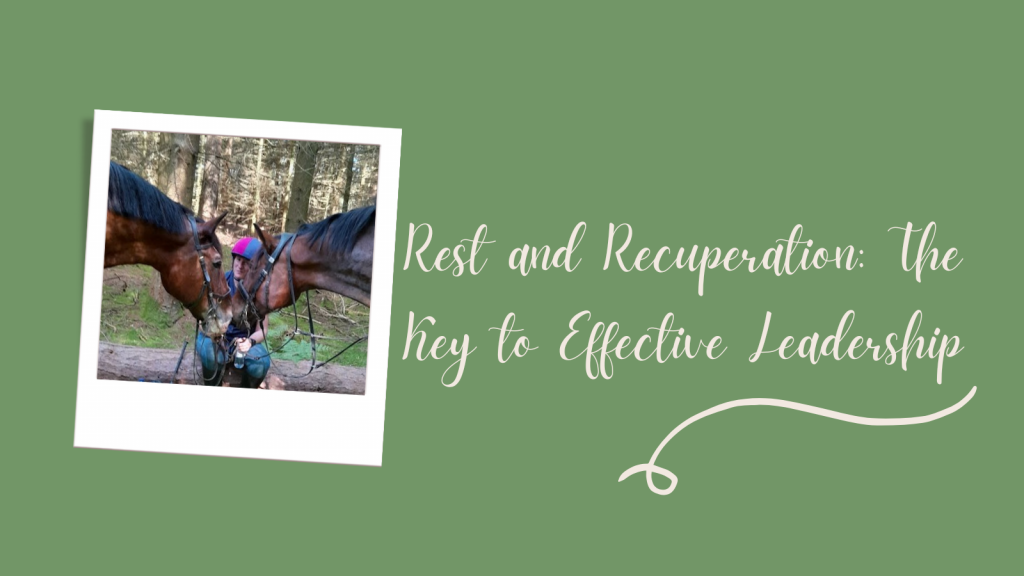
Rest and Recuperation: The Key to Effective Leadership

Research shows that leaders perform better when they take time to rest properly and don’t ruminate over work related matters after hours. This may seem obvious, but rest is so often neglected or undervalued and seen as a luxury rather than a necessity. The reality is that it is actually a benefit for the organisations that leaders serve if those leaders get quality rest and recuperation.

The Importance of Leader Recovery

The Harvard Business Review article Want to Be a Better Leader? Stop Thinking About Work After Hours, is based on research by the authors, Remy E. Jennings, Allison S. Gabriel, and Klodiana Lanaj titled “The importance of leader recovery for leader identity and behaviour” published in the Journal of Applied Psychology, in 2023. A 10-day diary study involving 73 leaders and a “matched follower” (employee they line managed, showed that when leaders “detached” from their work in the evenings, they felt more recharged the next day, which helped them to “identify” more strongly with their leader role. Conversely, on days when leaders ruminated about work in the evening, they felt more drained the next morning, hindering their ability to identify as a leader.

The idea of “identifying” emphasizes leadership as a way of “being” rather than “doing”, leadership is so much more than having a list of tasks to complete, it is about inspiring and engaging others. Characteristics of great leaders, such as authenticity, curiosity, analytical skills, adaptability, creativity, comfort with ambiguity, resilience and empathy require a leader to be feeling energised. These characteristics are less likely to show up if a leader is feeling exhausted. I believe that the same is true for teachers as the leaders in their classrooms.

The research also found that the “followers” considered the leaders to be more effective too after rest, rating them as more “powerful” and “transformational” than those who had ruminated the night before. Interestingly, the research showed that rest (or lack of it) affected newer leaders more than those who had been in leadership roles for longer. When we are new in roles, everything takes a little more effort until we have built those pathways and strong habits to support us.

This research highlights a clear link between rest and recuperation and the ability to lead. There is, however, another equally serious consideration, as the absence of rest also increases the likelihood of a leader suffering from “burnout.”

Beyond Being your Best – the Increased Risk of Burnout

‘Burnout’ is recognised by the World Health, defined as a “state of physical and emotional exhaustion brought on by prolonged or repeated stress”. Though it’s most often caused by problems at work, burnout can also be linked toother areas of life, such as parenting, caretaking, or relationships.

Common signs of burnout include:

  • Feeling tired or drained most of the time.
  • Feeling helpless, trapped and/or defeated.
  • Feeling detached/alone in the world.
  • Having a cynical/negative outlook.
  • Self-doubt.
  • Procrastinating and taking longer to get things done.
  • Feeling overwhelmed.

Burnout is not simply a result of working long hours, juggling too many tasks, and not taking time to rest, though those both play a role. Other causes can include not feeling in control of how a job is carried out, being required to complete tasks that conflicts with your values, working towards a goal that doesn’t resonate, or when lacking support.

If responsibilities don’t match a leader’s true purpose or if they have lost sight of this, and if they don’t take a break occasionally, they increase their risk of facing burnout, as well as the risk of developing many of the other mental and physical health problems that often come along with it, including headaches, fatigue, heartburn, and other gastrointestinal symptoms, as well as increased potential for alcohol, drug, or food misuse.

One of the common signs or stages of burnout is a tendency to over work. This can be linked to self-doubt and a perceived need to work more to be successful. Presenteeism and excessive working become greater in many people beginning to suffer from burnout.

Given the importance of rest, it seems paradoxical for it to be so common for teachers and leaders not to prioritise this important rest, to continue to work and/or think about work well after the official work day has ended. So what stops teachers and leaders from taking that much needed rest and recuperation?

Rest: What’s Getting in the Way?

The authors of the article state’ “The high demands of a leadership role lead some to perceive that the only way to perform well is to work around the clock. As a result, many may find themselves ruminating about an issue with an employee, trying to think of a solution to a client problem, or creating a mental to-do list long after they have left the office for the day or turned off their computer.”

Culture and Perception

Interesting that the article suggests part of this could be linked to a perception. As a coach, this makes me curious to find out more. How much of this is a belief or assumption that to perform well we need to work long hours and how much is the sheer quantity of work? Beliefs like this may seem like reality. These beliefs can go back to childhood, many of us will recall being praised for working hard as children and will also have been told that hard work was the route to success. We probably find ourselves sharing this praise and advice too and it is, of course true to an extent, but an over emphasis on this can cause us to believe that we need to work harder or longer than is necessary to be a success at whatever we do. Leaders may also feel that the higher pay they receive means they should work longer and harder than those they lead rather than the higher pay being a reflection of their responsibility, experience, and skills. It may be the norm in an organisation to work long and late. Positive comments made to and about those sending or responding to early and late emails (or whose cars are seen to arrive early and leave the car park late) compared to any judgement of those who do not may link to organisational culture. Some may feel positive about themselves for working these long hours.

Julie Mason on the website weareteachers.com back in January 2021 wrote about a “culture of over working. In her article she argues, “Overworking doesn’t make you a better teacher. There’s a toxic culture in education that associates overworking with being a good teacher. Your overtime is not a badge of honour but a systemic problem that leads to burnout.” She goes on to say “No one is saying we shouldn’t work hard. There’s no question that teaching requires hard work; it’s rare that we end the day with every item crossed off our to-do list. But we need to accept that there is always going to be more that we can do. This is why so many of us sacrifice our physical and mental health and work well beyond our contract hours. We are sprinting towards a finish line that keeps getting further away.”

One thing that is also evident, however, according to many who contacted me is that we can’t ignore workload.  

Workload

A former colleague commented in response to my initial post about Rest and Recuperation for leaders, “Big shifts in workload are needed especially for Middle Leaders in schools, you can’t switch off if you’re having to use evenings and weekends simply to keep up to date. I know some Heads of Department who work 70 hours per week to get the job done.”

Many school leaders talk about this at a senior level too. Moustapha, who leads an international school says, “I can relate to the challenge of disengaging from work after hours, particularly in my role which involves extensive planning and preparation. In the context of running a school, there are immense day-to-day responsibilities that often extend beyond regular working hours. This includes planning, organizing workshops, and developing new initiatives, which are critical but time-consuming tasks. The ability to stop thinking about or doing work after hours is significantly impacted by the sheer volume of these tasks. The nature of my job requires constant attention and foresight, which often spills over into personal time. This overlap is a constant struggle, and finding a balance remains a challenge”.

There is a lot of research and conversation on social media about the level of teacher and school leader workload and its impact on many practitioners. Some schools and trusts have managed to cut this down considerably, but many are still citing this as an issue. Beyond education too, there have been a lot of studies about organisational practice and workload for leaders and managers.

The 2023 DfE research report “Working lives of teachers and leaders” found that full time leaders reported working on average 57.5 hours per week and teachers 51.9 hours per week. Both are above the “standard” 37.5 hours considered full time in many occupations. Over four in ten leaders (43%) reported working at least 60 hours in the reference week and two in ten teachers (19%)

More positively, some teachers I spoke to who shared that they could complete their work in their PPA time and some Headteachers too who reported having been able to leave work at school and ensure they had full evenings to rest – at least three times per week. We can see that many leaders do have a significant workload. There can also, in both teaching and leadership be a grey area over working hours and the expectations of when emails should be responded to and what hours should be spent working.

Clarity over Hours

Darren, a teacher, and presenter on Teachers Talk Radio, wrote “I think the issue with this is the lack of definition of ‘working hours’. We can’t switch off when the kids go home because then lessons don’t get planned. So the onus then falls on us as individuals to decide when our cut-off points are. That’s not always easy.”

How do we decide our cut of points? Looking back to the points on culture, perception, and workload, this may not be straightforward. I think, however, it does show the importance of an awareness of these things. Awareness, for example of the need for a cut off could be helpful.

What also became clear from the comments and my own experience of leadership, is even with awareness, with a decision made to stop work and a choice not to work, no priority deadlines that need to be addressed, it can still be difficult to switch off.

The elusive ability to switch off.

Even when leaders and teachers have stopped working, their brains may not get the memo to stop. The article referred to at the beginning is about leaders ruminating, thinking about work rather than working. So it is much more than just continuing “doing work”, the problem is about still thinking about work.

This is something I can relate to as a former headteacher. Rob, agrees, saying that this inability to “switch off” was something he had also experienced as a head teacher. It isn’t just heads and school leaders who report challenges in switching off, a second year teacher, working in a UK Primary messaged me to say that even though he can leave work at a reasonable time most days, completing most tasks in his PPA, he also struggled to switch off after the school day.

A combination of factors

It seems that it is likely to be a combination of factors leading to the difficulty in switching off and resting fully outside of work. Some factors are general, some are specific to each context. In an international school setting, school leader Frances, agreed it was difficult to switch of and rest, explaining “although it is stressful having to continue to do further work in the evenings after school is over, I feel more stressed if I switch off and do nothing.” When asked how easily she could stop thinking about or doing work after hours, she responded “Not very easily. It is always at the back of your mind, nagging you and creating this sensation that you need to stay on top of things otherwise you are not good enough to be in the job.” She described how this was made more difficult by having emails on her phone, explaining “if you are aware that they are coming through and you need to check them to see if they need immediate attention.”

Another senior leader who didn’t want to be named told me that they find it extremely difficult to stop thinking about work and shared their saying “I go to work to attend meetings, and I come home to work”. It is quite common for them to be working till 22:30 5 or 6 days a week. When they responded to me it was 7pm on Friday night, and they were working their way through the day’s emails. They commented specifically about parental expectations in their own setting, saying that in their school, parents expect a reply to an email within a few hours regardless of the day or time that it is sent. They went on to say the digital age also does not help, as work never remains at work now due to devices. This is hugely concerning, complex and potentially not sustainable, clearly some change is really needed here.

Frances also spoke about workload, saying “Sometimes you have to pick up and continue working throughout the evenings as there is never enough time during the day to get things done.” Frances also cited “Guilt and fear of falling behind and letting other colleagues down” as barriers to recuperation. Whilst this is about workload, it also shows a deeper level of concern for competing tasks and a real sense of responsibility to colleagues.

Enabling Leaders’ Rest

So what can we do as teachers and leaders to try to take this time away from work so we can be our best leader and teacher selves? The writers in the Havard Business Review offer a few practical recommendations for leaders:

First, they advise that leaders find ways to detach after work. Citing research that shows that leaders have a tendency to overwork and feel the need to always be available, they emphasize the legitimacy of disconnecting from work and taking time to recover rather than continuing to think about work until late into the evening. They recommend that leaders consider mastering a new hobby, read, exercise, spend time with friends, generally trying to find activities that they enjoy in the evening to turn their thoughts away from work.

Secondly, they advise leaders to establish boundaries between work and home. As leaders tend to influence the communication norms for their teams, clarifying their own hours of availability to employees may be helpful in ensuring adequate time each day to recover after work. In addition, creating guidelines for yourself about when work-related interruptions are allowed during non-work hours (e.g., what situations constitute leadership emergencies) may be a helpful practice both for leaders, and their teams.

Lastly, they suggest that leaders should consider carefully how they spend their non-work time and advise leaders to use recovery time to combat depletion and enhance your identity as a leader. They explain that it uses energy to connect with leadership roles. Leadership is hard, and those feeling refreshed in the morning may be more emboldened to take on leadership responsibilities compared to those leaders who start their workday feeling drained.

Recovery time can be used well if you focus on the seven types of rest advocated by Dr Saundra Dalton Smith (and the subject of a previous blog). Rest is more then just siting still or being quiet (although this may help some). It is about finding the activities that really help.

Self-coaching or working with a coach to look at this could also help. Checking for any perceptions or beliefs about over working. There is also a case here for some organisational and cultural change in some circumstances too.

Ideas from current leaders

Moustapha, one of the International School leaders says, “What helps in achieving a semblance of balance is setting clear boundaries and practicing mindful scheduling, though admittedly, this is easier said than done.” Frances advises “Planning things to do in advance sometimes helps as it forces you to switch off.”

A teacher who described how he struggles to switch off says that he sets a prompt leaving time from work each day. Knowing how difficult it can be to switch off, this, along with going to the gym helps me to destress/ relax after a busy day. He describes how he also tries and organise one thing each week like going out for dinner to have a life after working hours.

And another teacher says she used to struggle to switch off but describes how now she has stopped taking her laptop home most nights, it has improved her mental health. Whilst workload can still be an issue, if she has something to be completed, she stays at work, creating a clear divide between home and work. She also says that having a partner that also works in education, and they have adopted a policy of no shop talk at home which benefits them both and allows them to be present in what we are doing. She also says walking the dog and getting out and about also helps.

Jack, a school leader in Mexico describes how since starting a whole-school leadership position, he has been going for walks in the evening and ensuring that has have time with his family, either reading together, playing football or at the very least chatting over a meal each evening. He describes making a conscious decision to “switch off” after 8:00 pm which he says has been very helpful in marking the difference between work and leisure time.

Elle, another international school leader describes the benefits of turning off notifications. She says she can be reached in emergencies, but all other work-based forms of communication are turned off when she is done with work for the day. That might not be at 5:30pm but whenever she chooses to choose is her ‘stop’ time. If she still has notifications, she says she must look and would then be thinking about it even if she can’t do anything until back at work the next day. Elle also says “When I do need to work at the weekend, I make sure I agree with myself the ‘stop’ point in advance. Maybe an amount of time or a task. I then plan to do something immediately after, even better if it’s something I must book so I make myself stop and go. This has helped me not overwork at the weekend – and means I get my nails done regularly! Elle also says exercise helps and describes how heading straight to the gym at the end of the day helps to process and decompress.

Reluctance to Speak about Rest

It has been good to speak to some leaders and teachers about their experiences with rest switching off from work. What I was surprised about, however, was the vast number of leaders and teachers who were so reluctant to speak, or who didn’t want to be referenced or quoted. Some of the reasons they gave, for not wanting to speak about taking rest/recuperation were fear of judgement or a fear of getting more work. Some said that people wouldn’t think they were doing a good job if they had time to rest. Clear research says that taking time to rest makes leaders better – and I believe that would apply to teachers too. Why then can’t we celebrate this?  People were equally reluctant to speak about having too much work. Some said this was for fear of reprisals at work or being labelled a trouble maker.

Conclusion

The evidence is here – rest is an important part of a leader’s life, not just for themselves and their families, but also as a key component in becoming a better leader, for the benefit of their organisations, teams and anyone they serve.

For some sectors, there are almost certainly some structural, significant changes needed to make this more effective and consistent for leaders. Ther are also some cultural changes, which I think we are seeing the star of about not seeing over work as a badge of honour.

Let’s not normalise over work. Let’s continue too to encourage all leaders to look to this research. All tasks come with an opportunity cost – if they are less valuable than the need to rest and create better leaders and teachers, they need to be taken from the routines and “what we do”.

At an individual level we can all take our part. We can take steps to look after ourselves, be intentional about rest and recuperation, setting time for this as part of our schedules, knowing it makes us better leaders, as well as enabling us to be healthier humans.

How are you going to make sure you get the rest you need and disconnect from your work after hours?

New Year, New Goals?

I have always been somewhat on on the fence when it comes to goals. I know some people found the idea of setting goals, particularly at New Year quite jarring. Looking back, sometimes I have found myself to be in a good place having not set goals. other times, I think I have probably missed opportunities.

I wrote about goals in one of my earlier blogs back in April, following on from a previous post about values.

What I have definitely learned is that the most important thing about goals is that if you are going to set goals, it is vital that you make sure they are the right goals for you. Looking back, where things haven’t gone well or I have found myself to be unhappy, I realise now that I had been pursuing the wrong goals. These were often goals that I thought I ought to have, or that were expected of me (or so I thought). Often these goals were not in line with my values, or my purpose, or were just not right for me at the time.

It may take some time to find the right goals, and self coaching or speaking to a coach can help with this. There is quite a body of research about goals, and evidence strongly points towards the importance of goal setting. Where I have set goals that were right for me, in line with my values and purpose, achievable and yet challenging, I have found them helpful.

I also firmly believe in starting by celebrating wins and this forms an important part of goal setting for me now. For me, 2024 will be about building on some of these achievements, as well as making some changes.

Here are some useful questions to think about when setting goals, and what better time that as we approach a New Year?

  • What matters to you? What really matters, not what you think should matter, or others want to matter.
  • What has gone well in 2023? What have you achieved and what has brought you joy?
  • How do you want to feel by the end of 2024?
  • What do you want to keep in 2024?
  • What do you want to be different in 2024?
  • What do you want to do in 2024 and what do you want to achieve in 2024?
  • What might get in your way? What can you do to keep on track? Who can help you?

Now imagine you are doing the things you want to do in 2024 and/or have achieved the things you want to achieve. How does that feel? Imagine you’re looking back at the end of the year. Are you in line with your purpose and values? What advice would you give yourself now?

What about you? Goals or go with the flow? What do you want 2024 to bring for you?

Happy New Year, I wish you health, happiness and everything you want 2024 to bring.

2023: Celebrating the Wins

Coming towards the end of 2023, I have started to see several posts about setting goals for the forthcoming year. I have set goals before or even New Years Resolutions and achieved with varying rates of success. Completing “Couch to 5K” a few years ago was probably one of the more successful, I still run, which I had never done before January 1st, 2020. Other goals or resolutions have been less effective and fallen by the wayside.

This year, I wanted to think differently, so I have been looking to the areas of positive psychology and neuroscience, prompted by learning from the coach training I completed a while back, for some guidance, which has brought an awareness of the benefits of celebrating wins first before thinking about goals. Previously, goal setting, for me has involved focussing on what has gone wrong or somewhere I believe I am failing.

Negativity Bias

Does this sound familiar? Research shows that, we tend to ignore our personal achievements and dwell on our shortcomings instead. In part this is the way we are built, what psychologists call ‘negativity bias’. Studies show we’re more likely to focus on the things we haven’t achieved than take stock of what we have accomplished.

Our negativity bias means we tend to pay more attention to negative events than positive ones and often make decisions based on negative rather than positive information. This is likely to be a result of evolution. Earlier in human history, paying attention to bad, dangerous, and negative threats in the world was literally a matter of life and death. Those who were more attuned to danger and who paid more attention to the bad things around them were more likely to survive. This meant they were also more likely to hand down the genes that made them more attentive to danger.

The evolutionary perspective suggests that this tendency to dwell on the negative more than the positive is simply one way the brain tries to keep us safe. Whilst this may still serve a purpose, it is something that can also hold us back and ultimately be damaging. An awareness of it and developing alternative thought patters is therefore important.

Why Focus on the Wins?

Spending time focussing on the positives, our achievements, wins, however, small makes us feel better and makes us more likely to achieve further success. Our brain is a reward-loving machine. At the centre of this is dopamine, a neurotransmitter associated with pleasure, reward, and motivation. When we achieve a goal or receive positive feedback (even from ourselves), causes the release of dopamine, which boosts our mood, motivation and attention. It also signals us to keep doing the activity again and again. Missing this celebration, therefore, means that we not only miss out on the feelgood element, but also the prompt to support future achievement. If we consistently undermine or overlook our successes, we can inadvertently starve our brain of this positive reinforcement. This can lead to negative neural pathways and foster Imposter Syndrome or other forms of self-doubt.

If you acknowledge your skills and celebrate your achievements, you’ll begin to act in a way that embodies confidence and competence. If you focus on failure, you are more likely to doubt yourself which will make you less likely to succeed. Recognizing your wins, no matter how minor leads to improved performance, increased motivation, and a sense of well-being. This has been studied closely, multiple studies have revealed that individuals who take the time to acknowledge and celebrate their achievements exhibit higher levels of self-esteem, reduced anxiety, and enhanced job performance. One study indicated that participants who reflected on past successes before embarking on a task were more resilient and performed better than those who didn’t.

Embracing Success can also be a challenge if we have been brought up to be modest. We may (I know I do) feel uncomfortable about acknowledging achievements publicly. Acknowledging achievements doesn’t, however, necessarily mean flaunting them. It’s about internal validation. I did want to share some thought, partly for my own recognition, and, hopefully, to help you look for your wins too.

Reflecting on My Wins

2023 has been my first full year of running my own business. Whilst I have also had a school-based role for part of the time too, this has been a year of learning about business. Setting up my accounts, thinking about pricing and meeting an accountant to organise how I pay myself and ensure tax is paid properly has been an accomplishment.

Growth and expertise are two of my core values, this year I have been pleased to complete further coach training, so I can now be confident in coaching teams as well as individuals, I passed the new coaching competency exam, and having completed 500 hours of coaching (and the previous 125 hours of coach training and 10 hours of mentor coaching) became accredited at the higher level of PCC (Professional Certified Coach).

Connection is another core value of mine, and the relationships I have built with the school leaders I have coached, supported and the teachers I have mentored have been positive. Their feedback has been super, with them commenting on how the space I provide enables them to think and grow, and how the support and coaching has benefitted their wellbeing. Again, with wellness as one of my core values too, seeing the wellbeing benefits for school leaders and teachers has been great.

My overall purpose professionally is to support school leaders and teachers, in whatever I am doing. Indirectly, by providing governor training, which has been well received and from which feedback shows positive impact has also been a win.

Additionally, in a totally random move, I joined Teachers Talk Radio as a host this year, my fortnightly show has begun to attract downloads and feedback has been positive. I have also enjoyed this new experience, growth and learning.

In terms of achieving personal goals this year, I have been pleased to be able to spend some more time with my husband, Richard, to support him with his travelling role and be more present for him. My Dad too, has benefited from us having some more time together, and I have been pleased to be able to support him with shopping and other appointments as well as regular trips out for coffee and lunch. It was also great to have organised a reunion with friends from university in November, I can’t believe 30 years since we first met, and enjoying weekend back in Birmingham this year was great. Certainly a highlight to look back on.

I pleased to have kept up with running, especially with the dogs and have joined a gym and started Pilates. I’ve enjoyed some day light horse rides and attended a dressage competition. I have also embraced my creativity, beginning to master pyrography and Dremel engraving and producing some items for home and for gifts. All small wins, but important for wellness and creativity.

Next Steps

The process of writing these has brought a real wellbeing benefit. I have also been inspired to think of next steps and new goals, building on the success here. I am careful not to let this take away from my enjoyment of the simple accomplishments – and sometimes a clear “that’s good enough” means we don’t need to take something further – just enjoy the achievement. It has, however, helped me to begin to clarify some goals.

How to Embrace Success

The process of listing and writing a little about each win has inspired some new goals for 2024 – so look out for those later this week. First, however, I want to focus on consolidating the important step of embracing success. Here are the steps to follow if you want to gain the benefits from embracing success too.

First, acknowledge and make a habit of writing out your accomplishments, no matter how small. Some prompts that may help are:

  • How much have you changed in the last year? And in what ways?
    • What challenges have you faced and what did they teach you?
    • And what are the learnings you are taking into this new year?
    • What are you most proud to have achieved?

Next, share your achievements. You can talk to friends, mentors, colleagues or a coach. Talking out loud can help and their feedback may be helpful too, but remember, this is just one perspective.

When someone offers praise, accept it gracefully instead of deflecting or undermining compliments. You can try a simple “Thank you” as a response.

Why You Should Share Your Wins

Celebrating our achievements inspires others to do the same, creating a ripple effect. If we can encourage and uplift one another, we can drive collective growth and innovation.

What have been your accomplishments this year?

Even the smallest wins can cause the dopamine release and then the prompt to repeat these, thus building future success. Sharing your wins will also inspire others to do the same.

Purpose: The Importance of the Why?

What does it mean to have purpose in life? Why is it important? and how can we find our purpose? These are the three questions I shall endeavour to answer here, as well as sharing examples of some purpose driven educators and leaders.

First, a bit off context. Most of my professional life has been in the world of education. Teaching can be a tough job with, for example, Ofsted and the wider accountability structures, cultural issues as well as underfunded services which are placing ever increasing pressure on educators and school leaders. There is, however, a lot of “purpose” in the education profession which I believe is a key factor that keeps great people in the profession.

At the moment, teachers and school leaders need some major changes to happen, including significant reform to the Ofsted inspection and reporting system, changes to accountability around exams and progress measures as well as increased funding for schools and other related services.

There are, however, real wellbeing benefits of having and reflecting on our moral purpose. I’m not talking about toxic positivity, but here I shall reflect on and share my learning about the importance of purpose.

Purpose – What’s Special about the Why?

Philosophers have sought and debated “the purpose of life” for centuries. I’m not going to attempt that here, but I am going to suggest that what matters is “our purpose in life”.

Our purpose or meaning in life is generally thought of as the central, motivating aims of our lives. Sometimes referred to as the reason we get up in the morning, our purpose is closely linked to our values and can guide our life decisions and direction, influence our behaviour and ultimately bring meaning to our lives.

Writing in the Harvard review in September 2023, Ayse Yemisicigill, Melis Sena Yilmaz and Matthew T. Lee define purpose as:

“an overarching intention that is personally meaningful to you and of consequence to the world beyond yourself. Your purpose can help you organize your life, give you a clear direction, and motivate you — especially when you encounter life’s inevitable setbacks and disappointments”

We all have a particular set of skills, talents, experiences and interests and our purpose is related to these. Our purpose is what motivates and drives us, what keeps us going when challenges are tough. It is also about the long game rather than short term or in the heat of the moment.

Purpose, for many is connected to meaningful work, or a vocation. It can also be about nurturing a family, bringing happiness to loved ones or commitment to a community. Purpose isn’t fixed and is likely to change through life. Change of purpose may happen after a significant life event, such a bereavement or children growing up or a change in relationship status.

Having a purpose is essential but finding what brings us meaning may not be straightforward and many of us can be confused about our purpose or lose sight of it from time to time. If we lose sight of what keeps us going, especially when faced by challenges, our mental health is likely to dip and our motivation will drop.

Writing in Psychology Today in March 2022, Kristen Fuller MD, a Physician who has become a writer, editor and reviewer explains that, according to research, individuals who have a strong sense of purpose and meaning in life tend to have better mental health, overall well-being, and cognitive functioning compared to those who lack a sense of purpose.

Fuller, who specialises in mental health, addiction, and primary care goes on to explain that individuals with a sense of life purpose are less likely to have heart attacks, strokes, and dementia. She cites several studies that also show that individuals with a strong sense of purpose tend to engage in healthier behaviours and lifestyle choices such as practicing regular physical exercise and participating in preventative health services.

A study in 2013 found that individuals with a strong sense of purpose in life were better at stress management and had better sleep than individuals without a strong sense of purpose. Research has also shown that having a positive and meaningful aspect in life may improve brain function, including overall cognition and memory. Additionally, individuals with purpose tend to have lower instances of depression.

The benefits of having a clear purpose are evident from the research research, I was interested to read and hear how highly a number of the most respected and influential education leaders and practitioners, as well as some earlier in their careers with whom I have been fortunate to work, regard purpose and how evident this is in their work.

Purpose Front and Centre

A Recent interview with Adrian Rogers, CEO of Chiltern Learning Trust as part of the TES 10 questions series highlighted an example of moral purpose in action. When asked why he works in education, Adrian responded by speaking about his background, describing how he was the first person in his family not to go down the pit, and how his intelligence gave him opportunities. He went on to describe how his background drives him, stating “you want children to have a better opportunity than you had, to make the schools that we run a better place for the children, to give them those wider opportunities.” He describes how part of his career has been in affluent areas but having a preference for schools in working class areas and a focus on raising aspirations. Later in the interview, where he describes some of the challenges he faced as a bright boy in a tough school, you can see why he is so keen to ensure the best possible educational experience for young people now across his trust.

And Adrian isn’t alone in his purpose driven leadership and sense of purpose in his professional life. I wrote to a number of leaders and educationalists asking them about their “purpose”. Sam Strickland (@Strickomaster on Twitter/X), Principal, CEO and author responded “I initially entered the profession due to my love for education, children and my absolute passion and love for wanting to teach history. I have absolutely loved my time in the profession. What keeps me here? A passion and desire to want to make a difference to my school, my staff, the pupils we serve and the community where my school is situated. I also see it as a privilege and an honour to be able to support the wider educational community through the opportunities afforded to me and my school.”

So, Sam is clear about his purpose, initially in sharing his knowledge and love of history – and then, that phrase we hear often “to make a difference”. As a Principal – the purpose of wanting to make a difference for his own school community – interestingly, specifically mentioning his staff.  Sam’s support for other teachers and heads beyond his own school is also widely known and so I think this sense of purpose is clear. Huge thanks Sam for responding.

Jamie Pardon, Director of Education and Former Headteacher in Pioneer Learning trust describes how she didn’t go into teaching directly from school, instead she started working in a  nursery as a TA and fell in love with the role. Jamie tells me that she didn’t love school herself as a pupil and student, largely after experiencing verbal and physical bullying in Year 7. Explaining this further, Jamie says, “I wanted to be part of the solution,  my motto is ‘be the change you want to see’. I went into primary rather than secondary, simply because I couldn’t pick a subject! What keeps me in education put simply is I still believe in the reasons I went into teaching. Of course, working in a fantastic organisation that is forward thinking and invests in people in all levels key too!”

Paul Carlile, a former Headteacher and now consultant and leader linked to a large successful MAT in Hull responded “So, I went in to teaching because as a secondary student who wanted to study music I missed this opportunity because of the inadequate teaching I received over 4 years … meaning I was unable to make the grade – ( syllabus not covered in both practical and theory ) the college wouldn’t accept me without the grades. I decided to go in to teaching to ensure pupils receive an equitable experience and realise their dreams.”

Geoff and Margaret, favourites of mine on X, who you may recall returned to the classroom answering the “call” for retired teachers to return during the pandemic. During today’s pub lunch, they said “ It was the children who brought us into teaching and the children who kept us there! We both just wanted to make a difference. Even though the job can be exhausting, it’s a privilege to be able shape a life.”

For the ECTs I have had the privilege of mentoring, talking “purpose” has been fascinating. For Katie who teaches year 1, it is “helping the children to develop their understanding of the world.” Oliver, who teaches year 2 tells me he gets purpose from seeing the lasting impact we have as teachers. He also values he bonds we create, says he enjoys the joy of being crazy and seeing the progress children make. For Celine, she recalls the positive impact one of her own primary school teachers had on her, and has recently been in touch with her. Such an inspiration.

Bex Owen, currently acting head at Little Paxton Primary school has clear moral purpose. As a former pupil at the school herself, now as substantive deputy head and currently acting head she describes always wanting to be a teacher. She explains, “I am massively passionate about bringing out the best in people and helping them to discover what they are brilliant at. I do want to make a difference in children’s lives and give them the best start to their education so they become lifelong learners. Even though education can be tough, it really is the best job in the world. Seeing children curious, eager to learn, getting experiences that they may not have without school and growing up to make a difference in society makes everything worthwhile. There is not a day, or hour, that is the same so teaching is never boring. Knowing you unlock the future for children through what you teach is an amazing feeling!” Bex has been at the same school for her whole career, the same school she attended as a child, and describes herself as invested in the local community.

Other leaders have similar stories. Molly describes wanting to teach because her mum was an LSA in a school, she would often go and volunteer in her school, and absolutely loved watching the teacher teach the children and interacting with them. Molly says when she was younger she really enjoyed school and worked hard and now, as a teacher, some days are hard but the reward of teaching and seeing the children achieve in small moments is absolutely amazing and so she wouldn’t want to do anything else.

Alex described how he was really unsure of what to do after leaving university so he tried volunteering in schools and LOVED it. Started in secondary then tried primary. He describes the satisfaction of being part of the school’s “journey” and feeling like you are having an I impact.

Some common themes and some contrasts. The influence of their own experiences as children and young people has been interesting, either inspired by school days they loved, or not enjoying school for various reasons and wanting to make it better for the next generation of children and young people seems to be a common theme.

For me, school wasn’t always a great place. Primary school didn’t always provide much in the way of challenge, and then at secondary school, this was also often the case. I often wasn’t that enthused or inspired, but do remember some teachers who did provide work, lessons and discussion that captured my imagination and made me think. In addition, I never really felt that I “fitted in” and so I have always wanted school to be a place that is as inclusive as possible – where children and young people can be who they truly are and understand about belonging rather than fitting in.

I guess, I wanted, as a teacher and then as a head to make sure this was the case more often ideally all of the time) for the children in my class. Becoming a school leader this widened to school level, wanting to support and challenge teachers to be the best they can be. Since leaving headship, I can see my purpose has changed a little. Now, I want to be able to enable school leaders to be the best version of themselves, anything I can do the help, through any coaching, support, governance to enable them to thrive and make their schools great places for all children and young people to learn.

What is clear is that however challenging education is, it is a vocation that brings a sense of purpose, tapping into this, thinking about it and bringing it to the front of your mind will bring wellbeing benefits.

So, how can we find our purpose?

Finding Purpose

Just because it is healthy to have a sense of purpose or meaning does not mean that a sense of purpose is easy to find. Sometimes we also assume something is our purpose because it is what we have heard, or we feel it ought to be. That is the danger of giving those examples – whilst it is great to hear about others, it is our own purpose that matters to us, and the inner work we may need to do to really find it and articulate it so that we can strive to live a life that aligns to our purpose.

  1. Take time for yourself. Finding your purpose will take time. You can use the rest of the ideas here as a basis for writing, or reflecting, or work with a coach to explore this further. Whatever you do, it will need some quality thinking time.
  2. Try new experiences, get out of your comfort zone and then take time to reflect on your experiences. This was one of the outcomes from the research into finding purpose done by Ayse Yemiscigil, Melis Sena Yılmaz and Matthew T. Lee published in September 2023 in the Harvard business review. Their study with 400 students graduating from high school showed this to be a prime factor. The research also showed that purpose was strong where people were engaging in experiences that showed them how their interests can help them contribute to others’ lives in ways that are personally meaningful. Reflection on these experiences was also found to be crucial, specifically reflecting on how the experiences linked to something that was socially useful.
  3. Search Inward. Tony Robbins, American Author and coach says that the questions “What is my purpose in life?” and “How can I be happy?” are actually the same – and they have the same answer. He argues that you can never truly understand how to find your purpose by listening to others’ opinions and seeking outside approval and that everything you need is within yourself. Robbins argues that the only thing holding us back is our own limiting beliefs and advocates identifying each limiting belief and replace it an empowering belie. Through doing this, he says we develop greater self-awareness and when we’re in control of our emotions, we’re in control of our life. We can discuss our goals and purpose, this is advocated strongly through the research by Ayse Yemiscigil, Melis Sena Yılmaz and Matthew T. Lee, taking feedback and using as we wish, but ultimately, it is up to each of us as individuals to do the work, and make sure we are focussed on our own purpose, not something we think we should have as our purpose. A non judgemental coach space can provide this opportunity for reflection.
  4. Purpose before goals. Robbins says if you focus only on achieving short-term goals, you will never find your true passion or learn how to find your purpose. The goals you work toward must always be based on finding your purpose. If they’re not, you’ll only feel a fleeting sense of accomplishment and will soon be seeking something more. You won’t be able to see that life is happening for you instead of to you. When you set a goal, ask yourself: How will this help me feel more fulfilled? How does this relate back to my purpose? Robbins advises keeping a journal to keep your purpose at the top of your mind.
  5. Focus on what you have. Developing an abundance mindset helps us to see beauty and goodness all around us and makes our purpose in life much clearer. It helps us to feel like we have more of the answers and that we are on the path to achieving meaningful goals. When we focus on what we have, fear disappears and abundance appears.
  6. Take ownership of your life. Think carefully and decide what’s truly right, You must not let yourself be driven by fear or anxiety and realise that every circumstance in your life is a result of your own decisions.
  7. Think about what brings you joy.  When you discover what brings you joy, you usually discover where your passions lie. Your abilities are connected to that sense of joy, so examine them too.
  8. Think about your needs. what are your most fundamental needs? This is an easy one to get wrong, and it is common for us to have a false sense of purpose based on others’ expectations rather than our own needs. Fulfilment begins with your innermost needs.

These ideas for finding our purpose make sense when we also reflect on some of the examples from those who generously shared their purpose with me. New experiences were common, positive benefits for others are also evident and common features of core purpose.

Reflections on Purpose

One thing that I can honestly reflect has been on my work this year with a Primary School that I have really grown to love. When I ask myself why this work has made me smile every day, always want to get up and go in to school, to be out on the gate whatever the weather, to work through any challenges, I can see it is all about the purpose. Supporting the ECTs to be the best versions of themselves, to be able then in turn to provide great education and opportunity for this wonderful school community has brought real alignment with my purpose. Of course, them being a great team to work with and the children and families being lovely too has helped. It has been a wonderful to spend the past 12 months with the ECTs and this last term with the new leadership team, and now I know they will continue to go from strength to strength. It has been a privilege to be even just a small part of their journey. Thank you Springfield for everything. It’s all about the purpose.

Wellbeing: A whole self check in

Do you have a particular time of year that you find more difficult than the rest of the year? Many of us do, for some, it is Christmas, for others it is mid January after the festivities have died down. For me, it is early November, for a number of reasons that combine to make this a time when I am likely to feel low, less motivated and generally less mentally well than most of the rest of the year.

A number of factors combine to make this time particularly challenging for me.

The clocks go back at the end of October, leaving the first week in November feeling darker in the evenings. A subtle change, but I find dark evenings difficult, lots of the things I enjoy and find make me feel better need outdoors and daylight, or are certainly better like this – horse riding, walking, running all work better with lighter nights, especially if work doesn’t allow time in the day. Whilst not the shortest nights, at this point, after the change and loss of an hour of evening daylight, I also know that “this is as good as it gets” in terms of evening light for four months. It is the time of year when I lost my mum, a long time ago, when I was on teaching practice, and I think these factors together make this a difficult time.

A couple of years ago, during November having what I now know were symptoms of burnout that had grown over a couple of years, my work as headteacher was feeling unmanageable I reached a point where I needed to stop and take a break. I was fortunate to receive some excellent support, from the wellbeing service our school used, my coach, some colleagues past and present and friends and family too.

I returned to school for the end of term, and for the Spring term, but I had made the decision to take a new direction, and left at Easter. Since then, as a coach, supporting school leaders has been an important part of my work. Knowing more about myself and signs to look out for that tell me to focus a little more on wellbeing are important too. This brings me on to the whole self check in.

Wellbeing check in

I saw these resources earlier this year and particularly like ideas here on this poster as I think they are really useful as a check in.

Stress Container

The stress container is something I have used a lot as a tool to help me think carefully about what I need to do in order to maintain or return to a place where I am able to manage my stress effectively. It is a key part of Mental Health First Aid training, and I find it really useful.

Start by thinking of the size of your container, our vulnerability to stress is determined by a number of factors including genes, our life experiences and environment.

The sources of stress flowing into the container will vary for each of us, but can include work related stress such as workload, multiple and conflicting demands, finances, conflict, bereavement or poor diet. There is space in the container for some of these, but when there is too much at once and the container overflows, we will feel and demonstrate the effects of stress. We may become ill, snap, feel overwhelmed and generally struggle to cope.

Coping Strategies – Turning the Tap On

There are ways we can turn on the tap to let some of the stress out and reduce the overflow. For me, this is all about being outside with our animals, riding my horse or running with with the dogs. Physical exercise, rest – see my blog on the seven types of rest, meditation and generally taking time for yourself are all helpful coping strategies.

There are also unhelpful strategies, like drinking alcohol, overworking or excessive social media access. These may appear to help briefly, but quickly “block” the tap and create further overflow and as such are definitely best avoided.

The thing about the stress container for me is that it is visual, makes me think and rationalise and helps me to make deliberate choices about looking after myself. Making a note of this, setting myself some specific tasks to do that look after me and then checking back is important to keep me on track so that I don’t neglect the important task of looking after myself.

What can you do to prioritise your self care?

« Older posts

© 2026 MH Connection

Theme by Anders NorenUp ↑