Whilst women make up 76% of the teaching workforce, according to the 2023 DfE school workforce survey, only 70% of school leaders are female. In primary schools, women made up 85% of the workforce in 2020 but only 74% of headteachers were women. In secondary schools, women made up 63% of the workforce but only 40% of headteachers were women.
This statistical imbalance gives us all the more reason, on International Women’s day and all year round, to celebrate some of the amazing women in leadership.
We can all think of women leaders who have inspired us, we can probably also think of many men for whom we can say the same. We may have encountered poor leaders of both genders. This is a celebration of women in leadership, not a denial that some may be less strong and also not ignoring the many great male leaders out there too.
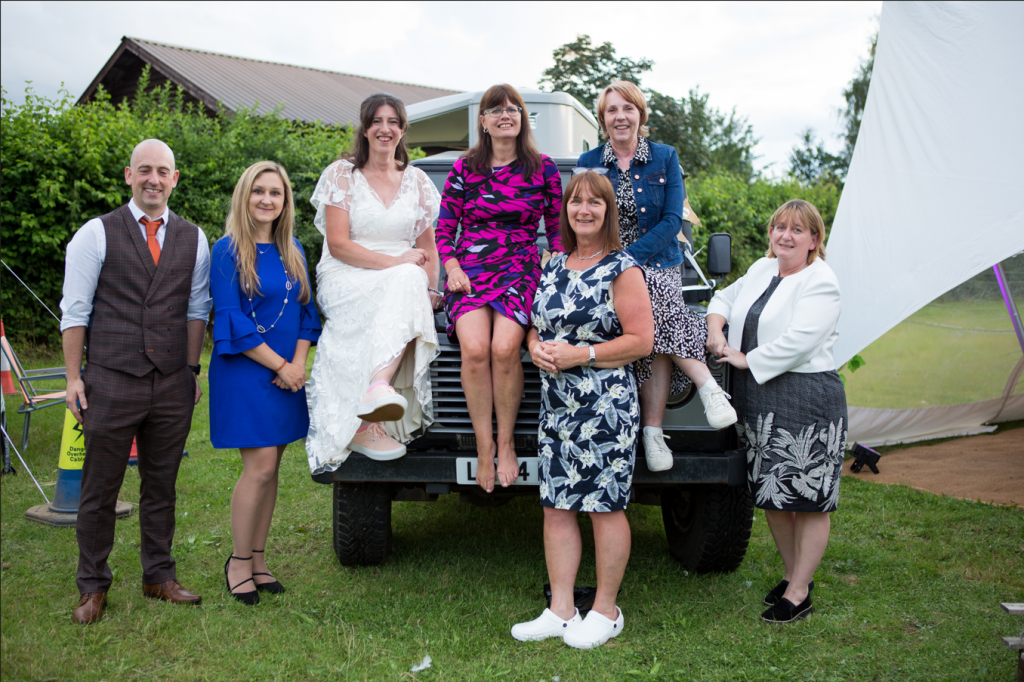
Them picture at the top is me, on my wedding day with the senior leadership team from my school when I was a headteacher. Some fantastic women leaders, and you will notice Paul, a superb male leader too.
Benefits of Women in Leadership
There is a range of evidence showing the benefits women leaders bring to the world of business. It is reasonable, I believe, to suggest that this research would be relevant to the world of education as leading teams has similarities across sectors. This research is not always new, a meta-analysis of 61 studies completed by Eagly et al in 1992 concluded that female leaders demonstrate more transformational leadership style and that women are more likely to model what’s good in the organization and inspire people to go along with its mission.
A study into team effectiveness (Woolley et al 2010) showed that team collaboration is greatly improved by the presence of women in the group. The research showed that groups that included more women or that were led by women exhibited greater equality in conversational turn-taking, which enabled the group members to be responsive to one another and to make the best use of the knowledge and skills of members.
In a national survey by the Pew Research Centre, (Taylor et al 2008), women ranked better than or equal to men in seven of eight traits relevant to leadership. Women were also ranked as being more compassionate, outgoing, and creative.
A social psychology study (Mansi P. Joshi, 2022) showed where organisations had a female leader, there was a perception and anticipation of fairer treatment amongst members of the organisation. They also found that female leaders generated organizational trust in both male and female dominated industries.
Research also shows that where female leaders were appointed to posts such as CEO and board members, stereotypes were less likely to be expressed through language within the organisation (Lawson et. al 2022). The research found that female representation can systematically change gender stereotypes and overcome the trade-off between women being perceived as either competent or likeable.
Celebrating Women Headteachers

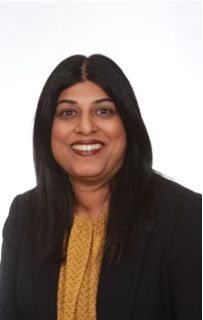
It was a privilege to talk to two inspirational women leaders in my Teachers Talk Radio Show on International Women’s Day this year. I spoke to Caren Earp, Head of Henlow Academy in Bedfordshire and Jess Pather, Headteachers of Lea Manor High school in Luton. Both are leading their schools through phases of transition and significant change. Both show strong, purpose driven leadership, care and nurture.
Caren is also a mum, her daughter now in year 11 has been her first priority and has been an interested visitor to her schools. Caren spoke about how she has been inspired by Stella Rimington, former Director general of MI5, who spoke openly about balancing motherhood and leadership at a high level.
Caren spoke with genuine pride of the growth in her school, the role that her team have played in this. She shared some wise words too which she hopes will inspire female leaders to step up. Caren says, “Sometimes the opportunity that is in front of you may not be the one you had in mind”. This has been true for Caren, who stepped in to lead Henlow Academy, growing it form a small Middle School to a flourishing Secondary School – with their first year 11s this academic Year. Congratulations Caren on this journey and for the support you continue to provide to other women in leadership, as a role model to women, including your own daughter, I celebrate you. You are a true example of a woman in leadership championing other women.
https://teacherstalkradio.podbean.com/e/celebrating-women-leaders-in-education-on-international-womens-day-the-twilight-show-with-maxine/
Jess spoke of her own journey and her purpose driven leadership and desire to change lives for young people and the communities she serves was clear. Jess also spoke with genuine pride of the leaders who she has seen grow, particularly from her previous school, who are now taking on major roles and whose influence on the communities they serve is significant. The change in her current school has been phenomenal and continues at a fast pace. She has a broad and diverse team, totally bought into her vision and continues to drive these improvements forward. Jess spoke about her own belief in seeing colleagues as people first and professionals second, of prioritising her people in this way. This is clear in her work too. Jess also advised women to be confident in our abilities, and to pursue your dreams with integrity.
Caren shared a quote from Elbert Hubbard that feels like a common theme in the conversations with both these women leaders, “It is a fine thing to have ability, but the ability to discover ability in others is the true test”. Whether we are talking about women in leadership or leadership in general, this is an important quote.
Celebrating Women in Leadership
I’d like to give a mention to some other women in leadership. Sue Teague, she was headteacher where I was deputy head and taught me a lot about distributed leadership, strategy and giving people the space and skills to do their job. I would also like to give a mention to Anna Rogers, her integrity, determination and purpose, always wanting to ensure the best for the children is a real inspiration.
And Finally – Celebrating The Most Important Woman to Me

Finally, I want to give a mention my first teacher, before I had got as far as school – my mum. My mum taught me to read and write before I had even started school. She didn’t have the opportunity to stay on at school for any further study, leaving school to work in Leicester’s hosiery industry as a factory worker at 15. She was a bright lady and was determined for things to be better for me, she was a talented artist, (much of her work ended up displayed around my primary and secondary schools) and she wrote beautifully. She devoted so much of her life to looking after me and my dad and taught me to work hard, reinforcing key messages like if you want something, work hard and you can achieve it. She taught me to be confident and to speak up if something isn’t right. So my final biggest shout out, for International Women’s Day and for Mothers day this Sunday is my mum, Helen Warner. My biggest inspiration. Thank you. You may not have been around on Earth for some time, but to me, you’re still here, inspiring me every day.
References
Eagly, A. H., Makhijani, M. G., & Klonsky, B. G. (1992). Gender and the evaluation of leaders: A meta-analysis. Psychological Bulletin, 111(1), 3–22. https://doi.org/10.1037/0033-2909.111.1.3
Eagly, A. H., Nater, C., Miller, D. I., Kaufmann, M., & Sczesny, S. (2020). Gender stereotypes have changed: A cross-temporal meta-analysis of U.S. public opinion polls from 1946 to 2018. American Psychologist, 75(3), 301–315. https://doi.org/10.1037/amp0000494
Mansi P. Joshi https://orcid.org/0000-0002-8780-4612 joshimp@iu.edu and Amanda B. DiekmanView My Fair Lady? Inferring Organizational Trust From the Mere Presence of Women in Leadership Roles Volume 48, Issue 8
https://doi.org/10.1177/01461672211035957 personality and Social Psychology bulletin
Lawson M.A, Martin A.E, Huda I, and Matz SC, The Wharton School, University of Pennsylvania, Philadelphia, PA; received December 30, 2020; Hiring women into senior leadership positions is associated with a reduction in gender stereotypes in organizational language
February 22, 2022
Paul Taylor, Rich Morin, D’Vera Cohn, April Clark, Wendy Wang, Pew Research Center 202 419-4328 http://pewresearch.org AUGUST 25, 2008 A Paradox in Public Attitudes Men or Women: Who’s the Better Leader?
WILLIAMS WOOLLEY A , CHRISTOPHER F. CHABRIS, ALEX PENTLAND, NADA HASHMI, AND THOMAS W. MALONE Evidence for a Collective Intelligence Factor in the Performance of Human Groups
30 Sep 2010, Vol 330, Issue 6004 pp. 686-688