We all know that getting enough rest is a key factor in maintaining our wellbeing. I had often linked rest with sleep – often then wondering how, even with plenty of sleep, I have often still felt tired. This led me to look into “rest” more thoroughly, and to finding the work of Dr Saundra Dalton-Smith, physician, speaker, coach and author of “Sacred Rest”.
Dr Daulton-Smith states “Rest encompasses the restorative activities we do that help us refill our tanks, which become depleted throughout the day. It truly reenergizes us.” She is clear that rest is about much more than just sleep. She goes on to define seven types of rest that everyone requires.
Seven Types of Rest
How much rest you need and how often you need to replenish each type of rest varies from person to person. “One size does not fit all when it comes to rest. Everything you do draws from a different pool of energy. The best rest occurs when you revive the specific kinds of energy you regularly deplete,” Dr Daulton-Smith explains.
Here are the seven types of rest with a brief explanation:
Creative: Engaging with things that inspire and motivate you, such as nature and art.
Mental: When you quiet your mind and focus on what’s really important.
Physical: Rest that relieves your body of muscle aches and tension and helps improve your sleep.
Social: Spending time on relationships you cherish and engaging with people who enhance your life.
Emotional: The ability to express your deepest feelings and be your genuine self.
Sensory: Taking a respite from background noise, including negative self talk and interaction with digital devices.
Spiritual: Tapping into the feeling that you are part of something bigger, and having a sense of belonging and fitting in.
My restful week
As much of my work is with school leaders and teachers, it makes sense for me to also take a break over the half term. I have been enjoying the break, and using the time to practice closely the seven types of rest.
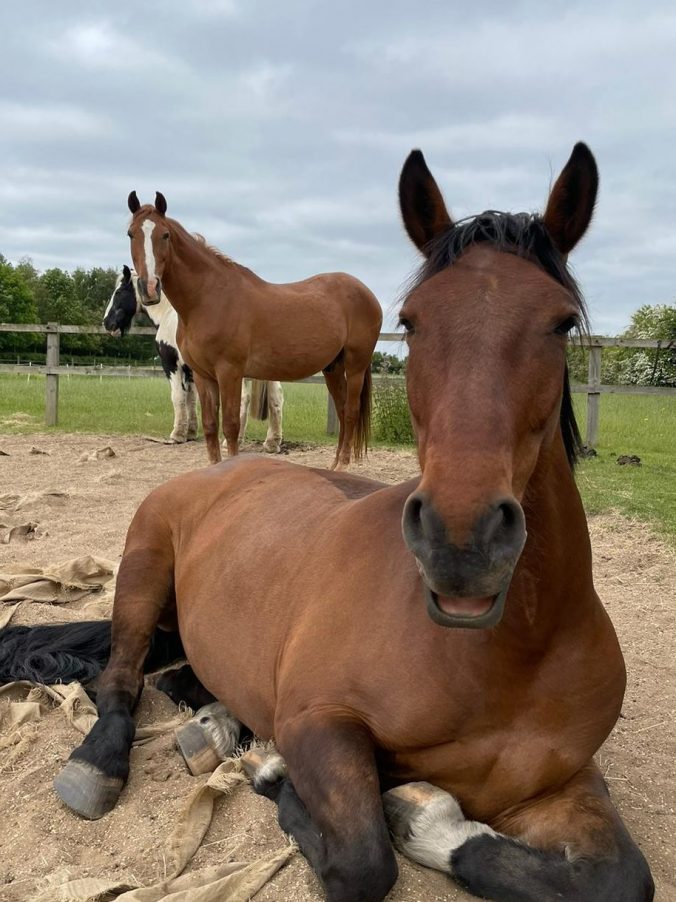
Monday started with some show jump coaching, great for mental rest, as purely focused on my horse, the exercises and some progress as an added bonus. The rest of the day was spent almost totally outdoors, trying to get the garden in order, so more mental rest, creative rest and already starting to feel the benefits. In addition, time with my husband and Dad – social rest spending time on relationships I cherish, I can see exactly how powerful this focus on rest is.
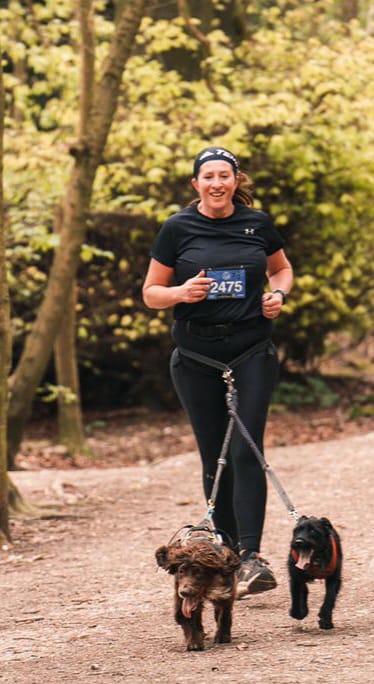
Tuesday, out running with the dogs, always a real head clear, and my favourite mental and creative rest, where I was inspired to capture some of my rest journey in my blog. Often where I have my best ideas and creative thoughts, running provides me with the sort of clarity that comes from this important form of rest.
Wednesday, my fortnightly Zoom catch up with fellow coach, Terri provided emotional rest. We often coach each other, chat about things that are going on for us, and this provides an opportunity to talk things through, without judgement, to be open and vulnerable. Not all conversations and relationships allow this, or maybe we don’t often allow ourselves this form of rest. For me, this is something I feel the benefit of enormously.
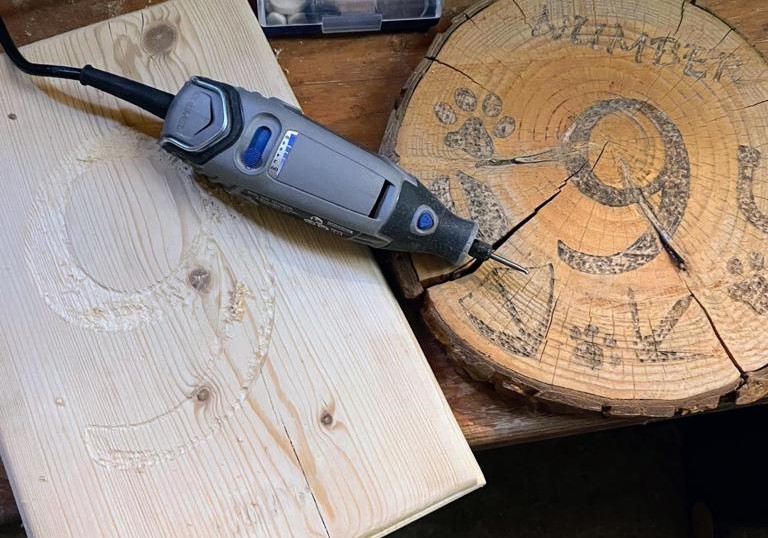
More creative rest too on Wednesday, with a bit of work on the house number project. Just a cut off from an old scaffold board, some sanding, routered edges and the start of Dremel engraving (before painting the number and varnishing). Still a work in progress, but a form of rest I have discovered recently.
Thursday was a day of social rest, starting with a run on a new route with a friend. Next followed an afternoon of unexpected visitors – lovely friends and neighbours, before an evening of drinks with colleagues.
Friday has been a day of physical rest, with some stretching and also, up to mid afternoon, sensory rest, enjoying some quiet time and a break from screens and devices too. Tonight, on my Teacher’s Talk Radio Show, I talked about rest and also meditation – as spiritual rest. Callers shared ideas such as looking out to sea and up into the sky to see we are part of something much bigger.
Overall, a very restful week. As we discussed in the show, ensuring the seven types of rest are incorporated into life back at work is vital for our wellbeing. Short meditations such as a body scan can help, regular brain breaks and engaging with colleagues and screen savers of restful places and images.
I would love to hear your thoughts. How best do you rest?
Resilience is a word that comes up lot in coaching, education and many other areas. I have heard many people reflect that they “need to be more resilient” – or worse still, say to others, “you just need to be more resilient”. Before we can begin to contemplate increasing our resilience, I believe we need to understand more about the concept itself as well as reflect a little about ourselves. Only then can we move forward.
Resilience is sometimes listed as a value, a positive trait, and when I was early on in my teaching career, I was proud to read a reference describing me as “highly resilient”. There have been times where this has probably been the case, but other times where I have felt that my resilience has been low. Particularly in the last couple of years, I have experienced poor mental health, and this leads me to look closely at the concept of emotional resilience. Resilience is important to enable us to thrive and be successful.
My coach training and wider learning recently has increased my self awareness and my understanding of the concept of resilience. I wanted to share some knowledge, reflections and experiences relating to resilience through my blog.
What is Resilience?
The concept of resilience was developed in the 1970s, and was very much seen as a personal quality, something fixed that we either have or we don’t have. The concept was linked to studies of achievements of vulnerable children, those who did better than “expected” were deemed to be “resilient”.
“the process and outcome of successfully adapting to difficult or challenging life experiences, especially through mental, emotional, and behavioural flexibility and adjustment to external and internal demands.”
This definition sets resilience as a process and an outcome. It suggests that resilience is something we can build or develop. Some argue that this definition is still a little narrow and that resilience is an important factor in enabling us to thrive and not just the ability to bounce back.
Resilience does not eliminate stress or erase life’s difficulties, but allows you to tackle or accept problems, live through adversity and move on with life.
Whilst resilience is still often referred to as a quality, it is more commonly accepted that it is something that we can develop, and is not not fixed. Biological and social influences set some of us at an advantage (or disadvantage) when it comes to resilience, but the good news is that with support, work and learning, it is something we can all develop.
Whether a process we work through or quality we have and/or can develop further, it seems that it is something that would benefit many of us to learn more about.
Burn Brighter
While there are many definitions of resilience, psychologists typically agree that it made up of both the capacity to handle difficult times and our ability to respond flexibly. Some researchers go further, identifying the following three factors as essential to resilience (Boniwell & Tunariu, 2019):
Recovery Returning to normality or the pre-stressor degree of functioning
Resistance Limited or no signs of disturbance following the stressor
Reconfiguration Returning to a different homeostasis and finding new stability according to the change in circumstances
This takes the definition of resilience a step further, recognising that resilient individuals going through significant life events do not always recover effortlessly; but they often find a new path. Whilst difficult events may “knock” an individual, with the benefit of resilience, this can lead to growth.
There are many types of resilience, for this blog, I will focus on emotional resilience.
Developing and Increasing Resilience
Even with high levels of resilience, difficult emotions such as sadness, loneliness, guilt, etc are still very real. These emotions are felt, but with resilience, the individual is able to work through the difficulties, and come out the other side with learning and growth.
Clearly then, resilience is something worth looking into as it enables us to get through difficulties and to be more successful, happy and increase our chances of being able to lead the lives we want to lead – linked to our goals and values.
There is a lot of advice out there about how we can improve our emotional resilience, I have picked a selection that I can relate to. As with all pieces of advice, what works for me may be different to what works for you. I shall try to explain the science too.
1. Develop Self-Awareness
Pausing to examine your own feelings can be very powerful. Being deliberate about reflecting on exactly how something makes you feel can increase your levels of resilience.
Through self-awareness, we gain a deeper understanding of how thoughts create feelings and then in turn how these feelings contribute to our actions.
Self-awareness gives us the courage to look for answers within ourselves. Tuning in to our inner world, building self-awareness helps us in becoming more capable and present. Coaching can help with this, providing a focus on what we think, how we feel, questioning our perceptions and linking these to our actions.
2. Take a balanced, optimistic view and focus on positive thinking
Taking an optimistic view doesn’t mean looking through rose tinted spectacles. A flexible thinker would consider a range of optimistic and pessimistic views when considering something. Becoming a “realistic optimist” is the ultimate in balance and flexible thinking. Realistic optimists pay close attention to negative information that is relevant to the problems they face, however, unlike pessimists, they do not remain focused on the negative and instead, look to potential positive outcomes.
Positive thinking is not to be confused with toxic positivity, but people who can think positively and see potential positive outcomes are more resilient.
3. Look from different perspectives.
Considering other perspectives or having an awareness that your own view isn’t the only one is a vital part of flexible thinking and can boost our resilience as we will take a more balanced view of events or issues.
4. Check the facts
Rational thinking means looking for facts and challenging our assumptions, many of which thanks to negative bias may be unhelpful.
Quite often, what we may believe to be true is just an assumption and our minds can sometimes then look for evidence to back this up, reinforcing our potentially inaccurate views. Simple coaching questions “how true is that?” , “what are the facts?” and “how do you know?” can all help you to check for facts and assumptions. Rational thinking, removing assumptions can then make us more resilient as we know not to believe some of the negative assumptions that we may make. Our negative bias makes negative assumptions more common than positive ones. Of course, some positive assumptions may also dent our resilience by leading to unpleasant surprises when the truth and facts become evident.
Coaching is a powerful way to challenge our thinking, and to enable us to develop more flexible thinking.
5. Interpersonal relationships
Developing a strong support network can be a key factor in increasing resilience.
Building strong interpersonal relationships widens our vision – it changes the way we see the world and ourselves. Additionally, how our networks support us is crucial too. If our people see us as capable and not in need of rescue, this is positive. Acting as coach rather than rescuer supports resilience too.
6. Practice Self Compassion
Self compassion involves offering compassion to ourselves: confronting our own suffering with an attitude of warmth and kindness, without judgment. Think about how you speak to yourself – would you speak like that to a friend, colleague or peer? If not, don’t speak to y0ourself like it. One practice, the self compassion brek can be very powerful in increasing resilience. It has 3 steps:
Be mindful: Without judgment or analysis, notice what you’re feeling. Say, “This is a moment of suffering” or “This hurts” or “This is stress.”
Remember that you’re not alone: Everyone experiences these deep and painful human emotions, although the causes might be different. Say to yourself, “Suffering is a part of life” or “We all feel this way” or “We all struggle in our lives.”
Be kind to yourself: Put your hands on your heart and say something like “May I give myself compassion” or “May I accept myself as I am” or “May I be patient.”
Meditate
As mindfulness gurus like to remind us, our most painful thoughts are usually about the past or the future: We regret and ruminate on things that went wrong, or we get anxious about things that will. When we pause and bring our attention to the present, we often find that things are…okay.
Practicing mindfulness brings us more and more into the present, and it offers techniques for dealing with negative emotions when they arise. That way, instead of getting carried away into fear, anger, or despair, we can work through them more deliberately. One practice that is effective is the “body scan”, here you are guided through (or self guide) concentrating on your whole body, from your heard to your toes in turn.
My Reflections
For me, I can see how a positive outlook and positive thinking has helped me in challenging times, I can also see how looking for facts has helped too. Conversely, during times when I have been less resilient, looking back I can clearly see how I had made assumptions, become too focussed on negatives. Equally, I have been enormously helped by coaches to reframe my thinking, to be aware that not all thoughts are facts and to take a more balanced view.
As connection is one of my core values, a small but supportive network of close friends, colleagues and family are constant resilience builders. Always on hand to listen, question, and support – I cant thank this tam of resilience builders enough.
What about you? I’d love to hear what helps you to build and maintain resilience.
These are all things I have said, many times. I thought these statements were true, and to me, at a point in time, they have all been true.
At school, I hated PE. Pretty much everything about it, I hated the changing rooms, I dreaded any game where I had to catch a ball (poor hand eye co-ordination and being short sighted resulted in almost certain failure), I remember feeling sick half way round a cross country run (the few occasions I took part before working out a plan for total avoidance). As soon as I could stop I did and never went back. Horse riding and looking after horses has been my “exercise” – never running – that was always avoided.
With very few exceptions, I probably had never run any sort of distance until the age of about 45. Around my 45th birthday I decided to lose some weight and to get fitter, so followed an advert for a local trainer who was running some exercise groups. This involved a supportive group of women, a great trainer and was held in a golf range. There was a variety of exercises, weights, skipping (something else I never thought I would be able to do) and a little bit of running – just short distances. I lost weight, got into exercising consistently and then, in January 2020 I started the couch to 5K. After 9 weeks, I finished it and did my first Park Run. Shortly after, we went into lockdown and running started to bring yet more benefits.
Running and Limiting Beliefs
Running has taught me that just because we think we can’t do something, it doesn’t mean we never will. I am not a fast runner, but I have found I can actually run reasonably well. I can see that we can probably do many of the things we tell ourselves we can’t. Looking back now at all of the voices telling me I would never be a runner – probably most of them mine, all I needed was a plan, a way to break it down into manageable chunks and to find a place to start. Ultimately, I just needed to believe.
Running and Having a Plan
Couch to 5K is a brilliant plan. It breaks down your introduction to running into manageable sessions, starting with just running for 60 seconds and then resting – before repeating. It is just 30 minutes too, including warm up and cool down. The commentary is encouraging and you always know when you are half way through. This builds up over the course of weeks, one week you run for 20 minutes without a break – this is the first time I felt like a runner. Eventually you run for 30 minutes, at first, this didn’t quite cover 5K, so I and then I built up the running time until I ran 5K. Soon I chieved 5K within 30 minutes.
Running and Values
Wellness is one of my core values, and running reinforces this, improving my physical fitness (as well as weight, improved cardio vascular fitness is a bonus). More notably, however, is the “headspace” running provides. The feeling after a run is amazing – stressbusting at its best. Connection is another of my values, and whilst connection with people takes up a lot of my days, running is all about time with my dogs and my connection with them. I also enjoy running with people too.
Running and Goals
I have also learned a lot about goal setting. My first goal was to run 5k. This was a good goal for me, realistic, measurable and really got me into running. Then I worked out a plan to increase to 10k, again, positive in that longer runs provide good thinking space for me, a time to really relax. The dogs also prefer this level of exercise.
For a time, I got quite caught up in wanting to run faster, I realise now, that it is important to check in with your goals. I had decided I wanted to run a faster mins per KM speed. I started some training on this, but after some time I was feeling frustrated and had avoided some runs. I had also picked up a couple of aches and pains in my knees. I realised that it was about my times, and I gave it some thought – why do I run? For fitness and wellness. I realised that speed isn’t such a benefit for this – but consistency and remaining injury free was. I also realised that I had fallen into a bit of a trap with Strava, which is good for keeping track, but had led me into “comparisonitis”. Other Strava contacts were running faster than me, I needed to give this some thought. Should I keep using Strava? I decided I should as I like to look back at the records. I also like the community – and as long as I am aware to keep the comparisons at bay, this is a benefit.
If my goals were to win races, be the fastest for my age group, it would be different. But knowing that my reasons for running are to keep fit, to enjoy the physical and mental benefits as well as to exercise the dogs, I decided that running 3 times per week – even if just a short run, was a better goal for me. Consistency and commitment are important to me.
Running and Resilience
Will I ever take that next step and test my stamina and resilience by trying an ultra or marathon? At this stage I don’t know – my goal is to keep running as part of my wellness – physical and emotional and resilience fits here.
Resilience will be my next topic.
What do you think? Any barriers you have overcome? Are you a runner?
Ever achieved something you thought was well outside your range?
Have you ever reached a point where you feel “stuck” – there’s a barrier in the way, something stopping you from getting further, you’re not making the progress you want to make. You might have goals and just feel that you are not reaching them.
What are your barriers?
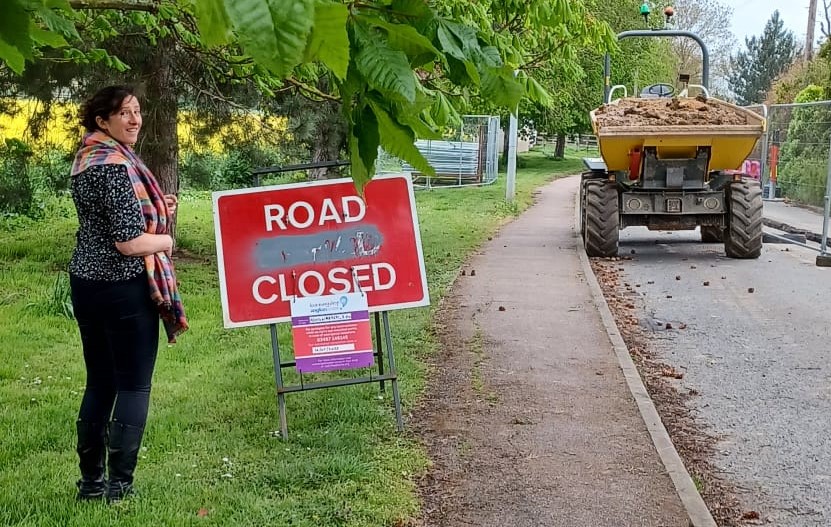
The roadblock pictured here is very real. Contractors, on behalf of Anglian Water have blocked the road for essential maintenance, (they also kindly agreed to take my picture.)
What about other blocks? How many of these are “real”, which are “perceived” and how can we get past them?
If you’re feeling stuck, it is worth giving some thought to the nature of your barriers. There are some common themes, many of which I recognise in my own experience and many have arisen in coaching conversations. Here are some of them. Which do you recognise?
Are you chasing the “right” goals?
In the past, I have found myself pursuing goals that I felt I ought to have. These goals may be linked to someone else’s idea of success – maybe a mentor or someone you look up to, or maybe society’s definition. Creating your own goals, based on your own values is important, and as they are so much more meaningful if truly in line with your values making them more achievable.
Are your behaving in line with your values?
Have a look at what you are doing in pursuit of your goals. Do your actions match your true values? Again, it is always worth looking closely at your values – the real ones – look back at the first blog post to check you are aware of these and can then make steps to live by them. Without this, you might be following rules and beliefs you picked up in your formative years, and may therefore end up acting in a way that isn’t in line with the person you truly want to be. If you are chasing a huge salary and accompanying consumerist lifestyle, whereas your values are much more around family and connection, this will present a barrier to you. Once you start to change the goals, link them more to your values, you will find less barriers.
Are you falling into the Advice trap?
Well meaning individuals can be quick to offer us advice. The problem with advice is that it is what works or worked for THEM, and may therefore not necessarily work for us. This advice might come from respected people, we may feel we ought to follow it, it might also sound good – but will often “feel” wrong.
An awareness of this, asking yourself how you feel about these ideas – and more of a coaching approach from those helping us can provide a better way forward.
Have you become disconnected from your “truth” and “purpose”?
Similar to your values, what are your true wants and needs. Are you working towards something that matches these, or what you think you ought to be working for? You might be adhering to outdated social norms, rather than your own truth – such as pay being more important than how a job makes you feel.
Acting in line with your purpose, knowing the impact you want to make will provide you with the golden intrinsic motivation, lacking this, with all of the extrinsic (pay, benefits, status) rewards, will leave you feeling blocked.
Are you staying in your comfort zone?
A bit like the safety barriers around the the roadworks, where a less safe but more direct option would be to keep the road open so we all drove precariously close to a huge hole but as long as we avoided the hole, would probably reach our destination with minimal delay, we often put up barriers to stop ourselves taking risk. Our brains’ first job is to keep us alive, so it is no surprise that our safety – including avoiding even small or perceived risks is something our brains will always try to do. Sticking with the safe and known option, avoiding changes are all comfort zone signs. Sometimes, the comfort zone may not actually be that comfortable, but we stick with it. Being a headteacher was this for me for quite some time, however hard it was, whatever feelings I had about it not being right for me any more, I had done it for a long time, and there was an element of wanting to stick with it. Of course, with this, there are the bits that were still good too. The whole ides of moving to freelance work, temporary contracts and this professional unknown was a huge step, but one I haven’t regretted for a second.
As I coach, one of my favourite questions is “What happens if you do nothing?” In most cases, this can lead to staying stuck. You can ask “what is the worst thing that can happen”? Stepping out of your comfort zone can then help you get a step closer to achieving your goals and feels good.
Do you believe in yourself?
Similar to staying in your comfort zone, lacking confidence can be a major barrier. Fear of failure is a major block for many people, without even being aware of it.
I love asking “What would you do if you knew you wouldn’t fail?”
Similarly, this can be about worrying what other people would think. This has been (and continues to be) a huge barrier for me. Making big decisions like leaving a job that I no longer wanted to do, my first thought – will people think I’m a failure? What will they think of me for giving up? As for speaking on Teacher talk Radio or writing a blog, parking these thoughts, separating my self worth from the feedback and seeing this as part of wider growth is a work in progress.
Barriers for Young People
Similarly, educators will be familiar with barriers faced by children and young people. How can we help them to get past these barriers? These days we are met with volumes of research from well known and well respected sources like the EEF (Education Endowment Fund). Again, these barriers are well known and the better we understand them as educators, the better we can tailor our approaches.
How can you get past the barriers?
An awareness of the barriers, maybe understanding that whilst they are real to you there is a way to shift them is helpful, our best chance of success also comes from creating a “reward state” in our thinking. Focusing on the desired outcomes, allowing ourselves some quiet space for good quality thinking is really helpful. Being solution focused and good thinking will be our next blog topic.
What about you?
I’m curious, has anything here sparked your thinking? What are your barriers and how are you getting past them, shifting them to the side, finding a good diversion or knocking them flat?